

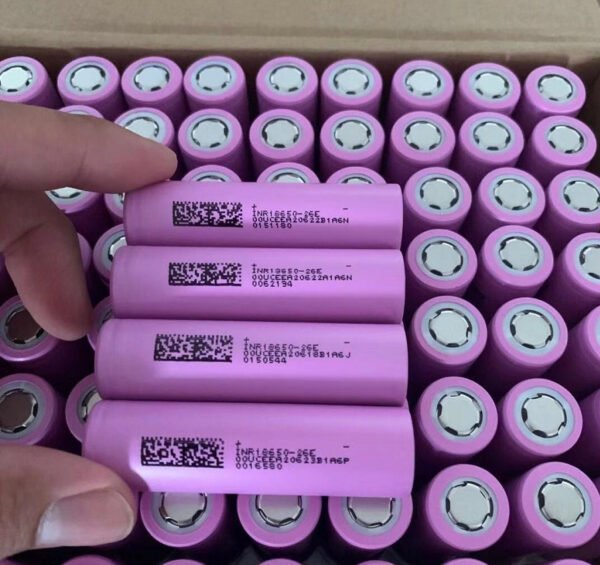
Factory Direct 18650 LFP Cells China Export: No BMS Compatibility Solved for Solar Storage Projects OEM Custom Solutions
When engineering solar energy storage systems for the global market, the selection of core battery cells is a critical decision that dictates the efficiency, lifespan, and safety of the entire installation. For engineers and technical procurement managers, sourcing high-performance, cost-effective cells directly from the manufacturing source is often the key to competitive advantage. This article explores the specific challenges and solutions regarding Factory Direct 18650 LFP (Lithium Iron Phosphate) Cells exported from China, with a specific focus on solving “No BMS Compatibility” issues for off-grid and residential solar storage projects. We will also delve into the technical superiority of these cells and the OEM custom solutions available to meet specific energy density and cycle life requirements.
The Technical Edge of 18650 LFP Cells in Energy Storage
Lithium Iron Phosphate (LFP) chemistry has become the gold standard for stationary energy storage due to its inherent safety and longevity. Unlike NMC (Nickel Manganese Cobalt) batteries, LFP cells do not contain cobalt, making them more thermally stable and less prone to thermal runaway—a critical factor for residential solar applications.
The 18650 cylindrical format (18mm diameter, 65mm height) offers distinct mechanical advantages. Its rigid steel casing provides excellent structural integrity, preventing electrode deformation over thousands of charge-discharge cycles. This robust physical design, combined with the chemical stability of the phosphate cathode, results in a battery that can deliver over 2,000 cycles while maintaining high energy density.
For solar storage, this translates to a battery pack that can reliably store energy harvested during the day and discharge it efficiently during peak evening hours for many years, without significant degradation.
Solving the “No BMS” Compatibility Challenge
One of the most common hurdles faced by international buyers is the “No BMS Compatibility” issue. Many standard 18650 cells are manufactured for consumer electronics (like laptops or power tools) and are not inherently optimized for the specific voltage curves and safety protocols required in large-scale solar battery banks.
When integrating cells into a solar storage system, the Battery Management System (BMS) acts as the brain. If the cell’s internal resistance, discharge rate, or voltage plateau is not perfectly matched to the BMS algorithm, it can lead to:
- Premature Cut-off: The system shutting down before the cell is fully discharged.
- Balancing Failures: Individual cells within the pack degrading at different rates, leading to “weak links.”
- Safety Risks: Overheating or over-discharging due to mismatched protection thresholds.
To solve this, working directly with a manufacturer that understands the specific requirements of solar storage is paramount. A factory-direct approach allows for the specification of cells with tailored voltage profiles and internal resistance that align perfectly with the intended BMS. This ensures seamless communication between the cell (the muscle) and the BMS (the brain), guaranteeing maximum runtime and safety.
OEM Custom Solutions: Beyond the Standard Catalog
While standard cells are readily available, solar storage projects often require specific form factors or performance characteristics that off-the-shelf products cannot meet. This is where OEM Custom Solutions become invaluable.
Working with a manufacturer that offers deep customization allows engineers to:
- Optimize Capacity: Adjust the active material loading to achieve specific Ah (Ampere-hour) ratings required for daily solar intake.
- Customize Form Factors: While 18650 is standard, some projects may benefit from the higher energy density of 21700 or 32700 formats, which offer even greater capacity in a slightly larger package.
- Tailor Discharge Rates: Specify cells for high continuous discharge (Power) or maximum capacity (Energy) based on whether the system is used for backup power or daily cycling.
By engaging in OEM development, businesses can create proprietary battery packs that are specifically engineered for their solar inverter systems, eliminating compatibility issues before they arise.
Why Source Directly from a Chinese Manufacturer?
Sourcing 18650 LFP Cells directly from the manufacturing hub in China offers significant cost advantages. It removes the markup associated with distributors and trading companies, allowing for a better price-to-performance ratio. However, not all manufacturers are created equal. It is essential to partner with a factory that adheres to international quality standards and has the R&D capability to support custom projects.
For instance, a manufacturer with automated production lines can guarantee the consistency of Cell-to-Cell (C2C) performance, which is vital for building large battery packs where hundreds or thousands of cells operate in unison.
Partner with a Global Manufacturer
Navigating the complexities of lithium battery technology and international export requires a partner with experience. If you are looking to optimize your solar storage project with high-quality, factory-direct cells, it is time to consult with an expert.
For technical inquiries or to discuss OEM custom solutions for your specific energy storage needs, you can Contact Us directly. Our team is equipped to handle global export requirements and provide the engineering support necessary for your project’s success.
Explore Our Cylindrical Battery Range
To understand the full spectrum of options available for your solar storage project, we invite you to explore our comprehensive range of cylindrical battery cells. From the standard 18650 to the high-capacity 32700 formats, our product line is designed to offer solutions for every energy density and cycle life requirement.
You can view our detailed product specifications and application scenarios on our Cylindrical Battery Cell page. For those interested in the broader landscape of battery manufacturing in China and how to identify a reliable partner, we also recommend reading our guide on Battery Manufacturer in China, which outlines the key factors to consider when selecting a supplier for your technical procurement needs.

