Here is the comprehensive guide on 46135 LFP cells, written from the perspective of a professional lithium battery engineer, focusing on thermal runaway prevention for the 2026 electric motorcycle market.
Ultimate Guide to 46135 LFP Cells for Electric Motorcycle 2026 – Complete Thermal Runaway Prevention Focus
The electric motorcycle industry is undergoing a seismic shift. As we enter 2026, the demand for high-performance, long-range, and ultra-safe powertrains has never been higher. For B2B manufacturers and system integrators, the choice of cell chemistry and format is no longer just about energy density; it is fundamentally about safety architecture. This guide focuses on the 46135 Lithium Iron Phosphate (LFP) cylindrical cell, dissecting why it is becoming the gold standard for the next generation of electric motorcycles, with a specific emphasis on thermal runaway prevention strategies.
The 46135 Advantage: Size Meets Safety
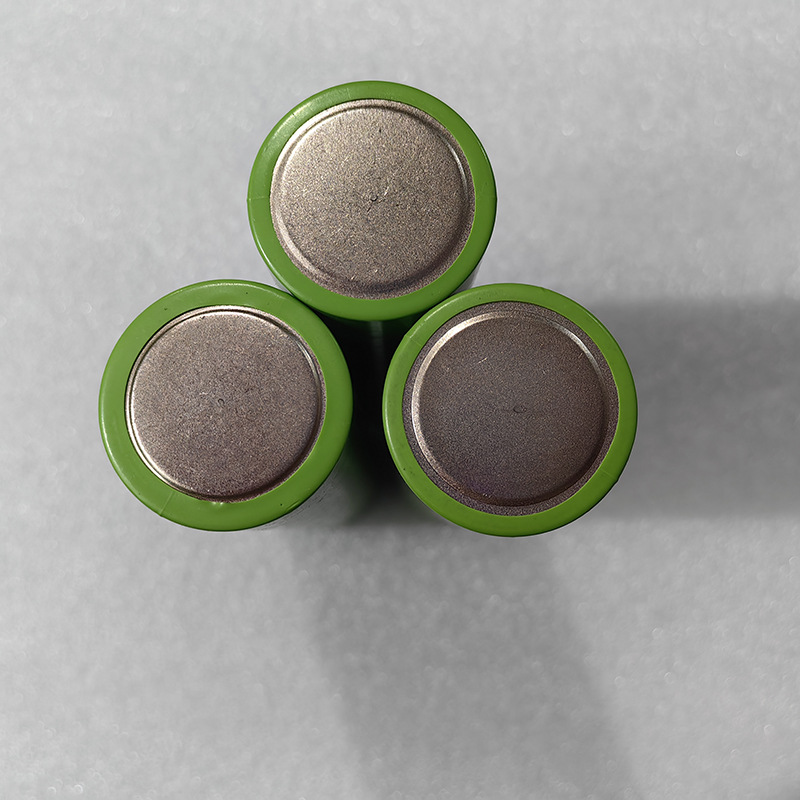
The 46135 format (46mm diameter, 135mm height) represents a “Goldilocks Zone” in cylindrical cell design. Unlike the older 18650 or 21700 formats, the 46135 offers a massive increase in volumetric energy density without the manufacturing complexity of prismatic or pouch cells.
For electric motorcycles, this translates into several mechanical and thermal advantages:
- Inherent Structural Integrity: The cylindrical shape is the strongest geometric form for containing internal pressure. In a crash scenario, the steel or aluminum casing of a 46135 cell is far more resistant to deformation than a soft pouch.
- Simplified Thermal Management: The large single-cell format reduces the total number of cells needed in a pack. Fewer cells mean fewer connection points, less complexity in the Battery Management System (BMS), and significantly reduced “hot spots” where thermal runaway can initiate.
- High Discharge Capability: The large diameter allows for thicker electrodes and more robust internal conductors, enabling the high continuous discharge rates (often exceeding 15C-20C) required for high-torque motorcycle applications.
The Chemistry of Safety: Why LFP is Non-Negotiable
When discussing thermal runaway, the cathode chemistry is the primary variable. Lithium Iron Phosphate (LFP) has distinct chemical properties that make it superior to Nickel Manganese Cobalt (NMC) for two-wheeled applications where crash protection is harder to engineer than in cars.
- No Oxygen Release: Unlike NMC cells, LFP cells do not contain oxygen in their crystal structure. Thermal runaway is an exothermic oxidation reaction; if there is no oxygen to feed the fire, the reaction cannot sustain itself.
- High Thermal Stability: The thermal runaway onset temperature for LFP is typically above 270°C, compared to 150°C-200°C for NMC cells. This provides a much larger safety buffer during overcharging or fast-charging scenarios.
- Stable Voltage Profile: LFP cells have a very flat voltage curve, which simplifies the BMS’s job of monitoring State of Charge (SoC) and prevents dangerous over-discharge conditions that can damage cells and lead to internal short circuits.
Thermal Runaway Prevention: A Multi-Layered Approach
While the 46135 LFP cell is inherently safe, a robust system design is essential for 2026 compliance and market leadership. We recommend a three-layer defense strategy:
Layer 1: Cell-Level Intrinsic Safety
The first line of defense is the cell itself. Modern 46135 LFP cells utilize advanced separators with ceramic coatings. These coatings act as a “thermal fuse,” shutting down ion flow if temperatures exceed 130°C. Additionally, the use of flame-retardant electrolyte additives ensures that even in the unlikely event of venting, there is no ignition.
Layer 2: Module & Pack Structural Design
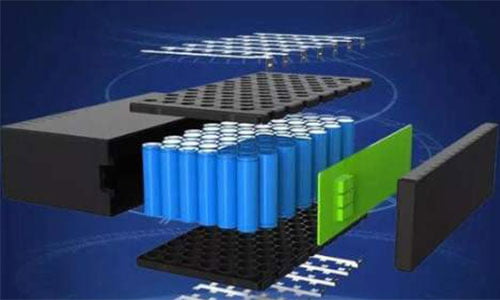
The way cells are arranged physically dictates heat transfer. For electric motorcycles, we advocate for a “spaced” module design.
- Radial Airflow: Unlike dense automotive packs, motorcycle packs should utilize the natural airflow between cells. The 46135 format allows for efficient passive cooling when spaced correctly.
- Crush Protection: The module structure must include anti-crush beams that sit between the cells and the outer casing of the motorcycle. This ensures that in a side impact, the force is absorbed by the frame, not the anode-cathode layers of the cell.
Layer 3: Active BMS & V2G Protocols
The 2026 standard requires predictive maintenance. Your BMS must monitor not just voltage and current, but also individual cell impedance. A sudden rise in impedance is the primary precursor to internal short circuits. By integrating AI-driven algorithms, the BMS can predict a potential thermal event hours before it occurs and isolate the affected cell cluster.
Comparison: 46135 LFP vs. Traditional Formats
To illustrate the performance gap, consider the following comparison for a typical 3kWh motorcycle auxiliary pack or a 5kW main drive module:
| Feature | 46135 LFP Cell | 21700 NMC Cell | 18650 NMC Cell |
|---|---|---|---|
| Energy Density (Wh/L) | High (Optimized) | Very High | Medium |
| Thermal Runaway Temp | >270°C | 150°C – 200°C | 150°C – 200°C |
| Cycle Life | 4000+ Cycles | 1000-2000 Cycles | 500-1000 Cycles |
| Pack Complexity | Low (Fewer Cells) | Medium | Very High |
| Safety Margin | Excellent | Good | Standard |
The Manufacturing Imperative
Choosing the right manufacturing partner is critical. Not all cylindrical cells are created equal. Manufacturing defects such as micro-shorts, electrode misalignment, or impurities in the electrolyte are the leading causes of field failures. When sourcing 46135 cells, you must demand a manufacturing process that utilizes 100% automated optical inspection (AOI) and 100% formation testing.
Partnering for the Future
As the electric motorcycle market evolves in 2026, safety will be the primary differentiator. The 46135 LFP cell offers a unique combination of high energy, long life, and intrinsic safety that is unmatched by older technologies. However, realizing this potential requires a partnership with a manufacturer that understands the specific rigors of two-wheeled transportation.
At CNS Battery, we specialize in high-end cylindrical solutions designed for the most demanding applications. Our R&D capabilities are focused on maximizing the thermal stability of LFP chemistry while pushing the boundaries of energy density.
If you are developing the next generation of electric motorcycles and need a power solution that prioritizes safety without sacrificing performance, we invite you to explore our capabilities. We provide comprehensive cylindrical battery cells and customizable solutions for the world.
Explore our Cylindrical Battery Cell range to find the perfect match for your 2026 electric motorcycle project: Product Link
For specific inquiries regarding 46135 LFP cell integration and thermal management design, contact our engineering team directly: Contact Us
Looking for a reliable Battery Manufacturer in China? CNS Battery combines automated production with ultra-safe chemistry to deliver distinguished global solutions. Learn more about our expertise: Battery Manufacturer in China