

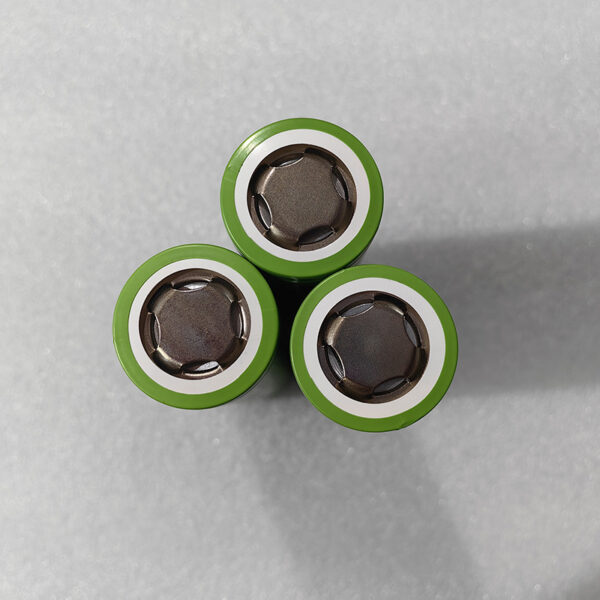
The Critical Role of Low Internal Resistance in Power Tool Batteries
In the world of cordless power tools, performance is non-negotiable. Whether it is a heavy-duty impact wrench or a high-speed angle grinder, the limiting factor is often not the motor design, but the energy source itself. For engineers and technical procurement managers, selecting a battery is not just about voltage or capacity; it is about the physics of power delivery. A battery with high internal resistance is the Achilles’ heel of any power tool, leading to voltage drop, heat generation, and premature shutdowns. This article explores the technical imperative of low internal resistance, specifically focusing on how advanced cylindrical cell technology solves these challenges.
Understanding Internal Resistance in Lithium-Ion Cells
Internal resistance (IR) is the opposition to the flow of current within the battery cell. It is measured in milliohms (mΩ) and is composed of electronic resistance (from electrodes and tabs) and ionic resistance (from the electrolyte and separator). In technical terms, according to Ohm’s Law (V = I x R), when a high current (I) is drawn by a power tool, a high internal resistance (R) results in a significant voltage drop (V).
For power tool applications, this voltage drop is critical. If the voltage sags below the tool’s minimum operating threshold during peak load, the tool will cut out, even if the battery is only half-discharged. Furthermore, the power dissipated as heat is calculated by Joule’s Law (P = I² x R). High internal resistance means exponential heat generation, which degrades the electrolyte and accelerates capacity fade.
The 21700 Advantage: Geometry and Chemistry
To achieve the low internal resistance required for professional tools, manufacturers must optimize both cell geometry and chemistry. The shift from the traditional 18650 format to the 21700 format represents a significant geometric advancement. The 21700 cell, with a diameter of 21mm and length of 70mm, offers a larger cross-sectional area for current flow compared to the 18650. This larger format inherently reduces electronic resistance by providing more conductive pathways.
Beyond geometry, the choice of cathode chemistry is paramount. Power-optimized cells typically utilize Lithium Nickel Manganese Cobalt Oxide (NMC) or Lithium Iron Phosphate (LFP) chemistries. These materials are engineered with specific particle sizes and porosities to minimize ionic resistance within the electrode structure. For instance, NMC formulations allow for high specific energy while maintaining the structural integrity needed for high discharge rates.
CNS Battery: Engineering for High Discharge Rates
CNS Battery specializes in cylindrical lithium-ion cells designed explicitly for high-drain applications. By leveraging advanced manufacturing techniques, CNS achieves ultra-low internal resistance across its product range, ensuring maximum power delivery and thermal stability.
1. The 18650 Series: Proven Reliability
While newer formats exist, the 18650 remains a staple in the industry due to its compact size and high energy density. CNS offers a range of 18650 cells tailored for power tools, such as the INR18650-2000 and INR18650-3000 models. These cells are engineered with high discharge capabilities, often rated for continuous discharge currents of 20A or higher.
The key to their performance lies in the balance between energy density and power density. For mid-range power tools, these cells provide the optimal compromise, delivering sufficient runtime without excessive bulk. The low internal resistance ensures that even under heavy loads, the voltage remains stable, preventing the “brown-out” effect common in lower-quality cells.
2. The 21700 Series: Next-Generation Power
For the most demanding applications, CNS’s 21700 series represents the cutting edge. Models like the INR21700-4000 and INR21700-5000 are designed for “medium and high rate discharge applications,” specifically citing power tools and garden tools in their specifications. These cells boast capacities exceeding 5000mAh while maintaining the ability to discharge at currents up to 45A.
The larger format not only reduces resistance but also improves thermal management. With a lower surface-area-to-volume ratio, the 21700 cells can dissipate heat more efficiently during prolonged operation. This is crucial for preventing thermal runaway and ensuring the safety of the end-user. The combination of high capacity and low resistance means that tools can run longer and harder without interruption.
3. The 32700 Series: Extreme Energy Storage
For applications requiring both massive power and extended runtime, CNS offers the 32700 format. With a diameter of 32mm, these cells are true powerhouses. The IFR32700-6000 model offers a massive 6.0Ah capacity, making it ideal for high-torque tools and industrial equipment.
The primary advantage of this format is its ability to handle high continuous discharge currents while storing vast amounts of energy. This makes it suitable for applications where changing batteries is inconvenient or impossible, such as in integrated power systems or heavy construction machinery. The low internal resistance in such a large format ensures that the energy is delivered efficiently, minimizing losses and maximizing the tool’s output.
Applications and System Integration
When integrating these cells into a battery pack, engineers must consider the entire system’s resistance, not just the individual cells. However, starting with a low internal resistance cell is the foundation of a high-performance pack.
- Power Tools: From drills to saws, the low IR of CNS cells ensures that the tool receives the full voltage it needs, even when driving through hardwood or metal. This results in consistent torque and speed.
- Garden Tools: Lawnmowers and chainsaws require sustained high current. The thermal stability of low IR cells prevents overheating during long mowing sessions.
- Electric Bicycles and Scooters: For e-bikes, low internal resistance translates to better hill-climbing ability and faster acceleration, as the battery can deliver the surge current required without significant voltage sag.
Why Choose CNS Battery?
Selecting a battery manufacturer is a strategic decision that impacts the entire lifecycle of a product. CNS Battery stands out for several reasons:
- Technical Expertise: With a focus on R&D, CNS continuously optimizes electrode formulations and cell designs to push the boundaries of energy density and power delivery.
- Quality Management: Rigorous quality control ensures that every cell meets strict specifications for internal resistance and capacity, ensuring consistency across batches.
- Customization: Understanding that every tool is different, CNS offers customizable solutions to meet specific voltage, capacity, and discharge requirements.
For engineers looking to elevate their power tool designs, the choice of cell is critical. By choosing CNS Battery, you are choosing a partner that understands the physics of power and is committed to delivering cells that perform under the most demanding conditions.
To consult with a technical expert or request a sample for testing, visit the CNS Battery product center or contact their engineering team directly at amy@cnsbattery.com.


