

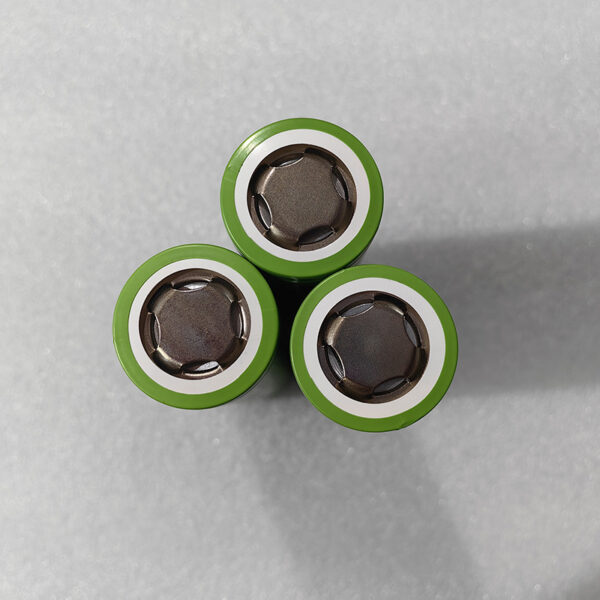
Factory Direct 18650 LFP Cells China Export: Understanding IATF16949 Certification for Power Tools Projects
The global power tools industry is experiencing unprecedented growth, driven by the shift toward cordless, battery-powered equipment. At the heart of this transformation lies the 18650 LFP (Lithium Iron Phosphate) cell—a cylindrical battery format that balances energy density, safety, and cost-effectiveness. For engineering teams and technical procurement specialists sourcing from China, understanding the intersection of factory-direct pricing, quality certifications like IATF16949, and actual cell performance is critical for project success.
The 18650 LFP Cell: Technical Foundation for Power Tools
The 18650 designation refers to a cylindrical cell measuring 18mm in diameter and 65mm in length. LFP chemistry offers distinct advantages over traditional NMC (Nickel Manganese Cobalt) alternatives, particularly for power tool applications where thermal stability and cycle life are paramount. LFP cells typically deliver 2,000-5,000 charge cycles while maintaining 80% capacity, significantly outperforming other lithium-ion chemistries in demanding industrial environments.
Key technical specifications engineers should evaluate include:
- Nominal Voltage: 3.2V per cell (versus 3.6-3.7V for NMC)
- Continuous Discharge Rate: 10C-30C for high-power tools
- Operating Temperature Range: -20°C to 60°C
- Safety Profile: Inherent thermal runaway resistance due to stable phosphate chemistry
When sourcing cylindrical battery cells, procurement teams must verify these specifications against actual test data rather than relying solely on datasheet claims.
IATF16949 Certification: What It Means for Battery Procurement
IATF16949 represents the international automotive quality management standard, built upon ISO9001 with additional automotive sector requirements. The 2025 update (6th Edition Rules) introduced more stringent process controls and supplier monitoring protocols. For power tool manufacturers, this certification signals that a battery supplier maintains systematic quality controls throughout design, production, and delivery phases.
However, the absence of IATF16949 certification doesn’t automatically disqualify a manufacturer. Many reputable Chinese battery producers serve non-automotive sectors with equivalent quality systems that haven’t undergone formal IATF auditing. The critical distinction lies in understanding what specific quality controls are actually implemented versus what certifications are displayed on marketing materials.
Key questions for technical evaluators:
- Does the factory maintain documented process control procedures?
- Are incoming raw materials tested against defined specifications?
- Is statistical process control (SPC) data available for review?
- What traceability systems track cells from production to shipment?
Factory Direct Sourcing: Balancing Cost and Quality Verification
China remains the dominant global supplier of lithium battery cells, accounting for over 70% of worldwide production capacity. Factory-direct purchasing eliminates distributor markups, potentially reducing costs by 15-30%. However, this approach requires robust vendor qualification processes.
Technical procurement teams should implement a multi-stage verification protocol:
Stage 1: Documentation Review
Request quality manuals, test reports, and production capacity data. Legitimate manufacturers provide detailed technical documentation without hesitation.
Stage 2: Sample Testing
Order pre-production samples for independent laboratory verification. Key tests include capacity validation, internal resistance measurement, and cycle life assessment.
Stage 3: Production Audit
When feasible, conduct on-site or third-party factory audits. For battery manufacturers in China, this verifies actual production capabilities versus trading company claims.
Power Tools Project Requirements: Matching Cell Specifications to Application Demands
Different power tool categories impose varying demands on battery cells:
| Tool Category | Typical Current Draw | Recommended C-Rate | Priority Factor |
|---|---|---|---|
| Drills/Drivers | 15-25A | 10C-15C | Cycle Life |
| Angle Grinders | 30-50A | 20C-30C | Power Density |
| Garden Equipment | 10-20A | 5C-10C | Energy Capacity |
| Professional Series | 40-60A | 25C-35C | Thermal Management |
Engineers must calculate pack configurations based on voltage requirements and runtime expectations. A typical 18V power tool pack uses 5S2P or 5S3P configurations with 18650 LFP cells, delivering 16V nominal voltage with adequate current capacity.
Risk Mitigation Strategies for International Buyers
Sourcing battery cells from overseas introduces specific risks that require proactive management:
Supply Chain Transparency: Verify raw material sourcing, particularly for critical components like separators and electrolytes. Reputable manufacturers maintain documentation tracing materials to original suppliers.
Regulatory Compliance: Ensure cells meet destination market requirements (UN38.3 transportation, CE marking, UL certification where applicable). Non-compliant shipments face customs delays or rejection.
Warranty and Support: Establish clear terms for defective cell replacement, technical support availability, and lead time commitments. Written agreements protect both parties.
For ongoing communication and technical support, establish direct contact through verified channels like the contact page to maintain clear communication lines throughout your project lifecycle.
Conclusion: Making Informed Procurement Decisions
The decision to source 18650 LFP cells from Chinese manufacturers requires balancing cost advantages against quality assurance requirements. IATF16949 certification provides valuable quality signals but shouldn’t serve as the sole selection criterion. Technical procurement teams achieve optimal outcomes by combining certification verification with hands-on testing, production audits, and clear contractual protections.
For power tool projects where performance, safety, and total cost of ownership matter, invest time in thorough vendor qualification. The upfront effort pays dividends through reduced failure rates, consistent performance, and reliable supply chains that support your product’s market success.
Remember: low price without quality verification creates expensive problems downstream. High quality with transparent pricing creates sustainable competitive advantages. Choose partners who demonstrate both through documented performance and open communication.


