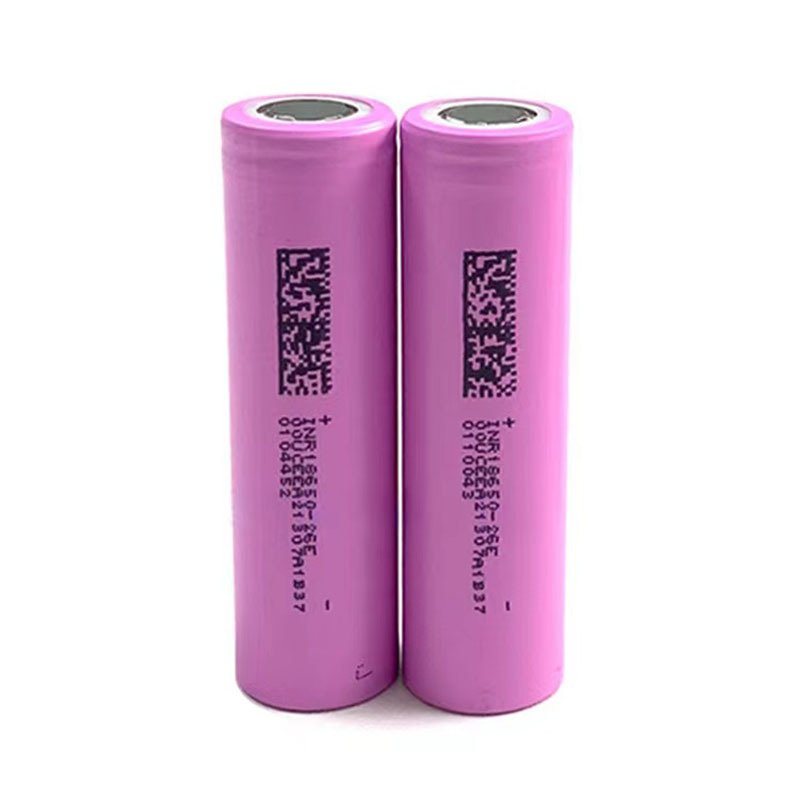
ESS OEM Pain Points Solved by 18650 LFP Cylindrical Batteries Ideal for Manufacturers
The energy storage system (ESS) market continues to expand rapidly, yet OEM manufacturers face persistent challenges in balancing performance, safety, cost, and scalability. Among emerging solutions, 18650 LFP (Lithium Iron Phosphate) cylindrical batteries have gained significant traction as a reliable option that addresses critical pain points for ESS manufacturers. This article examines how these batteries resolve common OEM challenges while delivering technical advantages aligned with industry requirements.
Understanding the Core OEM Challenges in ESS Manufacturing
ESS OEMs encounter several recurring obstacles throughout product development and deployment. Thermal management remains a primary concern, as improper heat dissipation can lead to accelerated degradation or safety incidents. Supply chain consistency presents another hurdle, with manufacturers struggling to secure reliable cell sources that maintain specification uniformity across production batches. Additionally, cost-pressure from competitive markets forces OEMs to optimize bill-of-materials without compromising system longevity or warranty commitments.
From a technical perspective, battery chemistry selection directly impacts cycle life, energy density, and operational safety. Traditional NMC (Nickel Manganese Cobalt) chemistries offer higher energy density but introduce thermal runaway risks and cobalt supply chain vulnerabilities. This is where LFP chemistry demonstrates distinct advantages for stationary storage applications where weight constraints are less critical than longevity and safety.
How 18650 LFP Cylindrical Format Addresses Thermal Management
The cylindrical form factor inherently supports superior thermal characteristics compared to prismatic or pouch alternatives. The round geometry creates natural air gaps between cells when packed into modules, facilitating passive cooling without additional thermal interface materials. This structural advantage reduces BOM costs while improving heat dissipation during high-current charge-discharge cycles.
LFP chemistry further enhances thermal stability through its olivine crystal structure, which maintains integrity at elevated temperatures where layered oxide chemistries begin decomposing. The iron-phosphate bond exhibits higher activation energy for thermal runaway, typically requiring temperatures exceeding 270°C before exothermic reactions initiate. For ESS applications operating in varied environmental conditions, this thermal margin provides crucial safety buffering.
Manufacturers can explore detailed cylindrical battery cell specifications at https://cnsbattery.com/products-3/cylindrical-battery-cell/ to evaluate technical parameters matching their thermal design requirements.
Supply Chain Reliability and Manufacturing Scalability
OEM production planning depends heavily on consistent cell availability with uniform electrical characteristics. The 18650 format benefits from decades of manufacturing refinement, with production equipment and quality control processes matured across multiple supplier bases. This maturity translates to tighter capacity tolerances, typically within ±2% for premium grade cells, reducing matching requirements during module assembly.
LFP chemistry eliminates cobalt dependency, removing exposure to geopolitical supply risks and price volatility associated with conflict minerals. Iron and phosphorus resources demonstrate broader geographic distribution, supporting more resilient supply chains for long-term production commitments. For ESS manufacturers planning multi-year product roadmaps, this supply stability enables more accurate cost forecasting and inventory management.
Working with established battery manufacturers in China provides access to scaled production capacity while maintaining quality oversight. Additional information about qualified manufacturing partners can be found at https://cnsbattery.com/battery-manufacturers-in-china/ for OEMs evaluating supply chain options.
Cycle Life and Total Cost of Ownership Advantages
Stationary storage applications prioritize cycle longevity over energy density. LFP chemistry routinely achieves 3000-5000 full depth-of-discharge cycles while retaining 80% capacity, significantly exceeding NMC alternatives in comparable conditions. The stable crystal structure experiences minimal lattice expansion during lithium intercalation, reducing mechanical stress that accelerates capacity fade.
From a financial perspective, extended cycle life directly improves project economics through reduced replacement frequency and lower levelized cost of storage (LCOS). OEMs can offer longer warranty periods without proportionally increasing reserve provisions, creating competitive differentiation in tender processes. The 18650 format further supports modular replacement strategies, allowing individual cell or module swaps rather than complete pack replacement.
Safety Compliance and Certification Pathways
Regulatory compliance represents a critical consideration for ESS market entry across different regions. LFP chemistry’s inherent safety characteristics simplify certification processes for standards including UL 9540, IEC 62619, and UN 38.3 transportation requirements. The reduced thermal runaway probability decreases testing iterations and associated development timelines.
Cylindrical cells benefit from standardized testing protocols established through consumer electronics and electric vehicle applications. This existing data library accelerates OEM certification efforts, as regulatory bodies recognize test methodologies for 18650 format cells. Manufacturers can leverage this precedent to streamline approval processes for new ESS product lines.
Integration Flexibility for Diverse ESS Architectures
The 18650 form factor supports flexible pack configurations across residential, commercial, and utility-scale applications. Series-parallel arrangements enable voltage and capacity customization without redesigning cell specifications. This modularity allows OEMs to maintain common cell procurement while varying pack designs for different market segments.
Battery management system (BMS) development also benefits from standardized cell characteristics. Voltage curves for LFP chemistry exhibit flatter discharge profiles, requiring precise state-of-charge estimation algorithms but providing stable operating voltage throughout most discharge cycles. This characteristic simplifies power electronics design for inverters and DC-DC converters within ESS architectures.
Conclusion
18650 LFP cylindrical batteries present a compelling solution for ESS OEMs navigating technical and commercial challenges. The combination of thermal stability, supply chain resilience, extended cycle life, and certification advantages addresses core pain points that impact product viability and market competitiveness. As the energy storage sector matures, manufacturers adopting this technology position themselves for sustainable growth with reduced technical risk exposure.
For OEMs evaluating partnership opportunities or requiring technical consultation on cell selection, direct engagement with qualified suppliers accelerates development timelines. Contact information for further discussion is available at https://cnsbattery.com/contact-2/ where engineering teams can address specific application requirements and volume procurement considerations.
The convergence of proven cylindrical manufacturing, stable LFP chemistry, and growing ESS demand creates favorable conditions for OEMs prioritizing long-term product reliability over short-term cost optimization. Strategic cell selection remains fundamental to achieving this balance while meeting evolving market expectations for safety and performance.