

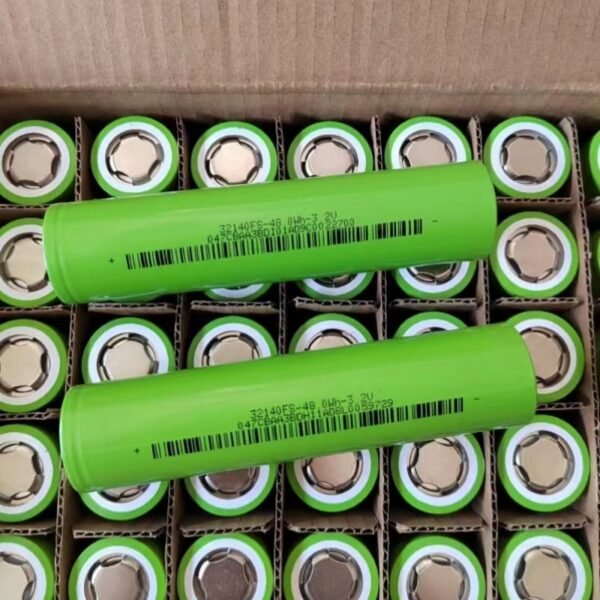
Solve Low Temperature Issues in 32700 Lithium Cells
Introduction
The 32700 cylindrical lithium cell has become a cornerstone in energy storage systems, electric vehicles, and industrial applications due to its high capacity (typically 5000-6500mAh) and robust structural design. However, low-temperature performance remains one of the most critical challenges facing engineers and technical purchasers when deploying these cells in cold climate conditions. Understanding the fundamental electrochemical mechanisms behind temperature-related degradation is essential for optimizing system reliability and extending operational lifespan.
Understanding Low-Temperature Electrochemical Limitations
1. Electrolyte Viscosity and Ionic Conductivity
At temperatures below 0°C, the liquid electrolyte within 32700 LiFePO4 cells experiences increased viscosity, significantly reducing lithium-ion mobility. Research indicates that ionic conductivity can decrease by 50-70% when operating at -20°C compared to room temperature (25°C). This phenomenon directly impacts both charge acceptance and discharge capability, resulting in reduced power output and extended charging times.
The standard carbonate-based electrolyte formulations (EC/DMC/EMC with LiPF6 salt) begin to approach their freezing point around -20°C to -30°C. Advanced manufacturers now incorporate low-temperature additives such as fluoroethylene carbonate (FEC) and lithium bis(oxalato)borate (LiBOB) to extend the operational range to -40°C while maintaining acceptable performance levels.
2. Solid Electrolyte Interphase (SEI) Layer Dynamics
The SEI layer formed on the graphite anode surface plays a crucial role in low-temperature performance. At sub-zero temperatures, the SEI layer resistance increases substantially, creating an additional barrier for lithium-ion transport. This increased impedance manifests as voltage depression during high-current discharge and can lead to premature cell shutdown in battery management systems.
Furthermore, charging below 0°C without proper thermal management can cause lithium plating on the anode surface. This metallic lithium deposition not only reduces reversible capacity but also creates dendrite formation risks that may compromise cell safety over extended cycling.
3. Cathode Material Kinetics
LiFePO4 cathode materials, while offering excellent thermal stability and cycle life, exhibit slower lithium-ion diffusion coefficients at low temperatures compared to NMC or NCA chemistries. The olivine crystal structure provides inherent safety advantages but requires careful electrode engineering to maintain performance in cold conditions.
Recent advancements in nanostructured LFP particles and conductive carbon coating technologies have improved low-temperature rate capability by 30-40%, enabling 32700 cells to deliver 70-80% of room temperature capacity at -20°C under moderate discharge rates (0.5C-1C).
Practical Mitigation Strategies
Thermal Management System Design
Implementing active or passive heating systems remains the most effective approach for maintaining optimal cell temperature. PTC heating elements integrated into battery packs can pre-condition cells before charging operations, preventing lithium plating and ensuring full capacity utilization.
Battery Management System Optimization
Modern BMS algorithms should incorporate temperature-compensated charging profiles that reduce charge current below 10°C and prohibit charging entirely below 0°C without pre-heating. Discharge limits should also be adjusted based on real-time temperature monitoring to prevent excessive voltage sag.
Cell Selection Criteria
When sourcing 32700 cells for cold climate applications, technical purchasers should request detailed low-temperature performance data including:
- Discharge capacity retention at -20°C and -40°C
- Maximum charge current vs. temperature curves
- Internal resistance variation across temperature range
- Cycle life data under low-temperature operating conditions
Quality Manufacturing Considerations
The consistency of low-temperature performance across production batches depends heavily on manufacturing quality control. Reputable battery manufacturers in China implement rigorous testing protocols including temperature cycling, impedance spectroscopy, and long-term cold storage validation to ensure cell-to-cell uniformity.
Key manufacturing parameters affecting low-temperature performance include electrolyte filling accuracy, formation cycling protocols, and final aging procedures. Cells that undergo proper formation at controlled temperatures demonstrate more stable SEI layers and better low-temperature characteristics throughout their operational life.
Conclusion and Product Integration
Addressing low-temperature challenges in 32700 lithium cells requires a comprehensive approach combining proper cell selection, system design, and thermal management. For engineers and procurement specialists seeking reliable cylindrical battery solutions, partnering with experienced manufacturers who understand these technical nuances is critical for project success.
Our range of cylindrical battery cells includes 32700 LiFePO4 options specifically engineered for extended temperature range applications, featuring optimized electrolyte formulations and enhanced electrode architectures. Each cell undergoes comprehensive low-temperature validation to ensure consistent performance across demanding operational environments.
For technical specifications, customization options, or application engineering support, please contact our team to discuss your specific requirements. Our engineering staff can provide detailed performance data, sample testing, and system integration guidance to ensure your project meets all operational targets regardless of environmental conditions.
Technical Note: All performance data referenced in this article is based on industry-standard testing protocols. Actual field performance may vary based on specific application conditions, system design, and operational parameters. Consult with qualified engineering personnel before finalizing cell selection for critical applications.


