
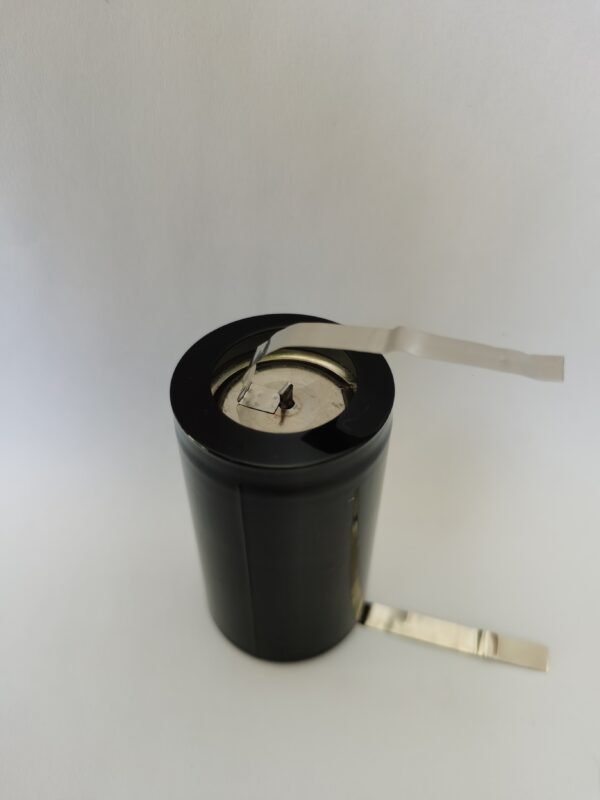
How to Fix Li-SOCl₂ Battery Passivation in NB-IoT Gas Meters
Introduction
Li-SOCl₂ (Lithium Thionyl Chloride) batteries have become the industry-standard power source for NB-IoT gas meters due to their exceptional energy density (up to 590 Wh/kg), wide operating temperature range (-55°C to +85°C), and ultra-low self-discharge rate enabling 10+ year service life. However, battery passivation remains a critical challenge affecting device reliability. This article provides engineering-focused solutions to mitigate passivation-related voltage delay in NB-IoT gas meter applications.
Understanding Li-SOCl₂ Battery Passivation Mechanism
Li-SOCl₂ batteries are primary lithium metal batteries utilizing lithium as the anode and thionyl chloride (SOCl₂) as both cathode active material and electrolyte solvent. The electrochemical reaction follows:
Anode: Li → Li⁺ + e⁻
Cathode: 2SOCl₂ + 4e⁻ → 4Cl⁻ + S + SO₂
Overall: 4Li + 2SOCl₂ → 4LiCl + S + SO₂
During storage or low-current discharge periods, a lithium chloride (LiCl) passivation layer naturally forms on the lithium anode surface. This protective film serves dual purposes: it prevents continuous self-discharge (enabling decade-long shelf life) but simultaneously increases internal resistance. When NB-IoT gas meters transition from PSM (Power Saving Mode) sleep states to active transmission requiring 100-200mA pulse currents, the passivation layer causes significant voltage delay—temporary voltage drop that may trigger premature low-battery alarms or communication failures.
Core Solutions for Passivation Mitigation
1. Battery Chemistry and Structure Optimization
Select spiral-wound (bobbin-type) Li-SOCl₂ cells over traditional carbon-monocoque designs for pulse-heavy applications. Spiral-wound construction provides larger electrode surface area, reducing current density during transmission bursts. For NB-IoT gas meters with periodic data transmission (typically every 4-24 hours), consider hybrid designs combining bobbin-type cells with integrated pulse-assist capacitors. Manufacturers like CNS Battery offer specialized ER-series cells optimized for IoT metering applications with enhanced pulse capability.
Explore our complete range of primary batteries designed for industrial IoT applications.
2. Hybrid Power Architecture Implementation
Integrate a supercapacitor or HPC (Hybrid Layer Capacitor) in parallel with the Li-SOCl₂ cell. This architecture allows the battery to provide baseline current while the capacitor handles transmission pulses. The capacitor charges slowly during sleep periods, then delivers high-current bursts (up to 500mA) during NB-IoT radio transmission without stressing the battery. This approach effectively bypasses passivation layer resistance during critical communication windows.
3. Controlled Pre-Activation Protocols
Implement firmware-controlled pre-activation sequences before major transmission events. A brief low-current discharge (1-5mA for 2-5 seconds) before the main transmission pulse helps break down the passivation layer gradually, reducing voltage sag during actual data transmission. This technique requires careful energy budgeting but significantly improves transmission reliability in cold temperature conditions where passivation effects intensify.
4. Temperature-Compensated Power Management
Deploy temperature-aware power management algorithms. Passivation layer resistance increases exponentially below 0°C. NB-IoT gas meters should incorporate temperature sensors to adjust transmission timing and power profiles based on ambient conditions. During extreme cold periods, extend pre-activation duration or delay non-critical transmissions until battery temperature recovers through self-heating during operation.
5. Battery Quality and Manufacturing Standards
Source cells from manufacturers with strict quality control on electrolyte composition and separator materials. Impurities in SOCl₂ electrolyte accelerate uneven passivation layer formation. Premium-grade cells maintain consistent LiCl film thickness, ensuring predictable voltage behavior throughout the battery lifecycle. Request detailed specification sheets including pulse discharge curves at various temperatures before procurement.
Implementation Best Practices for Engineering Teams
Design Phase: Calculate worst-case pulse current requirements including NB-IoT transmission peaks, valve actuation, and security features. Select battery capacity with 30-40% margin above calculated needs to account for passivation-related capacity loss over 10-year deployment.
Testing Protocol: Conduct accelerated aging tests simulating 10-year operation with realistic sleep-wake cycles. Monitor voltage recovery time after extended sleep periods at -20°C, +25°C, and +60°C to characterize passivation behavior across operating range.
Field Deployment: Implement remote battery voltage monitoring with trend analysis capabilities. Gradual increase in voltage recovery time indicates passivation layer thickening, enabling predictive maintenance before communication failures occur.
Conclusion
Li-SOCl₂ battery passivation in NB-IoT gas meters is a manageable engineering challenge requiring holistic approach spanning battery selection, circuit design, and firmware optimization. By understanding the electrochemical mechanisms and implementing appropriate mitigation strategies, utilities and meter manufacturers can achieve reliable 10+ year deployments without unexpected power-related failures.
For technical consultation on Li-SOCl₂ battery selection for your NB-IoT metering projects, contact our engineering team at CNS Battery. Our specialists provide application-specific recommendations ensuring optimal power performance throughout your product lifecycle.
Technical Specifications Reference:
- Nominal Voltage: 3.6V
- Energy Density: 500-590 Wh/kg
- Operating Temperature: -55°C to +85°C
- Self-Discharge Rate: <1% per year at 25°C
- Typical Capacity Range: 1,200mAh (ER14250) to 19,000mAh (ER34615)
