

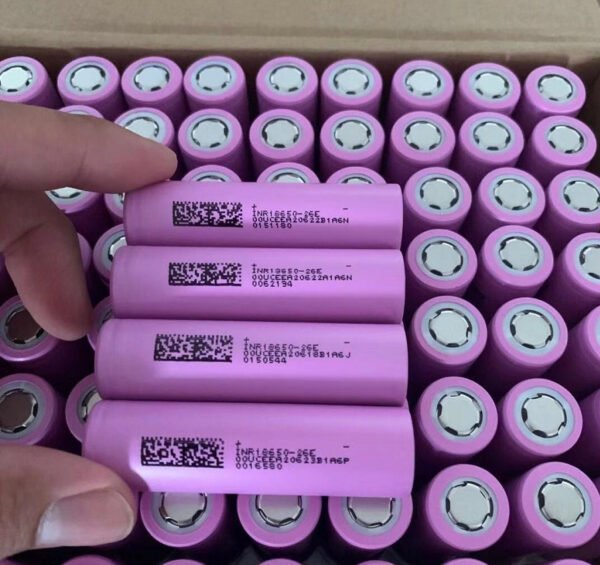
18650 LFP Cylindrical Battery for ESS – Long Cycle Life vs Competitors
Introduction
In the rapidly evolving energy storage system (ESS) market, selecting the right battery chemistry is critical for long-term performance, safety, and total cost of ownership. Among various cylindrical battery options, the 18650 LFP (Lithium Iron Phosphate) configuration has emerged as a superior choice for stationary energy storage applications. This article provides a comprehensive technical analysis of 18650 LFP cylindrical batteries, comparing their cycle life performance against competing chemistries including NMC (Nickel Manganese Cobalt) and NCA (Nickel Cobalt Aluminum) alternatives.
For engineers and technical procurement professionals evaluating ESS solutions, understanding the fundamental advantages of LFP technology is essential for making informed decisions that balance performance, safety, and lifecycle economics.
Technical Foundation: Understanding 18650 LFP Architecture
The 18650 designation refers to the cylindrical cell’s physical dimensions: 18mm diameter and 65mm length. This standardized format has become an industry benchmark due to its mature manufacturing processes, excellent thermal management characteristics, and proven reliability across diverse applications.
LFP Chemistry Fundamentals:
Lithium Iron Phosphate (LiFePO₄) cathode material offers distinct electrochemical advantages:
- Nominal Voltage: 3.2V per cell (compared to 3.6-3.7V for NMC/NCA)
- Operating Temperature Range: -20°C to +60°C with stable performance
- Thermal Runaway Threshold: Approximately 270°C (significantly higher than NMC’s 150-200°C)
- Crystal Structure: Olivine structure provides exceptional structural stability during lithium ion intercalation
The robust P-O bond in the phosphate group contributes to superior thermal stability, making LFP batteries inherently safer for large-scale ESS deployments where thermal management is paramount.
Cycle Life Comparison: LFP vs. Competing Chemistries
Quantitative Performance Analysis
| Battery Chemistry | Typical Cycle Life (80% DOD) | Capacity Retention @ 3000 Cycles | Calendar Life |
|---|---|---|---|
| LFP 18650 | 3,000-5,000 cycles | 80-85% | 10-15 years |
| NMC 18650 | 1,500-2,500 cycles | 75-80% | 8-10 years |
| NCA 18650 | 1,000-2,000 cycles | 70-75% | 7-9 years |
Key Technical Insights:
- Degradation Mechanisms: LFP cells experience minimal structural degradation during cycling due to the stable olivine crystal lattice. In contrast, NMC and NCA chemistries undergo more significant lattice expansion/contraction, accelerating capacity fade.
- Depth of Discharge (DOD) Impact: LFP batteries maintain consistent cycle life across 80-100% DOD ranges, while NMC/NCA performance degrades significantly beyond 80% DOD. This makes LFP ideal for ESS applications requiring maximum usable capacity.
- Temperature Sensitivity: LFP demonstrates superior cycle life retention at elevated temperatures (45-60°C), common in outdoor ESS installations without active cooling systems.
Safety Considerations for ESS Deployments
Safety remains the primary concern for utility-scale and commercial ESS installations. LFP chemistry provides inherent safety advantages:
Thermal Stability:
- Higher thermal runaway initiation temperature reduces fire risk
- Slower heat generation rate during abuse conditions
- Minimal oxygen release during thermal events
Chemical Stability:
- Iron-phosphate bonds resist decomposition under overcharge conditions
- Reduced risk of electrolyte combustion compared to cobalt-based chemistries
For comprehensive safety documentation and UN38.3 certification requirements, technical teams should reference manufacturer safety data sheets and testing summaries when evaluating suppliers.
Economic Analysis: Total Cost of Ownership
While LFP cells may carry a slightly higher initial cost per Wh compared to NMC alternatives, the levelized cost of storage (LCOS) favors LFP for most ESS applications:
Cost Factors:
- Extended cycle life reduces replacement frequency
- Lower thermal management requirements decrease system BOP costs
- Reduced safety system complexity lowers installation expenses
- Longer warranty periods improve financing terms
For a typical 1MWh ESS installation, LFP-based systems can achieve 15-25% lower LCOS over a 15-year project lifetime compared to NMC equivalents.
Application-Specific Recommendations
Optimal Use Cases for 18650 LFP:
- Residential and commercial solar+storage systems
- Grid frequency regulation services
- Backup power applications requiring long calendar life
- Hot climate installations with limited cooling infrastructure
Consider Alternative Chemistries When:
- Maximum energy density is the primary constraint
- Operating temperatures consistently remain below 25°C
- Application requires very high C-rate discharge (>3C continuous)
Conclusion and Product Selection
The 18650 LFP cylindrical battery represents the optimal balance of cycle life, safety, and economic value for most ESS applications. Technical procurement teams should prioritize suppliers with proven manufacturing capabilities, comprehensive testing documentation, and established quality management systems.
For detailed product specifications and technical consultation on 18650 cylindrical battery cells suitable for your ESS projects, explore our comprehensive cylindrical battery cell product range. Our engineering team can provide customized solutions matching your specific application requirements.
When evaluating potential manufacturing partners, consider factors including production capacity, quality certifications, and after-sales support. Learn more about established battery manufacturers in China to identify suppliers meeting international quality standards.
For technical inquiries, project consultations, or requests for detailed specification sheets, please contact our team directly. Our experienced engineers are ready to support your ESS development initiatives with data-driven recommendations and reliable supply chain solutions.
Technical Note: All performance data presented in this article reflects typical values under standard test conditions (25°C, 0.5C charge/discharge). Actual performance may vary based on specific operating conditions, BMS configuration, and system integration design. Professional engineering assessment is recommended before final system specification.


