

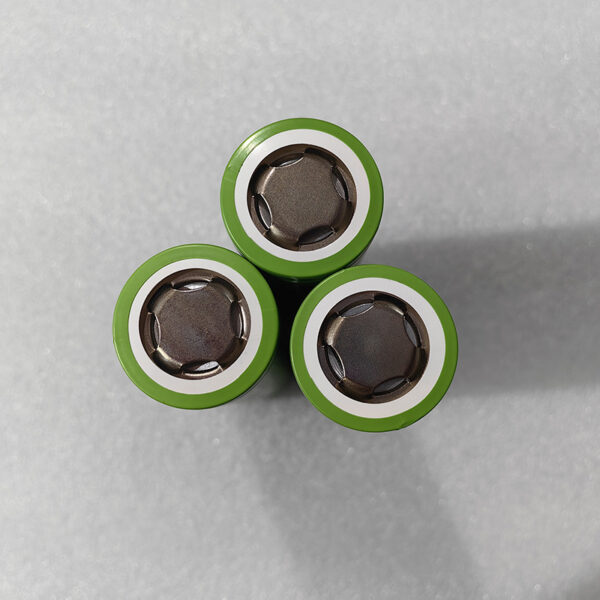
Factory Direct 40150 Li-ion Cells China Export: UN38.3 UL CE Certified for Drone Projects 2026 Buyer’s Guide
Introduction: Navigating Lithium Battery Compliance in 2026
The global drone industry continues its exponential growth trajectory, with lithium-ion battery cells serving as the critical power source for commercial and industrial applications. For engineers and technical procurement specialists sourcing 40150 cylindrical Li-ion cells from China, understanding certification requirements and technical specifications has become more crucial than ever in 2026. This comprehensive buyer’s guide addresses the essential compliance frameworks, performance parameters, and regional adaptation strategies for battery exports to EU, US, and international markets.
Understanding 40150 Cell Specifications and Performance Advantages
The 40150 cylindrical cell format represents a strategic balance between energy density and thermal management capabilities. With dimensions of 40mm diameter and 150mm height, these cells offer approximately 12-15Ah capacity at nominal 3.6V-3.7V configuration, making them ideal for medium-to-high power drone applications requiring extended flight times.
Key Technical Parameters:
- Energy Density: 250-280 Wh/kg typical for NCM chemistry variants
- Cycle Life: 1000-1500 cycles at 80% DOD under standard conditions
- Operating Temperature: -20°C to 60°C discharge, 0°C to 45°C charge
- Maximum Continuous Discharge: 3C-5C depending on specific chemistry configuration
- Internal Resistance: ≤35mΩ for optimized power delivery
For technical procurement teams evaluating Chinese manufacturers, verifying these specifications through independent testing remains essential. Reputable battery manufacturers in China maintain ISO 9001 quality management systems and provide comprehensive technical documentation supporting claimed performance metrics.
Critical Certification Requirements for International Export
UN38.3 Transportation Safety Certification
UN38.3 certification represents the mandatory baseline for all lithium battery international shipments. This United Nations standard encompasses eight rigorous test protocols ensuring battery safety during air, sea, and ground transportation:
- Altitude Simulation (T1): Tests low-pressure conditions equivalent to 15,000 meters
- Thermal Testing (T2): Evaluates performance across -40°C to +75°C temperature extremes
- Vibration Testing (T3): Simulates transportation vibration profiles
- Shock Testing (T4): Assesses impact resistance during handling
- External Short Circuit (T5): Validates protection against external shorting
- Impact/Crush Testing (T6): Measures structural integrity under mechanical stress
- Overcharge Testing (T7): Tests battery management system effectiveness
- Forced Discharge Testing (T8): Evaluates cell behavior under reverse current conditions
Without valid UN38.3 test reports, customs authorities in EU member states, United States, and most international jurisdictions will reject shipments. The 2026 updated regulations require test reports less than two years old, with summary documentation accompanying each shipment.
UL and CE Regional Compliance Frameworks
UL Certification (North American Market):
UL 1642 and UL 2054 standards govern lithium cell and battery pack safety for US and Canadian markets. UL certification demonstrates compliance with Nationally Recognized Testing Laboratory (NRTL) requirements, essential for commercial drone operators seeking insurance coverage and regulatory approval from FAA authorities.
CE Marking (European Economic Area):
CE certification encompasses multiple EU directives including EMC Directive 2014/30/EU, Low Voltage Directive 2014/35/EU, and RoHS Directive 2011/65/EU. For drone applications, additional compliance with Radio Equipment Directive 2014/53/EU may apply depending on integrated communication systems.
Technical buyers should request complete certification portfolios including test reports from accredited laboratories such as SGS, TÜV, or Intertek. Comprehensive documentation at cylindrical battery cell specifications ensures smooth customs clearance and market access.
Testing Methodologies and Quality Verification Protocols
Professional procurement teams should implement multi-stage verification processes:
Stage 1: Documentation Review
- Verify UN38.3 test report validity and testing laboratory accreditation
- Confirm MSDS/SDS documentation matches actual cell chemistry
- Review manufacturing date codes and traceability systems
Stage 2: Sample Testing
- Conduct capacity verification at C/5 discharge rate
- Measure internal resistance consistency across sample batches
- Perform cycle life acceleration testing under controlled conditions
Stage 3: Integration Validation
- Test cells within actual drone battery pack configurations
- Validate BMS communication protocols and protection thresholds
- Assess thermal performance under maximum load conditions
Regional Adaptation and Technical Barriers
Different geographic markets present unique compliance challenges requiring strategic adaptation:
European Union: The EU Battery Regulation 2023/1542 introduces enhanced requirements for battery passport documentation, carbon footprint declarations, and recycled content minimums effective 2026-2027. Manufacturers must prepare digital product passports containing complete lifecycle information.
United States: Beyond UL certification, state-specific regulations like California Proposition 65 require chemical exposure warnings. DOT hazardous materials transportation requirements align with UN38.3 but include additional packaging and labeling specifications.
Asia-Pacific Markets: Japan’s PSE certification, Korea’s KC marking, and India’s BIS registration represent additional compliance layers for regional distribution.
Successful market entry requires manufacturers maintaining flexible production capabilities accommodating diverse regional requirements while maintaining cost competitiveness.
Conclusion: Strategic Sourcing for 2026 and Beyond
The 40150 Li-ion cell segment offers compelling value propositions for drone applications when sourced from compliant, technically capable manufacturers. Priority should focus on suppliers demonstrating consistent certification maintenance, transparent technical documentation, and responsive engineering support capabilities.
For procurement teams initiating supplier qualification processes, comprehensive technical consultation remains invaluable. Direct engagement with manufacturers through established channels at contact page facilitates detailed specification discussions and certification verification procedures.
As global regulatory frameworks continue evolving throughout 2026, maintaining proactive compliance monitoring and establishing long-term partnerships with certified manufacturers represents the optimal strategy for sustainable supply chain development in the commercial drone sector. Technical buyers prioritizing certification completeness, testing transparency, and regional adaptation capabilities will secure competitive advantages in rapidly expanding international markets.


