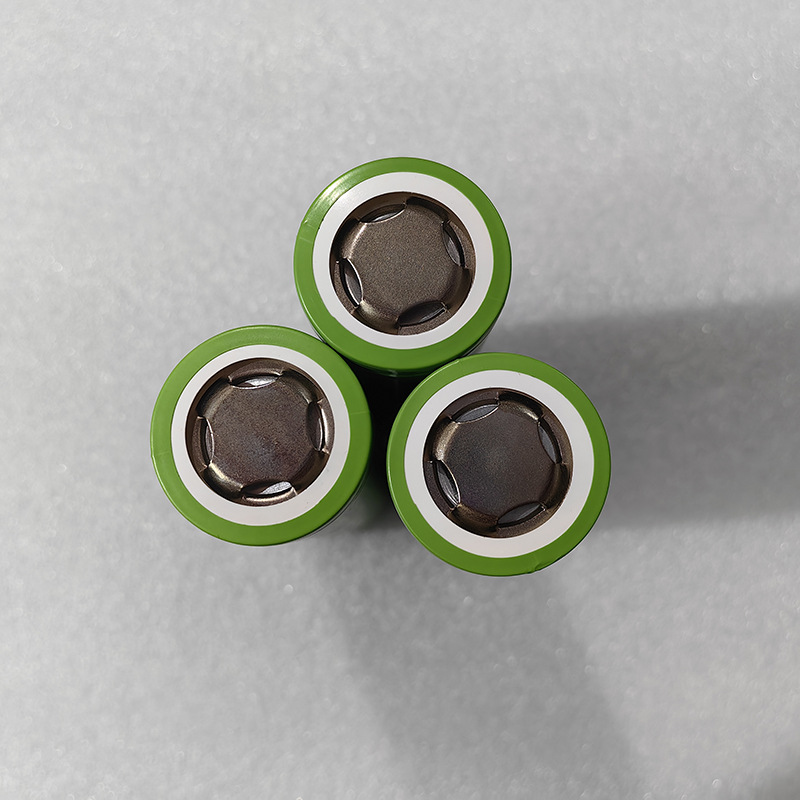
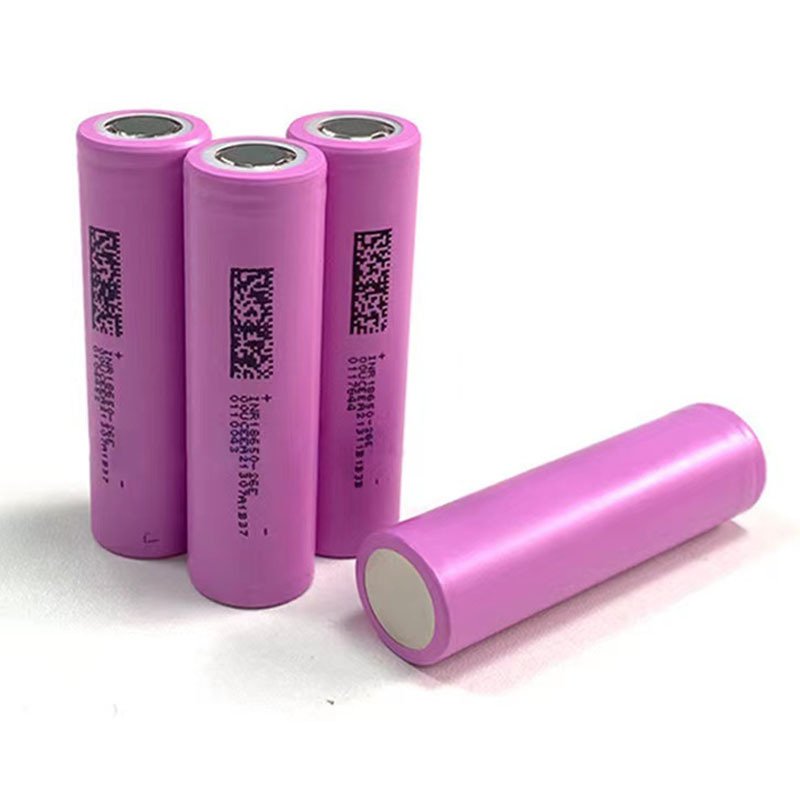
21700 Battery Cell For Solar Storage | CNS BATTERY
Introduction: The Rising Standard in Renewable Energy Storage
The global transition toward sustainable energy solutions has intensified demand for high-performance battery technologies. Among cylindrical lithium-ion cells, the 21700 battery cell has emerged as the preferred choice for solar storage applications. This technical analysis examines why the 21700 format outperforms legacy alternatives in residential and commercial photovoltaic (PV) energy storage systems, providing engineers and technical procurement specialists with actionable insights for system design and component selection.
Technical Advantages of 21700 Cells in Solar Applications
Enhanced Energy Density and Capacity
The 21700 cell measures 21mm in diameter and 70mm in length, representing a significant evolution from the widely adopted 18650 format. This dimensional increase translates to approximately 40-50% higher volumetric energy density, enabling system designers to achieve greater storage capacity within identical footprint constraints. Typical 21700 cells deliver capacities ranging from 4,000mAh to 5,000mAh at nominal 3.6V-3.7V, compared to 2,500mAh-3,500mAh for equivalent 18650 cells.
For solar storage systems, this capacity advantage reduces the total cell count required per kilowatt-hour (kWh) of storage, subsequently lowering assembly complexity, connection points, and potential failure modes within the battery pack architecture.
Optimized Thermal Management Characteristics
Thermal performance represents a critical consideration in solar storage deployments, particularly in regions experiencing elevated ambient temperatures. The 21700 format’s improved surface-area-to-volume ratio facilitates more efficient heat dissipation during charge and discharge cycles. This characteristic proves essential for solar applications where batteries experience cyclic loading patterns aligned with daily solar generation profiles.
Advanced 21700 cells incorporate enhanced electrode coatings and separator technologies that maintain structural integrity across operating temperatures ranging from -20°C to 60°C, ensuring reliable performance across diverse geographical installations.
Extended Cycle Life for Long-Term ROI
Solar storage systems require battery chemistries capable of sustaining thousands of charge-discharge cycles over 10-15 year operational lifespans. Premium 21700 cells utilizing Nickel-Manganese-Cobalt (NMC) or Lithium Iron Phosphate (LFP) chemistries deliver cycle life exceeding 2,000-5,000 cycles at 80% depth of discharge (DoD), depending on specific chemistry selection and operating conditions.
For technical procurement specialists evaluating total cost of ownership (TCO), the extended cycle life of quality 21700 cells directly correlates with reduced replacement frequency and enhanced project economics over the system lifecycle.
System Integration Considerations
Battery Management System (BMS) Compatibility
Effective integration of 21700 cells into solar storage systems necessitates sophisticated BMS architecture capable of monitoring individual cell voltage, temperature, and state of charge (SoC). Modern BMS implementations for 21700-based packs incorporate passive or active cell balancing to maintain pack uniformity, preventing premature degradation from cell-to-cell variance.
Engineers should verify BMS compatibility with the specific 21700 cell chemistry selected, as charging voltage thresholds and protection parameters vary between NMC, LFP, and other cathode formulations.
Scalability and Modular Design
The standardized 21700 form factor enables modular pack design, facilitating system scalability from residential 5kWh installations to commercial 100kWh+ deployments. This modularity simplifies inventory management for system integrators and enables phased capacity expansion as energy storage requirements evolve.
For detailed specifications on cylindrical battery cell options suitable for solar storage integration, visit our Cylindrical Battery Cell product range.
Quality Assurance and Manufacturing Standards
Selecting 21700 cells from certified manufacturers ensures compliance with international safety and performance standards including UL 1642, IEC 62133, and UN 38.3 transportation requirements. Reputable manufacturers implement rigorous quality control protocols throughout production, including electrode coating uniformity verification, weld integrity testing, and final capacity grading.
When evaluating potential suppliers for solar storage projects, technical procurement teams should request comprehensive documentation including test reports, certification records, and traceability data for batch-level quality assurance. CNS BATTERY maintains manufacturing facilities adhering to ISO 9001 quality management standards, providing customers with confidence in product consistency and reliability. Learn more about our manufacturing capabilities at Battery Manufacturers in China.
Conclusion: Strategic Selection for Solar Storage Projects
The 21700 battery cell represents an optimal balance of energy density, thermal performance, and cycle life for contemporary solar storage applications. As the renewable energy sector continues its expansion, system designers and procurement specialists must prioritize component quality and technical compatibility to ensure long-term project success.
For technical consultations, custom configuration requests, or partnership inquiries regarding 21700 cells for solar storage deployments, our engineering team stands ready to support your project requirements. Contact us directly at CNS BATTERY Contact to discuss your specific application needs and receive tailored technical documentation.
Technical specifications and performance data referenced in this article represent typical values for premium-grade 21700 lithium-ion cells. Actual performance may vary based on operating conditions, discharge rates, and environmental factors. Engineers should conduct application-specific validation testing prior to system deployment.