

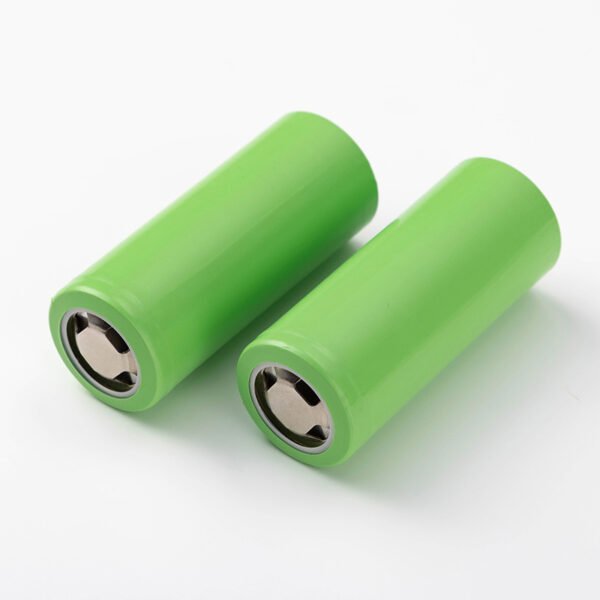
2026 LFP Cylindrical Battery Supplier: Fix High Discharge Rate in UAV Using 60110 Cells Ideal for Manufacturers
The unmanned aerial vehicle (UAV) industry continues to experience unprecedented growth in 2026, with commercial drone applications expanding across agriculture, logistics, surveillance, and infrastructure inspection. However, one persistent technical challenge remains: achieving optimal high discharge rate performance while maintaining battery safety and cycle life. For manufacturers seeking reliable power solutions, LFP cylindrical battery cells, particularly the 60110 form factor, have emerged as a game-changing technology. This article provides a comprehensive technical analysis for engineers and procurement specialists evaluating battery suppliers for UAV applications.
Understanding the High Discharge Rate Challenge in UAV Applications
UAV operations demand batteries capable of delivering sustained high current during takeoff, maneuvering, and payload operations. Traditional lithium-ion chemistries often struggle with thermal management under continuous high-rate discharge conditions. The 60110 cylindrical cell addresses these limitations through its optimized geometry and LFP (Lithium Iron Phosphate) chemistry combination.
From an electrochemical perspective, LFP chemistry offers several inherent advantages for high-discharge applications:
- Thermal Stability: The olivine crystal structure of LiFePO₄ provides superior thermal runaway resistance compared to NCM or NCA chemistries
- Cycle Life: LFP cells typically achieve 3,000-5,000 full cycles at 80% depth of discharge
- Safety Profile: Reduced risk of thermal propagation in battery pack configurations
Technical Specifications of 60110 LFP Cylindrical Cells
The 60110 form factor (60mm diameter, 110mm height) represents an evolution in cylindrical cell design, offering enhanced surface-area-to-volume ratios for improved heat dissipation. Key technical parameters include:
| Parameter | Specification |
|---|---|
| Nominal Capacity | 15-25 Ah (configuration dependent) |
| Continuous Discharge Rate | 3C-5C typical, up to 10C peak |
| Operating Temperature | -20°C to 60°C |
| Cycle Life | 3,000+ cycles @ 1C |
| Energy Density | 160-180 Wh/kg |
The larger form factor compared to traditional 18650 or 21700 cells reduces interconnect complexity in battery packs while maintaining structural integrity under high mechanical stress conditions common in UAV operations.
Critical Considerations for UAV Battery Pack Integration
1. Thermal Management Architecture
High discharge rates generate significant heat. The cylindrical geometry of 60110 cells facilitates efficient thermal pathways when properly integrated. Manufacturers should implement:
- Phase change materials (PCM) between cell arrays
- Active cooling systems for continuous high-power operations
- Thermal runaway propagation barriers
2. Battery Management System (BMS) Requirements
A sophisticated BMS is essential for maximizing 60110 cell performance:
- Individual cell voltage monitoring (±5mV accuracy)
- Temperature sensing at multiple pack locations
- Balanced charging algorithms optimized for LFP chemistry
- Real-time state-of-health (SOH) estimation
3. Mechanical Design Considerations
UAV applications subject batteries to vibration, shock, and variable orientation. The 60110 cylindrical format provides:
- Uniform stress distribution under compression
- Reduced swelling compared to pouch cells
- Compatible with standard module housing designs
Supply Chain and Manufacturing Partnerships
Selecting the right battery supplier extends beyond product specifications. Manufacturers must evaluate:
Production Capacity: Ensure suppliers can meet volume requirements with consistent quality control. China has emerged as the dominant LFP battery manufacturing hub, with established supply chains for raw materials and component sourcing.
Certification Compliance: UAV batteries require UN38.3, IEC 62619, and region-specific certifications. Verify supplier testing capabilities and documentation support.
Technical Support: Leading suppliers provide application engineering support for pack design, thermal simulation, and BMS integration.
For manufacturers evaluating potential partners, comprehensive supplier directories provide verified manufacturer listings with capability assessments. Explore established battery manufacturers in China for detailed capability matrices and production capacity verification.
Cost-Performance Optimization Strategies
The 2026 battery market has seen lithium carbonate prices stabilize, making LFP chemistry increasingly cost-competitive. For UAV manufacturers, total cost of ownership considerations include:
- Initial Cell Cost: LFP 60110 cells offer 15-20% cost advantage over equivalent NCM configurations
- Replacement Frequency: Extended cycle life reduces lifetime battery pack costs
- Safety Insurance: Lower thermal runaway risk may reduce insurance premiums for commercial UAV operations
Quality Verification and Testing Protocols
Before committing to a supplier, manufacturers should request:
- Third-party test reports from accredited laboratories
- Sample cells for in-house validation testing
- Production audit reports (ISO 9001, IATF 16949)
- Traceability documentation for raw material sourcing
Comprehensive product specifications and technical datasheets should be available through supplier product portals. Review detailed cylindrical battery cell specifications to compare performance parameters across different manufacturer offerings.
Future-Proofing Your UAV Battery Strategy
The UAV industry continues evolving toward longer flight times, heavier payloads, and autonomous operations. LFP 60110 cells provide a scalable platform that accommodates:
- Modular pack designs for varying mission profiles
- Compatibility with emerging fast-charging infrastructure
- Integration with hybrid power systems for extended range
Conclusion: Partnering for Success
The transition to LFP 60110 cylindrical cells represents a strategic opportunity for UAV manufacturers to enhance performance while reducing total cost of ownership. Success depends on selecting suppliers with proven manufacturing capabilities, technical support infrastructure, and commitment to quality consistency.
For manufacturers ready to evaluate LFP cylindrical battery solutions for UAV applications, direct engagement with qualified suppliers accelerates the development cycle. Contact established battery solution providers to discuss your specific requirements and receive customized technical proposals. Begin your supplier evaluation process through the official contact channel for comprehensive technical consultation and sample procurement.
The 2026 UAV battery market rewards manufacturers who make informed technology choices. LFP 60110 cylindrical cells deliver the performance, safety, and cost characteristics necessary for next-generation commercial drone operations. Partner with experienced suppliers who understand your application requirements and can provide the technical support necessary for successful integration.
This technical analysis is intended for engineering and procurement professionals evaluating battery solutions for commercial UAV applications. All specifications should be verified with individual manufacturers based on specific application requirements.


