

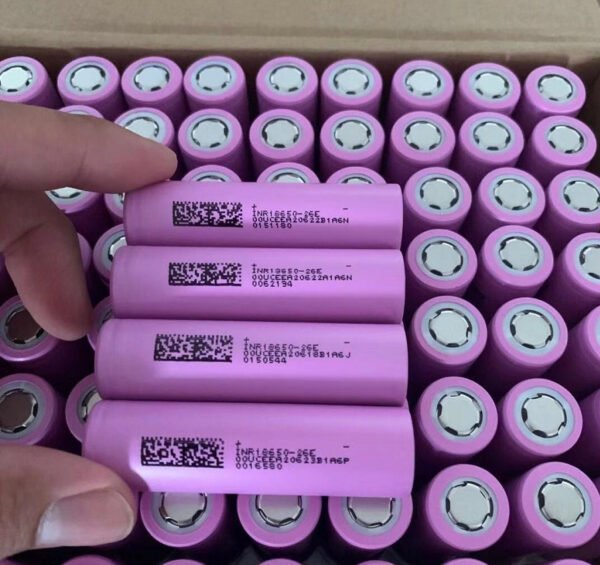
Navigating Industrial AGV Power: The Reality of 32150 LiFePO4 Cells in Global Supply Chains
For procurement managers and engineering teams sourcing power solutions for Automated Guided Vehicles (AGVs), the balance between cost efficiency and operational reliability is critical. As the industrial automation sector expands into 2026, the demand for robust cylindrical cells has surged. A common specification encountering buyers is the 32150 LiFePO4 cell. While factory-direct exports from China offer compelling pricing and high-quality construction, there is a fundamental technical constraint that must be addressed upfront: standard chemistry limitations regarding low-temperature performance.
Understanding the 32150 Specification and Cost Advantages
The 32150 cylindrical cell format has become a staple in industrial mobility due to its mechanical robustness and ease of pack assembly. Sourcing directly from established battery manufacturers in China allows overseas buyers to access competitive pricing without sacrificing build quality. The “Low Price High Quality” proposition is achievable through scaled production and mature supply chains, particularly for Lithium Iron Phosphate (LiFePO4) chemistry, which remains safer and more cycle-stable than alternatives.
However, “Factory Direct” does not mean “One Size Fits All.” The core advantage of LiFePO4 lies in its thermal stability and long cycle life, often exceeding 3,000 cycles at 80% Depth of Discharge (DoD). For AGVs operating in controlled warehouse environments (15°C to 35°C), these cells are optimal. You can explore specific cylindrical configurations suitable for these standard conditions at https://cnsbattery.com/products-3/cylindrical-battery-cell/.
The Low-Temperature Performance Constraint
The title of this analysis highlights a crucial operational boundary: “No Low Temperature Performance.” This is not a defect, but a chemical characteristic of standard LiFePO4 electrolytes. Below 0°C, the ionic conductivity of the electrolyte decreases significantly, leading to increased internal resistance. Attempting to charge standard LiFePO4 cells below freezing can cause lithium plating on the anode, permanently damaging the cell and creating safety hazards. Discharging in extreme cold results in significant voltage sag and reduced capacity.
For industrial AGV projects, this distinction is vital. If your logistics operation involves cold storage facilities (freezers) or outdoor deployment in northern climates during winter, standard 32150 cells are insufficient without thermal management systems.
Technical Mitigation Strategies
To deploy these cost-effective cells in variable environments, engineering teams must integrate active or passive thermal management:
- Self-Heating BMS: Incorporate Battery Management Systems that trigger internal heating pads before charging initiates when temperatures drop below 5°C.
- Insulation: Physical packaging of the battery pack should minimize thermal loss.
- Operational Protocols: AGVs should be docked in temperature-controlled zones during idle periods to maintain cell warmth.
Case Study: Warehouse Automation Deployment
Consider a recent deployment in a European distribution center. The project utilized factory-direct 32150 cells to power a fleet of 50 AGVs. The initial procurement focused on the “Low Price” aspect, securing a significant budget reduction compared to NCM alternatives. However, the facility had an unheated loading dock where temperatures occasionally hit -5°C.
Challenge: Initial testing showed a 40% drop in runtime during winter mornings.
Solution: The engineering team retrofitted the battery packs with heating films controlled by the BMS. While this added a marginal cost to the pack assembly, it preserved the core savings from the cell procurement. The high-quality 32150 cells maintained their cycle life because lithium plating was prevented during the cold start phase.
This case underscores that “High Quality” includes knowing the limits of the chemistry and designing around them.
Procurement Points for Overseas B2B Buyers
When sourcing 32150 LiFePO4 cells for AGV projects, adhere to the following checklist to ensure compliance and performance:
- Verify Grade A Status: Ensure cells are Grade A with consistent internal resistance (AC IR) matching. Mismatched cells in a series pack exacerbate temperature issues.
- Request UN38.3 Documentation: For export compliance, all lithium batteries must pass UN38.3 testing. Verify the MSDS and transport classification with your supplier.
- Clarify Temperature Ratings: Explicitly ask for the discharge and charge temperature ranges in the datasheet. Do not assume low-temperature capability unless specified as “Low Temp LiFePO4.”
- Audit the Manufacturer: Working with verified battery manufacturers in China reduces the risk of recycled or B-grade cells entering your supply chain. You can verify supplier credentials here: https://cnsbattery.com/battery-manufacturers-in-china/.
Conclusion
The 32150 LiFePO4 cell represents a high-value proposition for industrial AGV projects where cost control and safety are paramount. However, the limitation regarding low-temperature performance is a non-negotiable technical fact that must be managed through system design rather than ignored. By acknowledging this constraint and partnering with reliable factory-direct suppliers, B2B buyers can secure high-quality power solutions that drive operational efficiency.
For detailed technical specifications, customization options, or to discuss your specific AGV power requirements with our engineering team, please reach out via our contact page: https://cnsbattery.com/contact-2/. Ensuring the right fit between cell chemistry and application environment is the key to long-term project success.

