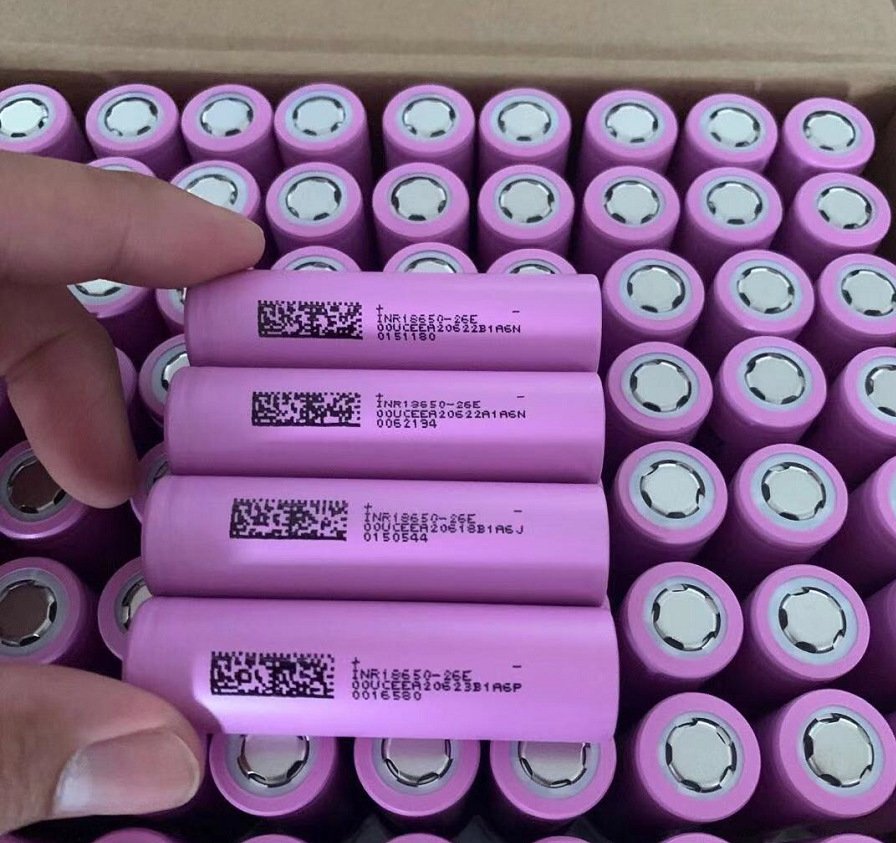
B2B 18650 LFP Cylindrical Battery Supplier China – Solve Long Cycle Life Today Low Price High Quality
For engineering teams and technical procurement specialists sourcing lithium battery solutions, the 18650 LFP (Lithium Iron Phosphate) cylindrical cell represents a critical balance between performance, safety, and cost-effectiveness. As China continues to dominate global battery manufacturing, identifying a reliable B2B supplier who delivers long cycle life, competitive pricing, and verified quality has become essential for projects spanning energy storage, industrial equipment, and electric mobility applications.
Understanding 18650 LFP Technical Advantages
The 18650 designation refers to cylindrical cells measuring 18mm in diameter and 65mm in length—a standardized format established by Sony that has become industry-wide. When configured with LFP chemistry (LiFePO₄), these cells offer distinct advantages over traditional NMC or LCO alternatives:
Extended Cycle Life: LFP chemistry typically achieves 2,000-5,000 full charge-discharge cycles at 80% depth of discharge (DOD), significantly outperforming cobalt-based chemistries. This translates to 5-10 years of operational life in stationary storage applications, reducing total cost of ownership for B2B buyers.
Thermal Stability: The olivine crystal structure of LiFePO₄ provides superior thermal runaway resistance, with decomposition temperatures exceeding 270°C compared to 150°C for NMC cells. This inherent safety characteristic is crucial for applications requiring UL or IEC certification.
Consistent Voltage Profile: LFP cells maintain a flat discharge curve around 3.2V nominal voltage, enabling predictable power delivery throughout the discharge cycle—critical for precision industrial equipment and medical devices.
Key Parameters for Technical Evaluation
When evaluating 18650 LFP suppliers, engineering teams should verify the following specifications:
| Parameter | Typical LFP Value | Testing Standard |
|---|---|---|
| Nominal Capacity | 1,200-1,800 mAh | IEC 61960 |
| Nominal Voltage | 3.2V | – |
| Charge Cut-off | 3.65V | – |
| Discharge Cut-off | 2.5V | – |
| Internal Resistance | ≤35 mΩ | AC 1kHz |
| Cycle Life @1C | 2,000+ cycles | 80% EOL |
| Operating Temperature | -20°C to +60°C | – |
Quality verification requires third-party testing following IEC 62619 (industrial applications) or UL 1642 (cell safety). Reputable manufacturers provide complete test reports including overcharge, short-circuit, crush, and thermal abuse validation.
China Manufacturing Quality Assurance
China’s battery manufacturing ecosystem has matured significantly, with automated production lines achieving Cpk values exceeding 1.67 for critical dimensions. Leading suppliers implement:
- Automated Electrode Coating: Precision coating within ±2μm tolerance ensures consistent capacity across production batches
- Dry Room Manufacturing: Dew point control below -50°C prevents moisture contamination affecting cycle life
- Aging & Sorting: 7-14 day aging processes identify early-failure cells before shipment
- Traceability Systems: QR code tracking from raw material to finished cell enables full quality accountability
For detailed product specifications and technical documentation, visit Cylindrical Battery Cell Products.
Regional Compliance & Market Adaptation
Successful B2B battery procurement requires alignment with destination market regulations. Chinese manufacturers serving global markets must demonstrate compliance with:
European Union Requirements:
- CE marking under Battery Directive 2006/66/EC
- REACH chemical substance registration
- RoHS compliance for restricted materials
- IEC 62619 safety certification for industrial batteries
United States Standards:
- UL 1642 cell safety certification
- UL 2054 battery pack standards
- DOT 38.3 transportation requirements
- California Title 20 efficiency standards
Additional Markets:
- UN 38.3 for international shipping
- KC certification for South Korea
- PSE marking for Japan
Manufacturers with established export experience maintain dedicated compliance teams to manage certification renewals and regulatory updates. This infrastructure reduces time-to-market for international buyers and minimizes customs clearance risks.
Cost-Performance Optimization
The “low price, high quality” proposition requires careful evaluation beyond unit cost. Total landed cost analysis should include:
- Yield Rate Verification: Higher manufacturing yield reduces hidden costs from defective cells
- Warranty Terms: 12-24 month warranties indicate manufacturer confidence
- MOQ Flexibility: Scalable order quantities support prototype-to-production transitions
- Logistics Optimization: FOB/CIF terms affecting final delivered cost
Established Chinese suppliers leverage vertical integration—from cathode material sourcing to cell assembly—to maintain competitive pricing without compromising quality controls.
Partner Selection Criteria
For engineering teams evaluating long-term battery supply partnerships, consider:
- Manufacturing capacity and lead time consistency
- Technical support responsiveness for application engineering
- Quality management system certification (ISO 9001, IATF 16949)
- Financial stability for multi-year supply agreements
- Geographic proximity to shipping ports for logistics efficiency
To explore manufacturer qualifications and facility capabilities, review Battery Manufacturers in China.
Conclusion
The 18650 LFP cylindrical battery represents a mature, cost-effective solution for applications prioritizing safety, cycle life, and predictable performance. China’s manufacturing ecosystem offers competitive advantages in scale, automation, and supply chain integration—provided buyers implement rigorous supplier qualification processes.
For technical consultation and customized battery solutions, contact our engineering team at Contact Page. Our compliance documentation and test reports support seamless integration into EU, US, and global market applications, ensuring your projects meet both performance requirements and regulatory obligations from prototype through mass production.