

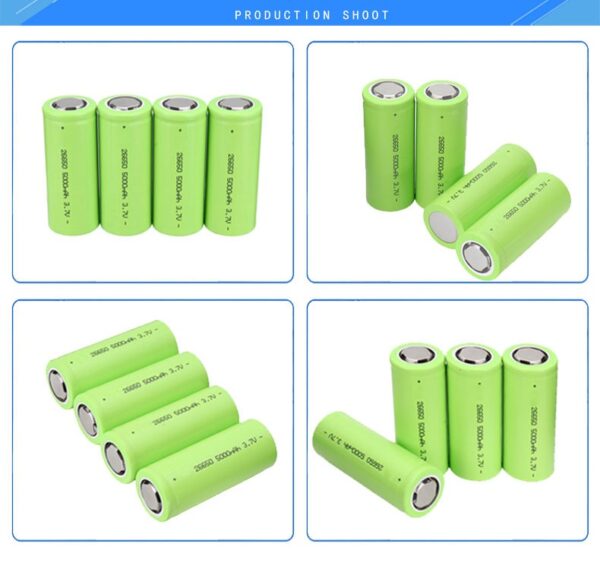
18650 LFP Cylindrical Battery for Power Tools – Sample Test Report Ultimate Guide
For B2B buyers, procurement managers, and power tool manufacturers sourcing lithium battery solutions globally, understanding the sample test report for 18650 LFP cylindrical batteries is critical to ensuring product safety, compliance, and performance reliability. As a professional lithium battery manufacturer with extensive experience in the industry, we provide this comprehensive guide to help you navigate the essential testing standards, technical parameters, and certification requirements when evaluating 18650 LiFePO4 cells for power tool applications.
Why 18650 LFP Batteries Matter for Power Tools
The 18650 LFP (Lithium Iron Phosphate) cylindrical battery has become a preferred choice for cordless power tools due to its superior thermal stability, extended cycle life, and enhanced safety profile compared to traditional NCM or NCA chemistries. With a nominal voltage of 3.2V and typical capacity ranging from 1500mAh to 2000mAh, these cells deliver consistent power output while maintaining structural integrity under high-drain conditions.
For buyers in North America, Europe, and Southeast Asia, selecting the right battery supplier from China requires thorough verification of test documentation. This ensures compliance with international transportation and safety standards before mass production orders are placed.
Core Test Report Components Every Buyer Should Verify
1. UN38.3 Transportation Safety Certification
The UN38.3 test report is mandatory for all lithium battery shipments via air or sea freight. This certification evaluates battery performance under eight rigorous conditions including altitude simulation, thermal cycling, vibration, shock, external short circuit, impact, overcharge, and forced discharge. A valid UN38.3 Test Summary confirms the battery can withstand transportation hazards without fire, explosion, or electrolyte leakage.
Reputable manufacturers provide UN38.3 documentation through ILAC-accredited laboratories. Always request the Test Summary before finalizing supplier agreements. For more information on certified battery manufacturers in China, visit https://cnsbattery.com/battery-manufacturers-in-china/.
2. IEC 62133 Safety Standard Compliance
The IEC 62133 standard specifies safety requirements for portable sealed secondary cells used in power tools and portable applications. Key test items include:
- External Short Circuit Test: Battery must not ignite or explode when terminals are shorted
- Free Fall Test: Cells dropped from 1 meter height must remain intact
- Overcharge Test: Battery subjected to 2C charging for 24 hours without thermal runaway
- Crush Test: 13kN pressure applied to verify no electrolyte leakage
Compliance with IEC 62133-2 (lithium battery specific) is essential for market access in EU, UK, and other regions requiring CE marking.
3. Performance Parameter Verification
A comprehensive sample test report should include detailed electrochemical performance data:
| Parameter | Typical Specification | Test Condition |
|---|---|---|
| Nominal Capacity | 1600-2000mAh | 0.5C discharge @ 25°C |
| Internal Resistance | ≤35mΩ | AC 1kHz measurement |
| Cycle Life | ≥2000 cycles | 1C charge/discharge @ 25°C |
| Operating Temperature | -20°C to 60°C | Capacity retention ≥70% @ -20°C |
| Max Continuous Discharge | 10C-15C | Power tool application |
These parameters directly impact power tool runtime, torque consistency, and overall user experience. Buyers should request third-party lab verification for critical specifications.
4. Thermal and Safety Testing
LFP chemistry offers inherent safety advantages, but thermal testing remains essential:
- Thermal Abuse Test: Cells heated to 130°C for 30 minutes without fire or explosion
- Nail Penetration Test: Steel nail inserted through cell without thermal runaway
- Temperature Rise Test: Surface temperature monitored during high-rate discharge
For power tools operating in demanding environments, these tests confirm battery reliability under extreme conditions.
Geographic Considerations for B2B Sourcing
When sourcing 18650 LFP batteries from China, regional compliance requirements vary:
- North America: UL 2054 battery pack standard, UN38.3 for transportation
- European Union: IEC 62133, CE marking, RoHS compliance
- Southeast Asia: Local certification plus UN38.3 for import clearance
- Australia/New Zealand: AS/NZS 3820 electrical safety standards
Working with established manufacturers who understand these regional requirements streamlines the certification process and reduces time-to-market. Explore our cylindrical battery cell offerings at https://cnsbattery.com/products-3/cylindrical-battery-cell/ for compliant solutions.
Sample Evaluation Process Best Practices
- Request Complete Documentation: UN38.3 Test Summary, IEC 62133 report, MSDS/SDS
- Verify Lab Accreditation: Ensure testing conducted by ILAC or CNAS certified facilities
- Conduct Independent Testing: Send samples to local third-party labs for verification
- Evaluate Production Consistency: Request batch-to-batch test data from manufacturer
- Review Warranty Terms: Understand defect coverage and replacement policies
Conclusion
A thorough understanding of 18650 LFP cylindrical battery test reports empowers B2B buyers to make informed sourcing decisions. By verifying UN38.3 certification, IEC 62133 compliance, and performance parameters, power tool manufacturers can ensure product safety, regulatory compliance, and customer satisfaction.
For detailed technical specifications, sample requests, or partnership inquiries, contact our professional team at https://cnsbattery.com/contact-2/. As a trusted lithium battery manufacturer serving global markets, we commit to delivering tested, certified, and reliable 18650 LFP solutions for your power tool applications.
This guide reflects industry standards as of 2026. Always verify current certification requirements with your regional regulatory authorities before placing orders.


