

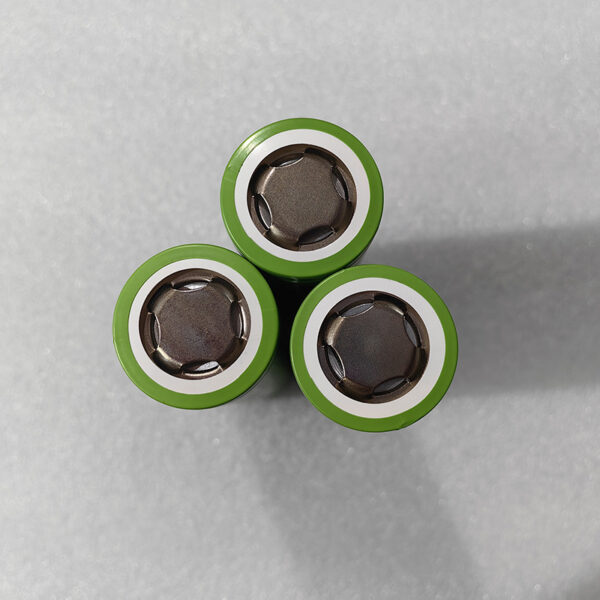
Nail Penetration Passed Battery Cell | CNS BATTERY
In the lithium battery industry, safety validation stands as the cornerstone of product reliability. Among various abuse tests, the nail penetration test represents one of the most stringent mechanical safety assessments for battery cells. At CNS BATTERY, our cylindrical battery cells have successfully passed this critical evaluation, demonstrating exceptional thermal stability and structural integrity under extreme conditions.
Understanding the Nail Penetration Test
The nail penetration test simulates an internal short-circuit scenario by driving a steel nail through a fully charged battery cell at a controlled speed of 25±5 mm/s. This mechanical abuse triggers immediate internal short-circuiting between the anode and cathode, potentially leading to thermal runaway. According to IEC 62133 and UN38.3 standards, a passing cell must not exhibit fire, explosion, or hazardous venting during and after the test.
From a technical perspective, the test evaluates several critical parameters:
1. Thermal Runaway Prevention
When the nail penetrates the cell, the internal resistance drops dramatically, generating localized heat exceeding 200°C within milliseconds. Our cells incorporate advanced separator technology with ceramic coating that maintains structural integrity at temperatures up to 220°C, preventing catastrophic failure propagation.
2. Electrolyte Stability
High-quality electrolyte formulations with flame-retardant additives significantly reduce combustion risk. Our manufacturing process ensures electrolyte saturation remains within optimal ranges (typically 2.5-3.5 g/Ah for cylindrical cells), balancing ionic conductivity with safety margins.
3. Cell Architecture Design
The cylindrical form factor inherently provides superior mechanical strength compared to pouch cells. Our 18650 and 21700 cells feature reinforced steel casings capable of withstanding internal pressure buildup exceeding 2.5 MPa before venting occurs through designed pressure relief mechanisms.
Technical Specifications and Compliance
Our nail penetration passed battery cells meet or exceed international safety standards:
- IEC 62133-2: Secondary cells and batteries containing alkaline or other non-acid electrolytes
- UN38.3: Transportation safety requirements for lithium batteries
- UL 1642: Standard for lithium batteries
Testing protocols require cells to be charged to 100% SOC (State of Charge) before penetration, representing worst-case energy conditions. Temperature monitoring via thermocouples confirms surface temperatures remain below 150°C during the 30-minute observation period post-penetration.
Manufacturing Quality Control
Achieving consistent nail penetration performance demands rigorous quality control throughout production. Our facility implements:
- Automated electrode coating with thickness tolerance within ±2μm
- Dry room environments maintaining dew point below -50°C to prevent moisture contamination
- 100% cell testing including OCV (Open Circuit Voltage), ACIR (AC Internal Resistance), and capacity grading
These measures ensure batch-to-batch consistency, critical for B2B customers requiring reliable supply chains for EV, energy storage, and industrial applications.
Why This Matters for Your Applications
For engineers and technical procurement specialists, selecting nail penetration passed cells reduces system-level safety risks and simplifies certification processes. Applications benefiting from this validation include:
- Electric Vehicles: Enhanced passenger safety during collision scenarios
- Energy Storage Systems: Reduced fire propagation risk in stationary installations
- Power Tools: Improved user protection under mechanical abuse conditions
- Medical Devices: Critical reliability for life-supporting equipment
Partnering with established battery manufacturers in China ensures access to cells meeting global safety expectations while maintaining cost competitiveness.
Conclusion
The nail penetration test remains a definitive benchmark for lithium battery safety. CNS BATTERY’s cylindrical battery cells demonstrate proven performance under this demanding evaluation, offering peace of mind for safety-critical applications. Our commitment to continuous improvement in cell chemistry, manufacturing processes, and quality assurance positions us as a reliable partner for global battery procurement needs.
For technical specifications, customization options, or partnership inquiries, please visit our cylindrical battery cell product page or contact us directly. Our engineering team stands ready to support your project requirements with data-driven solutions and comprehensive safety documentation.


