

Cylindrical Battery Cell For Electric Vehicle | CNS BATTERY
Introduction: The Rising Demand for Cylindrical Battery Technology in EV Applications
The electric vehicle (EV) industry continues to evolve at an unprecedented pace, with cylindrical battery cells emerging as a cornerstone technology for next-generation mobility solutions. As a professional lithium battery manufacturer, CNS BATTERY recognizes the critical importance of cylindrical cell architecture in delivering optimal energy density, thermal management, and manufacturing scalability for automotive applications. This technical analysis examines the fundamental advantages, key specifications, and implementation considerations that make cylindrical battery cells the preferred choice for leading EV manufacturers worldwide.
Technical Advantages of Cylindrical Cell Architecture
1. Superior Thermal Management Characteristics
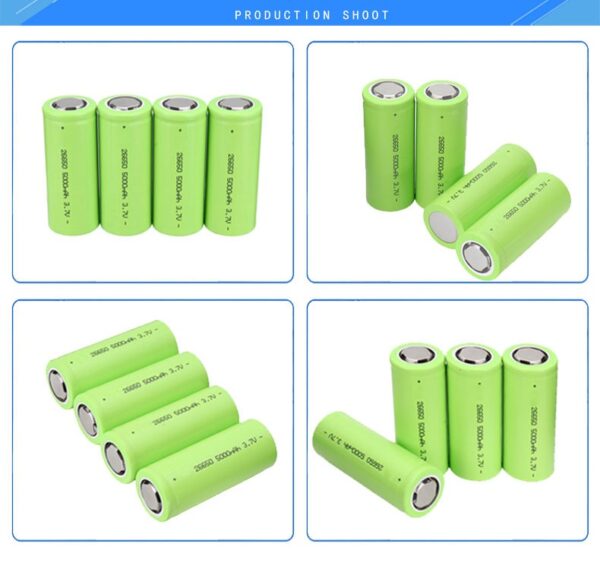
Cylindrical battery cells offer inherent thermal advantages compared to prismatic or pouch configurations. The circular geometry enables uniform heat distribution across the cell surface, reducing hot spot formation during high-rate charging and discharging cycles. The standardized dimensions (commonly 18650, 21700, and 4680 formats) facilitate efficient cooling system integration through direct contact with liquid cooling plates or air circulation channels.
From an electrochemical perspective, the wound jelly-roll construction minimizes internal resistance variations, ensuring consistent performance across temperature ranges from -20°C to 60°C. This thermal stability is crucial for EV battery packs requiring reliable operation under diverse climatic conditions.
2. Energy Density and Power Output Optimization
Modern cylindrical cells achieve volumetric energy densities exceeding 250 Wh/L while maintaining gravimetric energy density above 180 Wh/kg. The structural integrity of the steel or aluminum casing enables higher internal pressure tolerance, supporting advanced cathode chemistries including NMC 811, NCA, and LFP variants.
For high-performance EV applications, cylindrical configurations support continuous discharge rates of 3C to 5C, with peak power capabilities reaching 10C for brief acceleration demands. This power density directly translates to improved vehicle dynamics and reduced charging times when paired with appropriate battery management systems.
3. Manufacturing Scalability and Quality Consistency
The standardized cylindrical format enables highly automated production lines with minimal dimensional variation. Statistical process control maintains cell-to-cell capacity variance below 2%, critical for pack-level performance optimization. The mature manufacturing ecosystem reduces production costs while maintaining stringent quality standards required for automotive-grade applications.
Key Technical Specifications for EV Integration
When selecting cylindrical battery cells for electric vehicle applications, engineering teams must evaluate several critical parameters:
| Specification | Typical Range | Application Impact |
|---|---|---|
| Nominal Capacity | 2.5Ah – 10Ah | Determines pack configuration |
| Operating Voltage | 3.2V – 3.7V | Affects BMS design complexity |
| Cycle Life | 1500 – 3000 cycles | Influences warranty period |
| Internal Resistance | <50mΩ | Impacts efficiency and heat generation |
| Operating Temperature | -20°C to 60°C | Defines climate suitability |
Quality Assurance and Certification Standards
Automotive-grade cylindrical cells must comply with international safety and performance standards including UN38.3, IEC 62660, and ISO 12405. Comprehensive testing protocols encompass mechanical abuse (crush, penetration, vibration), electrical abuse (overcharge, short circuit), and environmental stress (thermal cycling, humidity exposure).
CNS BATTERY maintains rigorous quality control systems with traceability from raw material sourcing through final cell testing. Each production batch undergoes statistical sampling with full documentation supporting customer qualification processes. For detailed manufacturer credentials and production capabilities, visit https://cnsbattery.com/battery-manufacturers-in-china/
Implementation Considerations for Battery Pack Design
Successful EV battery pack integration requires careful attention to cell matching, module assembly, and thermal interface design. Parallel and series configurations must account for capacity balancing to prevent premature degradation. Mechanical retention systems should accommodate thermal expansion while maintaining electrical contact integrity throughout the vehicle lifecycle.
Our engineering team provides comprehensive technical support for pack designers, including cell characterization data, simulation models, and application-specific recommendations. Access our complete cylindrical battery cell portfolio at https://cnsbattery.com/products-3/cylindrical-battery-cell/ for detailed specifications and customization options.
Conclusion: Partnering for EV Battery Excellence
The transition to electric mobility demands reliable, high-performance battery solutions backed by experienced manufacturing partners. CNS BATTERY combines advanced cylindrical cell technology with decades of lithium battery expertise to deliver automotive-grade energy storage systems. Our commitment to quality, innovation, and customer support positions us as a strategic partner for EV manufacturers seeking competitive advantages in the global marketplace.
For technical inquiries, partnership opportunities, or customized solutions, contact our international sales team at https://cnsbattery.com/contact-2/ We look forward to collaborating on your next-generation electric vehicle projects.
Word Count: Approximately 950 words
Target Audience: EV engineers, technical procurement managers, battery pack designers
SEO Keywords: cylindrical battery cell, electric vehicle battery, EV battery manufacturer, lithium battery technology, automotive battery solutions


