18650 LFP Cylindrical Battery for Power Tools – High Reliability Guaranteed
The power tool industry demands batteries that deliver consistent performance, exceptional safety, and long-term reliability. Among various lithium-ion chemistries, the 18650 LFP (Lithium Iron Phosphate) cylindrical battery has emerged as the preferred choice for professional-grade power tools. This article explores why 18650 LFP cylindrical cells guarantee high reliability for demanding applications and what manufacturers should consider when sourcing these critical components.
Why LFP Chemistry Matters for Power Tools
Lithium Iron Phosphate (LiFePO₄) chemistry offers distinct advantages over traditional NMC or NCA batteries in power tool applications. The olivine crystal structure of LFP provides superior thermal stability, significantly reducing thermal runaway risks during high-discharge operations. Power tools frequently experience rapid current draws and intermittent heavy loads—conditions where LFP cells maintain structural integrity better than other chemistries.
The inherent safety profile of LFP batteries makes them ideal for professional environments where equipment failure can result in costly downtime or safety incidents. With operating temperature ranges typically spanning -20°C to 60°C, these batteries perform reliably across diverse job site conditions globally.
Technical Advantages of 18650 Form Factor
The 18650 cylindrical format (18mm diameter, 65mm length) remains industry-standard for several engineering reasons. First, the cylindrical geometry distributes internal pressure evenly during charge-discharge cycles, minimizing deformation risks. Second, this form factor enables efficient thermal management through established cooling strategies in battery pack design.
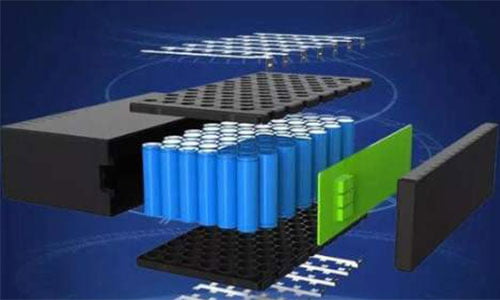
For power tool manufacturers, the 18650 size offers flexibility in pack configuration. Cells can be arranged in various series-parallel combinations to achieve target voltage and capacity requirements while maintaining compact tool designs. The standardized dimensions also simplify procurement and inventory management across global supply chains.
Key Performance Metrics for Professional Applications
When evaluating 18650 LFP cells for power tools, several technical parameters demand careful attention:
Continuous Discharge Rate: Professional power tools require cells capable of sustained 3C to 5C discharge rates without significant voltage sag. Quality LFP cells maintain above 90% capacity retention even after 2000+ cycles at these discharge rates.
Internal Resistance: Low internal resistance (typically under 35mΩ for premium cells) ensures efficient power delivery and minimizes heat generation during operation. This directly impacts tool runtime and battery longevity.
Cycle Life: LFP chemistry typically delivers 2000-5000 full cycles at 80% depth of discharge, substantially outperforming alternative chemistries in long-term total cost of ownership calculations.
Manufacturing Quality and Reliability Assurance
Battery reliability ultimately depends on manufacturing consistency. Reputable manufacturers implement rigorous quality control protocols including automated electrode coating, precision winding, and comprehensive cell testing. Each production batch should undergo capacity grading, internal resistance matching, and safety validation before shipment.
For businesses sourcing from China, verifying manufacturer credentials becomes critical. Established battery manufacturers in China maintain ISO 9001 certification, UN 38.3 transportation compliance, and IEC 62133 safety standards. These certifications ensure cells meet international requirements for professional equipment integration.
Supply Chain Considerations for Global Buyers
Procurement teams should evaluate suppliers based on production capacity, lead time reliability, and technical support capabilities. The best partners offer customizable specifications including capacity variants (1.5Ah to 2.5Ah for 18650 LFP), terminal configurations, and private labeling options.
Comprehensive product portfolios enable one-stop sourcing for diverse applications. Manufacturers can explore complete cylindrical battery cell ranges to match specific power tool requirements across different product lines.
Geographic Market Insights
Regional preferences influence battery specification requirements. North American markets prioritize UL certification and high-temperature performance. European buyers emphasize CE marking and environmental compliance including REACH regulations. Asian markets often focus on cost-efficiency while maintaining quality benchmarks. Understanding these regional nuances helps manufacturers position products effectively across global markets.
Conclusion: Building Long-Term Partnerships
Selecting the right 18650 LFP cylindrical battery supplier represents a strategic decision impacting product quality, brand reputation, and customer satisfaction. Priority should be given to manufacturers demonstrating technical expertise, consistent quality, and responsive communication.
For detailed specifications, customization options, or partnership inquiries, professional buyers are encouraged to contact our team directly. Establishing relationships with qualified battery suppliers ensures access to reliable components that power the next generation of professional tools worldwide.
The 18650 LFP cylindrical battery represents more than a component choice—it’s a commitment to safety, performance, and long-term value for power tool manufacturers and end-users alike.