
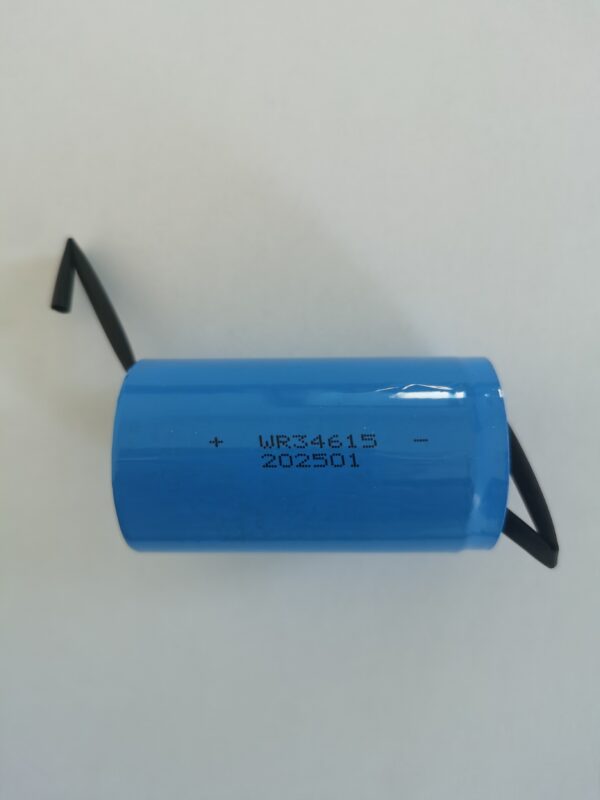
South Africa SANS 60086 Certified Lithium Batteries: Essential Compliance Guide for B2B Buyers
For businesses targeting the South African market, understanding SANS 60086 certification for lithium batteries is no longer optional—it’s a mandatory requirement for market access. As the adoption of primary lithium batteries expands across industrial, medical, and consumer applications, compliance with South African National Standards (SANS) has become a critical differentiator for suppliers seeking long-term partnerships in the region.
Understanding SANS 60086 Certification Framework
SANS 60086 is South Africa’s national adoption of the international IEC 60086 standard series, specifically governing primary (non-rechargeable) lithium batteries. The standard is enforced by the National Regulator for Compulsory Specifications (NRCS), which requires all imported lithium battery products to obtain a Letter of Authority (LOA) before entering the South African market.
The certification framework aligns closely with IEC 60086-4:2025, the latest sixth edition released in January 2025, which introduces enhanced safety requirements reflecting evolving lithium battery technology and risk profiles. For B2B buyers, this means suppliers must demonstrate compliance through testing conducted at SANAS-accredited laboratories or NRCS-recognized international facilities.
Primary Lithium Battery Technology Fundamentals
Primary lithium batteries, also known as lithium metal batteries, utilize lithium as the anode material with various cathode chemistries including lithium-manganese dioxide (Li-MnO₂), lithium-thionyl chloride (Li-SOCl₂), and lithium-iron disulfide (Li-FeS₂). Unlike rechargeable lithium-ion batteries, these cells offer distinct advantages:
- Higher energy density (up to 280 Wh/kg for Li-SOCl₂ systems)
- Extended shelf life (10-15 years with minimal self-discharge)
- Wide operating temperature range (-40°C to +85°C)
- Stable voltage output throughout discharge cycle
These characteristics make primary lithium batteries ideal for applications including smart meters, medical devices, IoT sensors, military equipment, and emergency backup systems—sectors where reliability cannot be compromised.
Core Testing Requirements Under SANS 60086
The SANS 60086 certification mandates comprehensive safety testing covering both normal use and reasonably foreseeable misuse conditions. Key test parameters include:
| Test Category | Specific Requirements |
|---|---|
| Mechanical Safety | Vibration, shock, drop test, crush test, impact test |
| Electrical Safety | External short circuit, forced discharge, abnormal charging |
| Environmental Safety | Temperature cycling, thermal shock, altitude simulation |
| Protection Features | Child-resistant packaging, correct installation verification |
The 2025 revision introduced stricter requirements for child safety packaging and enhanced mechanical integrity testing, reflecting global trends toward preventing accidental ingestion and improving transport safety. Manufacturers must provide complete technical documentation including cell chemistry specifications, manufacturing process controls, and batch traceability records.
South African Market Compliance Strategy
For international suppliers, navigating South African regulatory requirements demands strategic planning. The NRCS certification process requires:
- Product classification under the correct VC (Vehicle Component) or LOA category
- Test reports from recognized laboratories demonstrating SANS 60086 compliance
- Local representation through a registered South African agent or importer
- Production consistency documentation proving ongoing manufacturing quality control
Businesses should note that SABS (South African Bureau of Standards) provides voluntary certification that complements mandatory NRCS requirements, offering additional market credibility for premium product positioning.
Regional search trends indicate growing B2B demand for “SANS certified lithium batteries South Africa,” “NRCS approved primary cells,” and “IEC 60086 compliant battery suppliers”—keywords that reflect buyer awareness of compliance requirements. Geo-targeted content addressing Johannesburg, Cape Town, and Durban distribution hubs performs particularly well in local search results.
Why CNS BATTERY Stands Out for South African Partners
At CNS BATTERY, we understand that compliance is just the foundation—reliability, consistency, and technical support define long-term partnerships. Our primary lithium battery portfolio is engineered to exceed SANS 60086 requirements, with full traceability from raw material sourcing through final product testing.
Key advantages for South African B2B buyers:
- Pre-certified product lines ready for NRCS LOA submission
- Multiple lithium chemistries (Li-MnO₂, Li-SOCl₂, Li-FeS₂) for diverse applications
- Dedicated technical support for certification documentation
- Competitive MOQ flexibility for pilot projects and scaled deployments
- Established export experience to African markets with streamlined logistics
Our manufacturing facilities maintain ISO 9001 quality management systems, ensuring every batch meets consistent performance specifications. For businesses evaluating suppliers, we provide complete test reports, material safety data sheets, and compliance certificates to accelerate your approval process.
Explore our full range of SANS 60086 compliant primary lithium batteries at https://cnsbattery.com/primary-battery/ and discover how our certified solutions can support your South African market expansion.
For certification inquiries, technical specifications, or partnership discussions, contact our dedicated B2B team at https://cnsbattery.com/primary-battery-contact-us/. Our specialists are ready to assist with NRCS documentation requirements and provide customized solutions for your specific application needs.
Compliance is not just about meeting standards—it’s about building trust. Choose CNS BATTERY as your certified primary lithium battery partner for the South African market, where quality, safety, and regulatory excellence converge to deliver measurable business value.
