

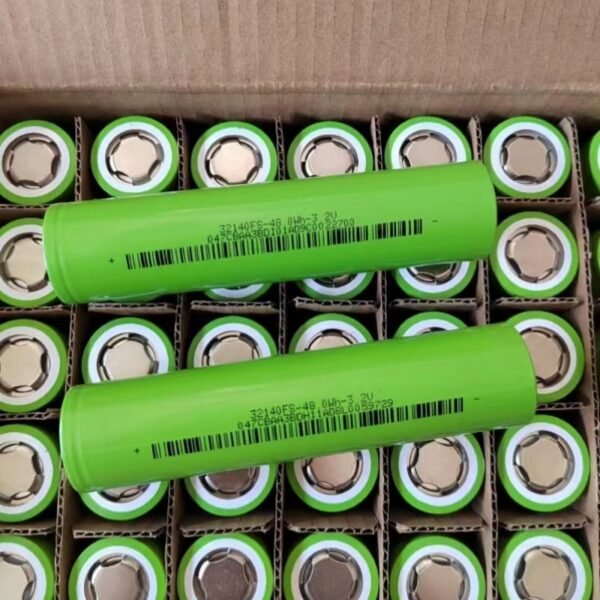
B2B 33135 Cylindrical Lithium Cell: China Factory Direct Supplier for Short Lead Time Solutions
In the rapidly evolving landscape of industrial energy storage, the 33135 cylindrical lithium cell has emerged as a critical component for B2B applications requiring reliable power density and extended cycle life. As global manufacturers seek China factory direct suppliers to reduce lead times and optimize procurement costs, understanding the technical specifications and compliance frameworks becomes essential for engineering teams and technical purchasers alike.
Technical Architecture of the 33135 Cylindrical Cell
The 33135 designation refers to a cylindrical battery cell with 33mm diameter and 135mm height, representing a substantial capacity upgrade over conventional 18650 or 21700 formats. This form factor delivers enhanced volumetric energy density while maintaining structural integrity under demanding operational conditions.
Key Parameter Advantages:
- Nominal Capacity: Typically ranges between 15-25Ah depending on cathode chemistry (NMC, LFP, or NCA variants)
- Operating Voltage: 3.2V (LFP) or 3.6-3.7V (NMC/NCA) nominal with precise discharge curves
- Cycle Life: 2000-5000 cycles at 80% depth of discharge under standard testing conditions
- Thermal Stability: Enhanced safety margins with operating temperatures from -20°C to 60°C
- Internal Resistance: Below 50mΩ for high-current discharge applications
For detailed product specifications, visit our cylindrical battery cell catalog.
Validation Testing Methodologies
Professional procurement requires comprehensive validation protocols. Industry-standard testing includes:
1. Capacity Verification Testing
Conducted at 25°C ambient temperature with constant current-constant voltage (CC-CV) charging protocols. Discharge rates typically range from 0.2C to 1C for capacity certification.
2. Cycle Life Assessment
Per IEC 62660 standards, cells undergo repeated charge-discharge cycles until capacity degradation reaches 80% of initial rated capacity. Temperature-controlled chambers ensure consistent environmental conditions.
3. Safety Compliance Testing
Includes overcharge, short-circuit, crush, and thermal abuse tests per UN 38.3 transportation requirements and regional safety certifications.
4. Impedance Spectroscopy Analysis
Electrochemical impedance spectroscopy (EIS) evaluates internal resistance characteristics across frequency ranges, critical for predicting performance in high-drain applications.
Geo-Compliance and Regional Technical Barriers
For international B2B purchasers, regional compliance represents a critical selection criterion. Chinese manufacturers serving global markets must navigate distinct regulatory frameworks:
European Union Compliance:
- CE marking requirements under Battery Directive 2006/66/EC
- REACH chemical substance restrictions
- RoHS compliance for hazardous material limitations
- Emerging EU Battery Regulation 2023/1542 carbon footprint declarations
United States Standards:
- UL 1642 and UL 2054 safety certifications
- DOT/UN 38.3 transportation compliance
- State-specific regulations (California Proposition 65)
Regional Adaptation Strategy:
Leading China-based suppliers maintain localized testing facilities and certification partnerships to accelerate market entry. Direct factory engagement reduces documentation delays and ensures traceability throughout the supply chain.
Partner with verified battery manufacturers in China who maintain comprehensive compliance documentation for your target markets.
Supply Chain Optimization Through Direct Factory Engagement
The short lead time advantage stems from eliminating intermediary distribution layers. Factory-direct procurement enables:
- Customized Specification Configuration: Chemistry selection, terminal designs, and packaging adaptations
- Real-Time Production Visibility: Direct communication with engineering teams for technical clarifications
- Reduced Inventory Carrying Costs: Just-in-time delivery schedules aligned with production cycles
- Quality Assurance Traceability: Batch-level documentation and failure analysis support
For procurement teams evaluating supplier partnerships, technical due diligence should encompass manufacturing capacity verification, quality management system certifications (ISO 9001, IATF 16949), and after-sales support infrastructure.
Conclusion: Strategic Sourcing for Global Applications
The 33135 cylindrical lithium cell represents a mature technology platform suitable for energy storage systems, electric mobility applications, and industrial backup power solutions. Selecting a China factory direct supplier with proven geo-compliance capabilities ensures both technical performance and regulatory adherence across target markets.
Engineering teams should prioritize suppliers offering comprehensive technical documentation, regional certification support, and responsive communication channels. The convergence of competitive pricing, shortened lead times, and compliance readiness positions qualified Chinese manufacturers as strategic partners for global B2B battery procurement.
Ready to evaluate your 33135 cell requirements? Contact our technical team for specification consultation and sample procurement support tailored to your application needs.


