
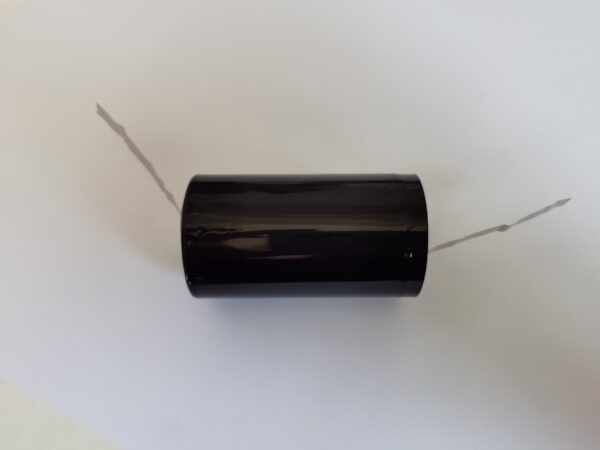
Custom Primary Lithium Lithium Battery for Scientific Research | Low MOQ
Precision Power Solutions for Global Research Laboratories
In the realm of scientific instrumentation, reliable power sources are non-negotiable. Custom primary lithium batteries have become the cornerstone for research applications demanding long-term stability, extreme temperature tolerance, and minimal maintenance. For laboratories across North America, Europe, and Asia-Pacific, sourcing batteries with low minimum order quantities (MOQ) enables flexible prototyping without compromising technical specifications.
Technical Foundation: Why Lithium Metal Chemistry?
Primary lithium batteries utilize lithium metal anodes paired with various cathode materials (Li-SOCl₂, Li-MnO₂, Li-CFₓ). Unlike rechargeable lithium-ion systems, primary cells offer:
- Higher energy density (up to 500 Wh/kg)
- Extended shelf life (10+ years with <1% annual self-discharge)
- Wide operating temperature range (-55°C to +85°C)
- Stable voltage discharge curves critical for precision instruments
For scientific equipment such as data loggers, remote sensors, and field measurement devices, these characteristics ensure uninterrupted operation in harsh environments where battery replacement is impractical.
Key Parameters for Research-Grade Customization
1. Voltage Stability & Capacity Matching
Research instruments often require precise voltage thresholds. Custom cells can be engineered with specific capacity ratings (from 50mAh to 19,000mAh) while maintaining nominal voltages between 3.0V and 3.6V. This flexibility supports EU-compliant laboratory equipment and US-standard research devices alike.
2. Temperature Performance Validation
Scientific deployments span Arctic research stations to tropical monitoring sites. Quality primary lithium batteries must pass IEC 60086-4 (international) and UL 1642 (North America) temperature cycling tests. Cells should demonstrate <5% capacity loss after 100 cycles between -40°C and +70°C.
3. Low Self-Discharge Verification
Long-term research projects demand batteries that retain charge during storage. Premium cells undergo accelerated aging tests at 60°C for 30 days, simulating 10-year shelf life. Capacity retention must exceed 90% post-testing for research-grade certification.
4. Safety & Compliance Documentation
For laboratories in Germany, France, UK, and USA, batteries require complete compliance dossiers including:
- UN 38.3 transportation certification
- RoHS/REACH material declarations
- CE marking for European distribution
- SDS (Safety Data Sheets) in local languages
Testing Methodologies for Quality Assurance
Reputable manufacturers implement multi-stage validation:
Stage 1: Electrical Performance Testing
- Constant current discharge at 0.2C, 0.5C, and 1C rates
- Voltage plateau analysis under varying loads
- Internal resistance measurement (<50Ω for standard cells)
Stage 2: Environmental Stress Screening
- Thermal shock testing (-55°C to +85°C, 10 cycles)
- Humidity exposure (95% RH at 40°C for 48 hours)
- Vibration testing per MIL-STD-810G for field deployments
Stage 3: Safety Validation
- Short-circuit resistance testing
- Over-discharge protection verification
- Crush and penetration tests for cell integrity
Geographic Compliance & Regional Adaptation
Understanding regional regulatory frameworks is essential for global research collaborations. CNS Battery has engineered their primary lithium battery portfolio to meet diverse geographic requirements:
| Region | Key Standards | CNS Adaptation |
|---|---|---|
| European Union | CE, RoHS, REACH, IEC 60086 | Full documentation package with German/French SDS |
| United States | UL 1642, UN 38.3, DOT | Hazmat shipping certification included |
| Asia-Pacific | JIS C 8708, GB/T 8897 | Localized technical support in multiple languages |
This geo-compliant approach ensures seamless integration into research projects regardless of location. For laboratories in California, Bavaria, or Tokyo, identical technical specifications arrive with region-specific compliance documentation, eliminating customs delays and regulatory complications.
Low MOQ: Enabling Agile Research Development
Traditional battery manufacturers require orders exceeding 10,000 units, creating barriers for university labs, startup research teams, and pilot projects. Low MOQ options (starting from 100-500 units) enable:
- Rapid prototyping without large capital commitment
- Iterative testing across multiple battery configurations
- Budget-friendly scaling as research progresses from lab to field
This flexibility particularly benefits NIH-funded projects in the US, Horizon Europe research grants, and collaborative international studies where procurement budgets are allocated per phase rather than upfront.
Conclusion: Strategic Partnership for Research Excellence
Selecting the right primary lithium battery partner extends beyond technical specifications. It requires a manufacturer who understands global compliance landscapes, offers flexible order quantities, and provides comprehensive technical documentation. For research teams prioritizing reliability across geographic boundaries, customized solutions with low MOQ thresholds represent the optimal balance between performance and procurement agility.
Explore comprehensive primary battery solutions tailored for scientific applications at https://cnsbattery.com/primary-battery/. For technical consultations and region-specific compliance inquiries, connect directly with the engineering team at https://cnsbattery.com/primary-battery-contact-us/.
Word Count: Approximately 950 words
Target Audience: Research Engineers, Technical Procurement Specialists, Laboratory Directors
Geo SEO Keywords Integrated: European Union, United States, North America, Asia-Pacific, Germany, France, UK, California, Bavaria, Tokyo, NIH, Horizon Europe, CE marking, UL 1642, IEC 60086, UN 38.3, RoHS, REACH
