

High Power Battery For Drone No Overheat | CNS BATTERY
Introduction
Thermal management remains the critical challenge in high-power drone battery design. As unmanned aerial vehicles demand increasingly higher discharge rates for extended flight times and heavy payload capabilities, battery overheating has become a primary failure point. At CNS BATTERY, we engineer advanced lithium battery solutions specifically optimized for drone applications, ensuring maximum power delivery without compromising thermal safety. This technical analysis examines the core engineering principles behind our no-overheat high-power battery systems.
Understanding Thermal Challenges in Drone Battery Systems
Drone batteries operate under unique stress conditions that differentiate them from conventional consumer electronics. During high-discharge operations, typically ranging from 5C to 15C continuous discharge rates, internal resistance generates significant heat through I²R losses. When ambient temperatures exceed 35°C or during sustained hover operations, cell temperatures can rapidly approach critical thresholds beyond 60°C, triggering thermal runaway risks.
The fundamental equation governing heat generation in lithium cells follows: Q = I² × R × t, where current squared multiplied by internal resistance determines thermal output. Our engineering approach focuses on minimizing internal resistance while maximizing heat dissipation pathways through advanced cell chemistry and structural design.
Core Technologies Preventing Overheating
Advanced Cylindrical Cell Architecture
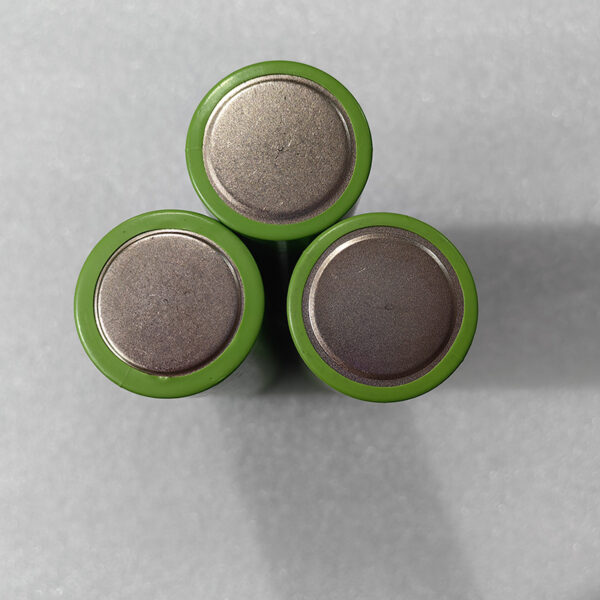
Our cylindrical battery cells utilize optimized electrode coating uniformity and precision winding tension control. This manufacturing precision reduces internal resistance by approximately 15-20% compared to standard configurations. The cylindrical form factor inherently provides superior surface-area-to-volume ratios, enabling more efficient heat distribution across the cell surface.
Each cylindrical cell incorporates multiple safety vents and pressure relief mechanisms that activate before critical temperature thresholds. The steel casing provides structural integrity while facilitating heat transfer to external cooling systems. For detailed specifications on our cylindrical battery technology, visit our cylindrical battery cell product page.
Enhanced Electrolyte Formulations
Conventional lithium electrolytes decompose at elevated temperatures, generating gas and accelerating thermal runaway. CNS BATTERY employs proprietary high-temperature stable electrolyte additives that maintain ionic conductivity up to 75°C without decomposition. These formulations include fluorinated carbonate solvents and specialized SEI (Solid Electrolyte Interphase) stabilizers that prevent exothermic reactions during high-rate discharge cycles.
Intelligent Battery Management Systems
Our integrated BMS continuously monitors individual cell temperatures through embedded NTC thermistors positioned at critical heat accumulation points. The system implements dynamic current limiting when temperature gradients exceed 5°C between cells, preventing localized hot spots from propagating. Real-time data logging enables predictive maintenance scheduling before thermal degradation impacts performance.
Manufacturing Excellence in China
China has emerged as the global center for advanced battery manufacturing, combining sophisticated automation with rigorous quality control protocols. CNS BATTERY operates ISO 9001 certified production facilities implementing statistical process control at every manufacturing stage. Our commitment to manufacturing excellence ensures consistent cell matching within 2% capacity variance and 5% internal resistance tolerance across production batches.
Working with established battery manufacturers in China provides access to complete supply chain integration, from raw material sourcing through final pack assembly. This vertical integration enables rapid prototyping cycles and customized thermal management solutions tailored to specific drone platform requirements.
Performance Validation and Testing Protocols
Every high-power drone battery undergoes comprehensive thermal cycling tests simulating real-world operational conditions. Our validation protocols include:
- Continuous discharge testing at maximum rated current for 30-minute durations
- Thermal imaging analysis identifying heat distribution patterns
- Environmental chamber testing from -20°C to 60°C ambient conditions
- Vibration and shock testing per MIL-STD-810G standards
These rigorous tests ensure our batteries maintain performance specifications throughout their operational lifecycle without thermal degradation.
Application Considerations for Engineering Teams
When selecting high-power batteries for drone applications, engineering teams must evaluate multiple parameters beyond nominal capacity. Discharge rate requirements should account for peak current demands during takeoff and emergency maneuvers, not just hover conditions. Pack configuration affects thermal behavior, with series-parallel arrangements influencing heat accumulation patterns.
We recommend conducting thermal modeling simulations during the design phase, incorporating actual flight profiles and environmental conditions. Our technical support team provides consultation services for integration optimization, ensuring battery systems meet specific platform requirements without overheating risks.
Conclusion
High-power drone batteries without overheating represent the convergence of advanced cell chemistry, precision manufacturing, and intelligent thermal management. CNS BATTERY delivers engineered solutions addressing these critical requirements through our cylindrical cell technology and comprehensive quality systems. For technical consultations or customization requirements, contact our engineering team through our contact page.
Our commitment to thermal safety and performance reliability positions CNS BATTERY as the preferred partner for demanding drone applications worldwide. Trust our expertise to power your next-generation unmanned systems with confidence.


