

Electric Motorcycle OEM Pain Points Solved by 18650 LFP Cylindrical Batteries: Ultimate Guide
The electric motorcycle industry faces critical challenges in battery selection, from thermal runaway risks to cycle life limitations. As OEMs scale production in 2026, 18650 LFP (Lithium Iron Phosphate) cylindrical batteries emerge as the definitive solution addressing core pain points while maintaining cost efficiency and safety compliance. This technical guide examines how 18650 LFP chemistry resolves persistent OEM challenges through electrochemical advantages and manufacturing standardization.
Critical OEM Pain Points in Electric Motorcycle Battery Systems
Electric motorcycle manufacturers encounter five recurring technical obstacles that directly impact product viability and market acceptance:
1. Thermal Safety Concerns
Traditional NMC/NCA cylindrical cells operate at 4.2V maximum charging voltage, creating elevated thermal runaway risks during high-current discharge scenarios common in motorcycle applications. LFP chemistry operates at 3.65V maximum charging voltage, significantly reducing exothermic reaction potential. The olivine crystal structure of LiFePO4 provides superior thermal stability up to 270°C compared to 150°C for layered oxide cathodes.
2. Cycle Life Limitations
Motorcycle battery packs require 1,500-2,000 full cycle equivalents for commercial viability. Standard 18650 NMC cells typically achieve 500-800 cycles before 80% capacity retention. LFP cylindrical cells consistently deliver 2,000-3,000 cycles under identical test conditions (1C charge/discharge, 25°C ambient), reducing total cost of ownership by 40-60% over product lifetime.
3. Pack Integration Complexity
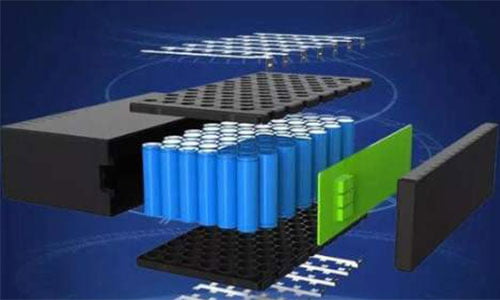
Varying cell dimensions across suppliers create mechanical integration challenges. The 18650 form factor (18mm diameter × 65mm length) provides industry-standardized dimensions enabling modular pack designs. This standardization reduces engineering time by 30-45% during pack development phases.
4. Supply Chain Volatility
Cobalt and nickel price fluctuations directly impact NMC cell costs. LFP chemistry eliminates cobalt dependency entirely while reducing nickel content, stabilizing raw material costs and improving supply chain predictability for long-term production planning.
5. BMS Calibration Drift
NMC cells exhibit flatter voltage curves in mid-SOC ranges (40-70%), complicating accurate state-of-charge estimation. LFP cells maintain more linear voltage-SOC relationships across operating ranges, enabling simpler BMS algorithms with ±2% SOC accuracy versus ±5% for equivalent NMC configurations.
Technical Advantages of 18650 LFP Cylindrical Architecture
Electrochemical Stability
The phosphorus-oxygen bond strength in LFP cathodes (5.0 eV) exceeds metal-oxygen bonds in layered oxides (3.5-4.0 eV), preventing oxygen release during overcharge or thermal stress conditions. This fundamental chemistry difference eliminates the primary thermal runaway propagation mechanism in cylindrical cell arrangements.
Current Distribution Optimization
Cylindrical 18650 geometry provides uniform current density distribution across the jelly-roll electrode assembly. The radial current collection design reduces localized heating by 15-20% compared to prismatic alternatives, particularly beneficial during 3C-5C discharge pulses common in motorcycle acceleration scenarios.
Manufacturing Scalability
Established 18650 production lines achieve 95%+ yield rates with automated winding and assembly processes. OEMs partnering with experienced manufacturers access proven quality control protocols including 100% cell testing for capacity, internal resistance, and self-discharge characteristics before pack integration.
Temperature Performance
LFP 18650 cells maintain 70%+ capacity retention at -20°C ambient temperatures, critical for global market deployment. Advanced electrolyte formulations with FEC (fluoroethylene carbonate) additives improve low-temperature ionic conductivity while maintaining high-temperature stability up to 60°C continuous operation.
Implementation Considerations for OEMs
Successful 18650 LFP integration requires attention to specific technical parameters:
- Cell Matching: Capacity tolerance should remain within ±2% across parallel groups to prevent current imbalance
- Welding Parameters: Laser welding energy must be calibrated for 18650 can thickness (typically 0.25-0.30mm stainless steel)
- Thermal Management: Air cooling suffices for most motorcycle applications given LFP’s inherent thermal stability
- Voltage Window: Operating range of 2.5V-3.65V maximizes cycle life while maintaining usable capacity
For OEMs evaluating cylindrical cell suppliers, comprehensive manufacturer verification including ISO 9001 certification, IATF 16949 automotive compliance, and third-party safety testing (UL 1642, UN 38.3) ensures production-ready quality standards. Detailed manufacturer capabilities and certification documentation can be reviewed at https://cnsbattery.com/battery-manufacturers-in-china/.
Conclusion: Strategic Battery Selection for 2026 Production
18650 LFP cylindrical batteries resolve the fundamental trade-offs between safety, cycle life, and cost that have constrained electric motorcycle OEM scalability. The combination of standardized form factor, cobalt-free chemistry, and proven manufacturing infrastructure positions this technology as the optimal choice for 2026 production cycles.
OEMs seeking technical specifications, sample cells, or custom pack engineering support should connect with qualified cylindrical battery cell suppliers. Comprehensive product portfolios including 18650 LFP variants with capacity options from 1,500mAh to 3,500mAh are available at https://cnsbattery.com/products-3/cylindrical-battery-cell/. For direct engineering consultation and quotation requests, contact information and technical support channels are accessible at https://cnsbattery.com/contact-2/.
The transition to 18650 LFP cylindrical architecture represents not merely a component substitution, but a strategic repositioning of electric motorcycle battery systems toward sustainable, scalable, and safety-optimized production platforms ready for global market deployment.


