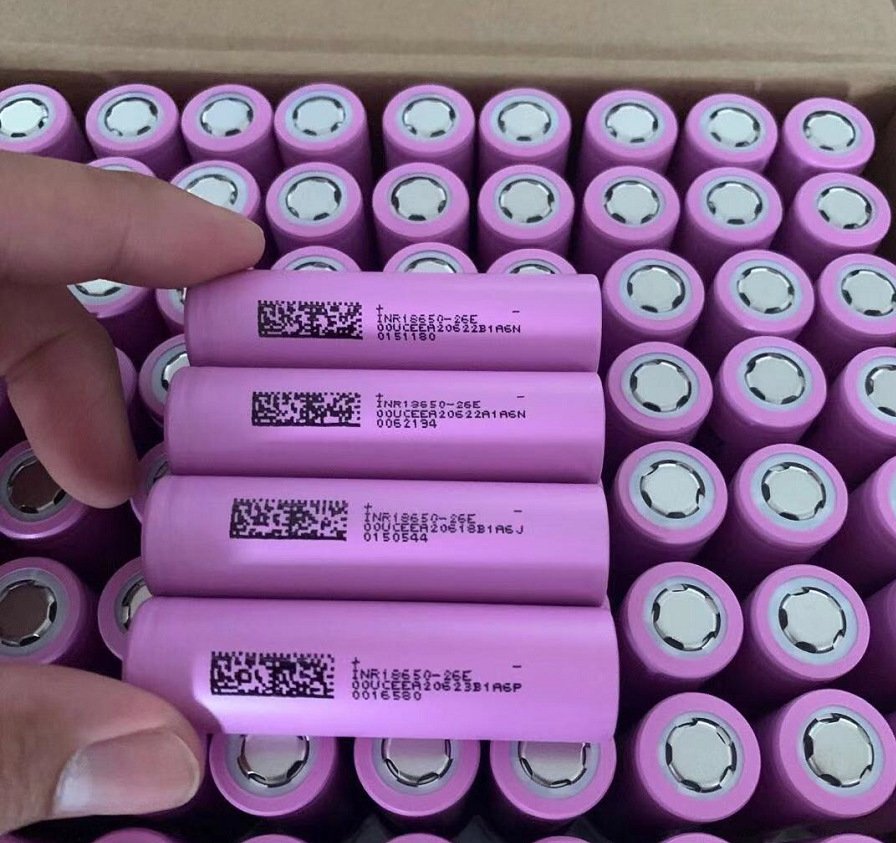
Buy Wholesale 46150 NCM Cells Bulk: High Competitive Wholesale Price Performance for Battery Pack vs Competitors
Introduction: The Strategic Advantage of 46150 NCM Cells in 2026
The global energy storage landscape has witnessed a paradigm shift toward large-format cylindrical cells, with the 46150 NCM (Nickel-Cobalt-Manganese) configuration emerging as a premium choice for industrial battery pack manufacturers. This comprehensive analysis examines why sourcing wholesale 46150 NCM cells delivers superior price-performance ratios compared to competing formats, while meeting stringent international compliance requirements for EU and US markets.
Technical Parameter Advantages: Engineering Excellence
The 46150 cylindrical cell specification (46mm diameter × 150mm height) represents an optimized balance between energy density and thermal management efficiency. Key technical advantages include:
Energy Density Optimization: NCM chemistry in the 46150 format typically achieves 250-280 Wh/kg at the cell level, significantly outperforming LFP alternatives in applications where weight-to-energy ratio is critical. The nickel-rich cathode composition (commonly NCM 811 or 9½½) enables higher specific capacity while maintaining structural stability through advanced doping techniques.
Thermal Performance: The cylindrical geometry provides superior surface-area-to-volume ratio compared to prismatic cells, facilitating more efficient heat dissipation during high-rate discharge cycles. This characteristic is particularly valuable for EV traction batteries and grid-scale energy storage systems operating in variable temperature environments.
Cycle Life Enhancement: Modern 46150 NCM cells incorporate single-crystal cathode materials and silicon-graphite composite anodes, extending cycle life to 2,000-3,000 full cycles at 80% depth of discharge while retaining 80% capacity. Advanced electrolyte formulations with fluorinated additives further suppress transition metal dissolution and SEI layer degradation.
Testing Methodologies: Validation Protocols for Quality Assurance
Professional battery pack manufacturers must implement comprehensive testing protocols when evaluating wholesale 46150 NCM cell suppliers:
Electrochemical Characterization: Standard testing includes capacity verification at C/3 and 1C rates, internal resistance measurement using AC impedance spectroscopy (1kHz), and rate capability assessment across 0.5C to 3C discharge profiles. Temperature-dependent performance testing from -20°C to 60°C validates operational envelope consistency.
Safety Compliance Testing: Cells must pass UN 38.3 transportation requirements, including altitude simulation, thermal cycling, vibration, shock, external short circuit, impact, overcharge, and forced discharge tests. For EU market entry, compliance with IEC 62619 (secondary lithium cells for industrial applications) and the new EU Battery Regulation 2023/1542 is mandatory.
Long-Term Degradation Analysis: Accelerated aging tests at elevated temperatures (45°C-60°C) combined with cycle testing provide predictive models for field performance. Differential voltage analysis (DVA) and incremental capacity analysis (ICA) enable early detection of degradation mechanisms including lithium plating and active material loss.
Regional Compliance and Technical Barriers: EU and US Market Adaptation
Navigating regional regulatory frameworks represents a critical differentiator for wholesale 46150 NCM cell procurement. CNS Battery has established comprehensive compliance infrastructure addressing both European and North American requirements:
European Union Compliance: The EU Battery Regulation (effective 2026) mandates carbon footprint declarations, recycled content minimums (12% cobalt, 4% nickel, 4% lithium by 2031), and battery passport documentation. CNS products incorporate full supply chain traceability systems and third-party verified carbon accounting, ensuring seamless market access across all 27 EU member states. CE marking under the Low Voltage Directive and EMC Directive remains essential for battery pack integration.
United States Standards: US market entry requires UL 1642 (cell safety) and UL 2580 (battery system) certifications, alongside DOT hazardous materials transportation compliance. The Inflation Reduction Act’s domestic content requirements create additional considerations for EV applications, though imported cells remain viable for stationary storage and non-automotive applications. California’s Title 20 and Title 24 regulations impose additional efficiency and safety requirements for energy storage systems.
Technical Barrier Mitigation: CNS Battery’s manufacturing facilities implement ISO 9001, ISO 14001, and IATF 16949 quality management systems, providing documented evidence of process control and continuous improvement. This infrastructure supports customer audits and regulatory inspections, reducing time-to-market for battery pack manufacturers targeting regulated sectors.
Wholesale Procurement Strategy: Maximizing Value
Bulk purchasing of 46150 NCM cells offers significant cost advantages through economies of scale, reduced per-unit logistics costs, and priority production scheduling. However, procurement decisions must balance price against technical support, warranty terms, and supply chain resilience. Established manufacturers provide engineering support for pack design optimization, BMS integration guidance, and failure analysis capabilities that reduce total cost of ownership beyond initial cell pricing.
For technical specifications, certification documentation, and volume pricing inquiries, visit our cylindrical battery cell product page or explore our battery manufacturers in China capabilities. Direct engagement with our engineering team through our contact page ensures customized solutions aligned with your specific application requirements and regional compliance obligations.
Conclusion: Strategic Sourcing for Competitive Advantage
The 46150 NCM cell format represents a technically superior choice for high-performance battery pack applications requiring optimal energy density, thermal management, and cycle life. When sourced from compliant manufacturers with established regional certification infrastructure, wholesale procurement delivers both immediate cost benefits and long-term market access advantages. As global battery regulations intensify through 2026 and beyond, partnering with suppliers who proactively address EU Battery Regulation and US safety standards becomes not merely advantageous but essential for sustained commercial success in the energy storage sector.