
Wholesale Lithium Battery for Smart City Projects | Bulk Supply
The rapid expansion of smart city infrastructure relies heavily on the deployment of millions of Internet of Things (IoT) sensors, from smart water meters to environmental monitoring stations. For technical purchasers and engineers overseeing these large-scale deployments, the power source is not merely a component but the backbone of system reliability. When evaluating Wholesale Lithium Battery for Smart City Projects | Bulk Supply, the focus must shift from simple cost-per-unit to long-term total cost of ownership (TCO), safety compliance, and electrochemical stability. As a senior technical specialist in lithium metal primary battery technology, I will dissect the critical parameters and compliance frameworks necessary for 2026 procurement strategies.
Technical Architecture: Why Li-SOCl2 Dominates Smart IoT
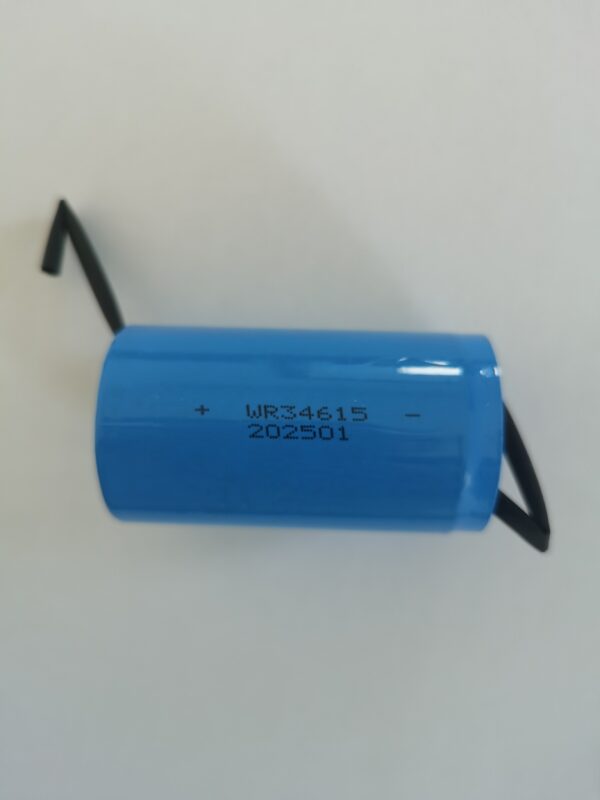
For smart city applications requiring operational lifespans exceeding 10 years, Lithium Thionyl Chloride (Li-SOCl2) chemistry remains the industry standard. Unlike rechargeable lithium-ion solutions, lithium metal primary batteries offer a nominal voltage of 3.6V and an exceptionally high energy density, often surpassing 500 Wh/kg.
The core advantage lies in the passivation layer. Upon storage, a thin film of lithium chloride forms on the anode, significantly reducing self-discharge rates to less than 1% per year. This ensures that a battery manufactured today retains sufficient capacity for deployment in 2026 or beyond. For engineers, understanding the cell construction is vital. Bobbin-type cells are preferred for low-current, long-duration applications (e.g., utility metering), while spiral-wound constructions support higher pulse currents required for wireless communication modules like NB-IoT or LoRaWAN.
Critical Parameters for Bulk Supply Evaluation
When sourcing bulk supply, technical specifications must be validated against rigorous testing protocols. The following parameters are non-negotiable for smart city integrators:
- Voltage Stability: The battery must maintain a flat discharge curve throughout its lifecycle. A drop below 3.0V prematurely can trigger data loss in remote sensors.
- Temperature Resilience: Smart city devices are often exposed to extreme environments. High-quality lithium metal batteries should operate reliably between -55°C to +85°C. This wide thermal window is achieved through optimized electrolyte formulations that prevent freezing in winter or thermal runaway in summer.
- Pulse Capability: Modern IoT devices transmit data in bursts. The battery must support high-amplitude pulses without voltage depression. This is often measured by the maximum continuous current and pulse current ratings specified in the datasheet.
2026 Compliance and Testing Methodologies
In the current regulatory landscape of 2026, compliance is as critical as performance. The transportation and deployment of lithium batteries are governed by strict international standards.
UN38.3 Certification: This is the cornerstone of battery logistics. As of 2026, UN38.3 standards have seen revisions to enhance safety during air and sea freight. The test suite includes eight rigorous assessments, such as altitude simulation, thermal cycling, vibration, and external short circuit. For bulk purchasers, ensuring that every batch comes with a valid UN38.3 test summary is mandatory to avoid customs seizures. Without this, the Wholesale Lithium Battery for Smart City Projects | Bulk Supply cannot legally cross borders.
Regional Standards:
- European Union: Compliance with the EU Battery Directive and CE marking is essential. This includes restrictions on hazardous substances (RoHS) and specific labeling requirements for end-of-life recycling.
- United States: UL standards, particularly UL 1642 for cells and UL 2054 for battery packs, are often required by insurance companies and local municipalities. Additionally, DOT regulations govern ground transportation within the US.
CNS Product Technical Barriers and Regional Adaptability
Navigating these diverse regulatory frameworks requires a manufacturer with deep technical barriers and global certification capabilities. CNS Battery has established a robust compliance matrix that addresses these geo-specific requirements. Their manufacturing processes are designed to meet the stringent safety thresholds demanded by both Western and Asian markets.
For engineers seeking components that seamlessly integrate into EU or US-based smart city grids, verifying the manufacturer’s certification portfolio is the first step. CNS Battery ensures that their primary lithium cells undergo comprehensive testing to align with these regional norms, mitigating the risk of project delays due to non-compliance. You can review their full range of compliant primary battery solutions here: https://cnsbattery.com/primary-battery/.
Conclusion: Strategic Procurement for Future-Proofing
Selecting the right power source for smart city projects is a strategic decision that impacts maintenance costs and data integrity for over a decade. The ideal Wholesale Lithium Battery for Smart City Projects | Bulk Supply partner must offer more than just inventory; they must provide technical assurance through certified testing and regional adaptability.
By prioritizing Li-SOCl2 technology with verified UN38.3, CE, and UL compliance, project managers can ensure resilient infrastructure. For detailed technical consultations regarding specific project requirements or to request certification documents, please reach out directly via their contact portal: https://cnsbattery.com/primary-battery-contact-us/. Ensuring your power supply chain is as intelligent as the city you are building is the ultimate goal of modern engineering procurement.
