
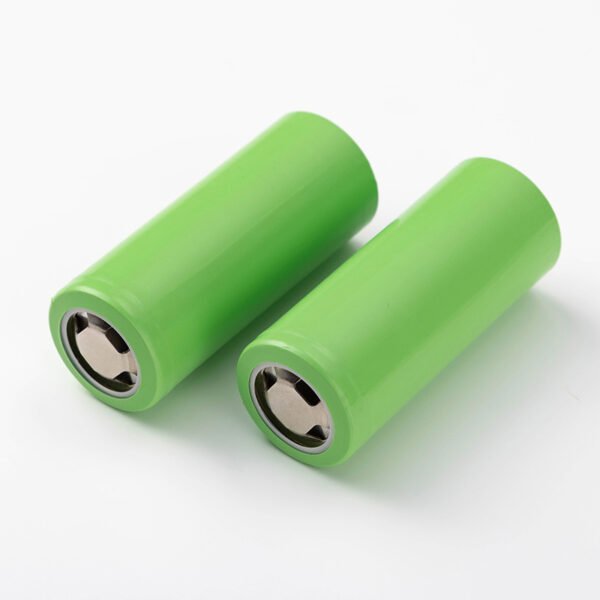
70% Capacity Retention Li-MnO₂ Battery at -40℃: Technical Performance Analysis for Extreme Environment Applications
In extreme cold environments, battery performance degradation remains one of the most critical challenges for industrial equipment designers and technical procurement specialists. The 70% capacity retention Li-MnO₂ battery at -40℃ represents a significant benchmark for lithium manganese dioxide primary batteries operating in arctic conditions, high-altitude installations, and cold-chain logistics applications. This article examines the technical foundations, performance characteristics, and selection criteria for engineers evaluating lithium primary battery solutions for sub-zero operations.
Understanding Li-MnO₂ Battery Chemistry
Lithium manganese dioxide (Li-MnO₂) batteries belong to the lithium primary battery family, utilizing metallic lithium as the anode and manganese dioxide as the cathode material. The electrochemical reaction follows: Li + MnO₂ → LiMnO₂, delivering a nominal voltage of 3.0V—approximately twice that of conventional alkaline cells.
The fundamental advantage of Li-MnO₂ chemistry lies in its solid-state cathode structure, which maintains structural integrity across wide temperature ranges. Unlike lithium-ion rechargeable systems, primary lithium batteries eliminate concerns about electrolyte freezing and lithium plating at low temperatures, making them inherently suitable for extreme environment deployments.
Key Performance Metrics at -40℃
Capacity Retention Characteristics
Achieving 70% capacity retention at -40℃ requires optimized electrode design and electrolyte formulation. At this temperature threshold, conventional battery chemistries typically experience 50-60% capacity loss due to increased internal resistance and reduced ionic conductivity. The 70% retention benchmark indicates superior electrolyte additives and cathode porosity engineering that facilitate lithium ion transport even under extreme cold conditions.
Technical procurement teams should verify capacity retention data through standardized testing protocols (IEC 60086) rather than relying solely on manufacturer specifications. Real-world performance may vary based on discharge rate, with lower current draws generally preserving higher capacity retention in sub-zero environments.
Voltage Stability Under Load
Low-temperature operation introduces voltage depression phenomena where terminal voltage drops under load conditions. Quality Li-MnO₂ batteries maintain stable discharge profiles even at -40℃, ensuring consistent power delivery to sensitive electronic equipment. Engineers should evaluate voltage curves at expected operating currents rather than open-circuit voltage measurements alone.
Self-Discharge and Shelf Life
Premium Li-MnO₂ cells demonstrate self-discharge rates below 1% per year at room temperature, translating to 10+ year shelf life. This characteristic proves particularly valuable for emergency equipment, remote sensors, and backup power applications where batteries may remain in storage for extended periods before deployment in cold environments.
Application-Specific Considerations
Industrial IoT and Remote Monitoring
Wireless sensors deployed in arctic oil fields, mountain weather stations, and cold-storage facilities require reliable power sources that function without maintenance. The 70% capacity retention specification ensures predictable runtime calculations for device designers planning multi-year deployments.
Medical and Pharmaceutical Cold Chain
Temperature-sensitive pharmaceutical transport demands battery-powered monitoring devices that operate continuously throughout the logistics chain. Li-MnO₂ batteries meeting the -40℃ performance standard provide confidence for compliance documentation and quality assurance protocols.
Defense and Aerospace Systems
Military equipment and aerospace instrumentation frequently encounter extreme temperature variations. Primary lithium batteries offer advantages over rechargeable alternatives in applications where charging infrastructure is unavailable or reliability takes precedence over reusability.
Technical Selection Guidelines
When evaluating Li-MnO₂ battery suppliers, engineering teams should request:
- Third-party test reports validating -40℃ capacity retention claims
- Discharge curve data at multiple temperature points (-40℃, -20℃, 25℃, 70℃)
- Impedance specifications across the operating temperature range
- Safety certifications (UL, CE, UN38.3) for transportation compliance
For comprehensive product specifications and technical documentation, visit our primary battery product catalog. Our engineering team provides application-specific recommendations based on your operational requirements.
Conclusion
The 70% capacity retention Li-MnO₂ battery at -40℃ represents a critical performance threshold for extreme environment applications. Understanding the underlying electrochemistry, verified performance metrics, and application-specific requirements enables informed procurement decisions that balance cost, reliability, and operational longevity.
For technical consultations and customized battery solutions, contact our engineering support team at https://cnsbattery.com/primary-battery-contact-us/. Our specialists assist with capacity calculations, form factor optimization, and regulatory compliance for global deployments.
