
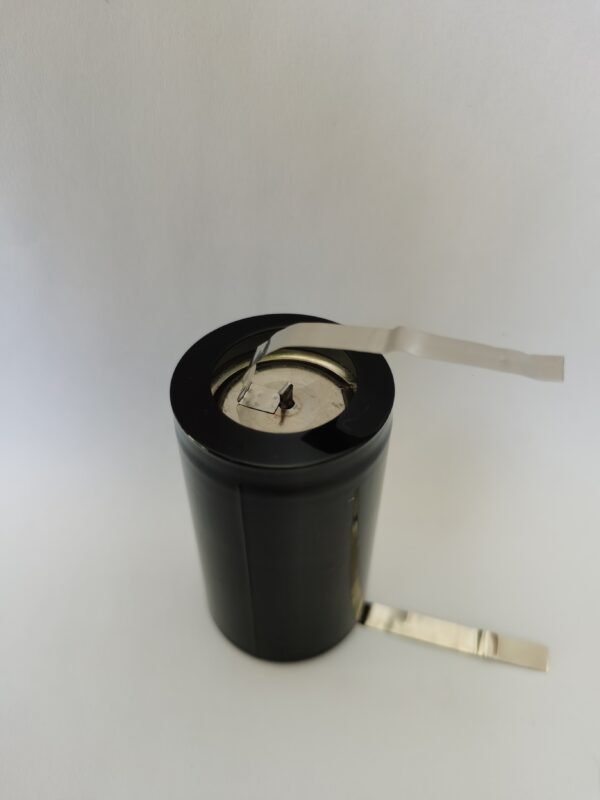
Li-S Battery for Lunar Lander Scientific Instrument Power
The evolution of space exploration has entered a transformative era, with lunar missions becoming increasingly sophisticated. As commercial and governmental space agencies prepare for sustained lunar presence through programs like NASA’s Artemis and China’s lunar exploration initiatives, the demand for reliable, high-performance power systems has never been more critical. Among emerging energy storage technologies, Lithium-Sulfur (Li-S) batteries represent a compelling solution for powering scientific instruments on lunar landers, offering distinct advantages over conventional lithium-based power systems.
Technical Advantages of Li-S Battery Technology for Space Applications
Li-S batteries operate on fundamentally different electrochemical principles compared to traditional lithium-ion or primary lithium metal batteries. The core chemistry utilizes elemental sulfur as the cathode material and metallic lithium as the anode, delivering theoretical specific energy densities exceeding 2,500 Wh/kg—approximately five times that of conventional lithium-ion systems. This exceptional energy density is particularly valuable for lunar lander missions where every kilogram of payload mass directly impacts launch costs and mission feasibility.
For scientific instrument power systems operating in the lunar environment, several technical parameters become mission-critical:
Extreme Temperature Performance: The lunar surface experiences temperature fluctuations ranging from -173°C during the lunar night to +127°C during daylight hours. Advanced Li-S battery designs incorporate specialized electrolyte formulations and thermal management systems that maintain operational stability across this extreme range. Recent developments in solid-state electrolytes and protective cathode coatings have significantly improved low-temperature performance, addressing one of the historical limitations of lithium-based chemistries in space applications.
Radiation Tolerance: Space environments expose electronic systems to intense cosmic radiation and solar particle events. Li-S battery architectures demonstrate inherent radiation resistance due to their simplified cell structure and absence of complex transition metal oxides found in conventional lithium-ion cathodes. This characteristic reduces degradation rates and extends operational lifetime for long-duration lunar surface missions.
Shelf Life and Self-Discharge: Primary lithium metal batteries, including Li-S configurations, offer exceptional shelf life exceeding 10 years with minimal self-discharge rates below 1% per year. This characteristic is essential for lunar lander missions where instruments may remain dormant during transit before activation upon lunar surface arrival.
Engineering Considerations for Lunar Lander Integration
Integrating Li-S battery systems into lunar lander scientific instrument platforms requires careful attention to several engineering factors:
Power Management Architecture: Scientific instruments on lunar landers typically operate in pulsed or intermittent modes, requiring power systems capable of delivering high peak currents while maintaining voltage stability. Li-S batteries demonstrate favorable discharge characteristics with relatively flat voltage profiles during most of the discharge cycle, simplifying power regulation circuitry and reducing overall system complexity.
Mass and Volume Optimization: The high gravimetric and volumetric energy density of Li-S technology enables significant reductions in battery system mass and volume compared to alternative chemistries. For lunar lander missions where payload capacity is severely constrained, this advantage translates directly into increased scientific instrument capacity or extended mission duration.
Safety and Reliability: Space-qualified battery systems must meet rigorous safety standards to prevent catastrophic failures that could compromise entire missions. Modern Li-S designs incorporate multiple safety features including pressure relief mechanisms, thermal fuses, and redundant cell monitoring systems. The absence of oxygen in the cathode material eliminates thermal runaway risks associated with conventional lithium-ion chemistries.
Mission Profile Compatibility
Different lunar mission profiles impose varying power system requirements. Short-duration landing missions (14 Earth days or less) benefit from the high energy density and low mass of Li-S systems. Extended surface operations, including lunar night survival, may require hybrid configurations combining Li-S batteries with radioisotope heating units or solar rechargeable systems.
For scientific instruments including spectrometers, seismometers, drilling equipment, and communication systems, Li-S batteries provide the stable, long-duration power necessary for comprehensive data collection. The technology’s compatibility with existing spacecraft power distribution architectures facilitates straightforward integration without requiring extensive redesign of legacy systems.
Commercial Availability and Supply Chain Considerations
As lunar exploration transitions from government-led initiatives to include significant commercial participation, access to space-qualified battery systems becomes increasingly important. Established primary battery manufacturers now offer customized Li-S solutions designed specifically for aerospace applications, with full compliance to international space safety standards and export regulations.
For engineering teams and technical procurement specialists evaluating power system options for lunar lander projects, comprehensive technical documentation, qualification testing data, and supply chain transparency are essential selection criteria. Reputable manufacturers provide detailed specification sheets, environmental testing reports, and mission heritage documentation to support system integration decisions.
Conclusion
Li-S battery technology represents a mature, viable solution for lunar lander scientific instrument power systems, offering compelling advantages in energy density, temperature performance, and mission reliability. As the space industry continues to expand lunar exploration activities through 2026 and beyond, the adoption of advanced lithium-based power systems will play a critical role in enabling successful mission outcomes.
For technical teams seeking qualified primary battery solutions for space applications, comprehensive product information and engineering support are available through specialized manufacturers. Visit https://cnsbattery.com/primary-battery/ to explore space-grade primary battery options, or contact our engineering team directly at https://cnsbattery.com/primary-battery-contact-us/ for mission-specific technical consultation and customization services.
The future of lunar exploration depends on reliable power systems that can withstand the harsh lunar environment while delivering consistent performance throughout mission duration. Li-S battery technology stands ready to meet these demanding requirements, supporting the next generation of scientific discovery on the Moon’s surface.
