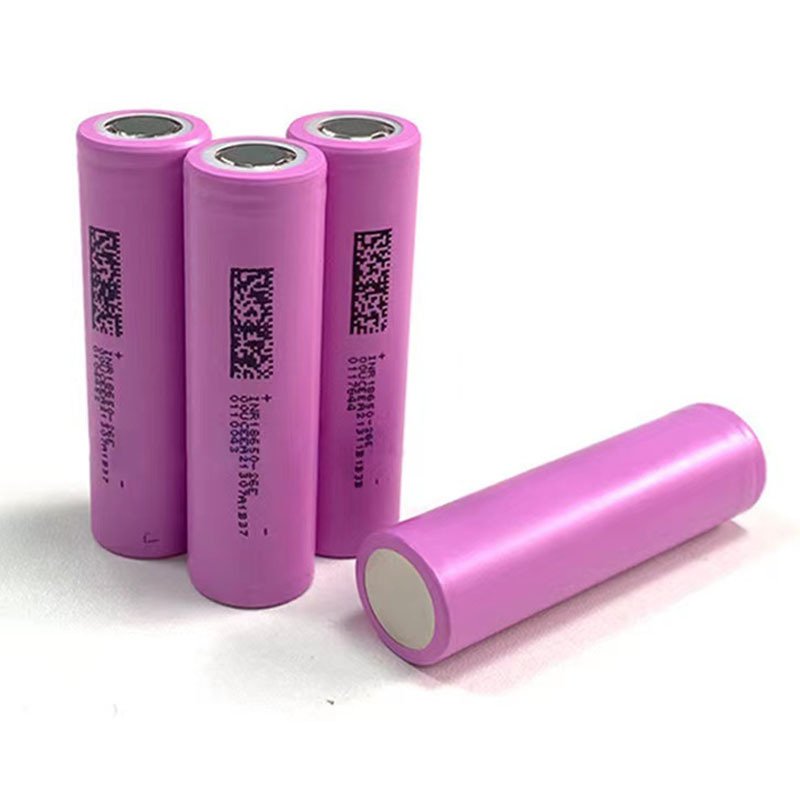
Factory Direct 33140 Li-ion Cells China Export: No Low Self-Discharge for E-bike Projects Ideal for Manufacturers
The global e-bike market continues its exponential growth, with manufacturers seeking reliable power solutions that balance performance, safety, and cost-effectiveness. Among cylindrical lithium-ion cell options, the 33140 form factor has emerged as a compelling choice for medium-to-high capacity e-bike battery packs. This article provides a technical analysis of 33140 Li-ion cells from a manufacturer’s perspective, examining why factory-direct sourcing from China presents strategic advantages for international B2B buyers.
Understanding the 33140 Cell Architecture
The 33140 designation refers to a cylindrical cell with 33mm diameter and 140mm height dimensions. This form factor sits between the ubiquitous 18650 and larger 21700 cells, offering distinct advantages for e-bike applications:
Physical Specifications:
- Diameter: 33mm ±0.2mm
- Height: 140mm ±0.3mm
- Typical Capacity: 2000-3000mAh per cell
- Nominal Voltage: 3.2V (LiFePO4) or 3.6-3.7V (NMC/NCA)
The larger surface area compared to 18650 cells enables better heat dissipation during high-current discharge cycles, a critical factor for e-bike motors that frequently demand 15A-30A continuous current draws.
Self-Discharge Characteristics: Technical Considerations
The “No Low Self-Discharge” specification requires careful interpretation. Standard lithium-ion cells exhibit self-discharge rates of 2-5% per month at room temperature. For 33140 cells exported for e-bike projects, several factors influence this parameter:
Chemistry-Dependent Behavior:
- LiFePO4 (LFP) chemistry: 1-3% monthly self-discharge, superior thermal stability
- NMC chemistry: 3-5% monthly self-discharge, higher energy density
- Storage temperature impact: Every 10°C increase approximately doubles self-discharge rate
Manufacturers should note that “no low self-discharge” typically indicates standard discharge characteristics rather than ultra-low self-discharge (ULSD) technology. For e-bike applications where battery packs remain installed between use cycles, standard self-discharge rates prove acceptable when paired with appropriate Battery Management Systems (BMS).
E-bike Application Suitability Analysis
Voltage Configuration Flexibility:
33140 cells enable versatile pack configurations:
- 36V systems: 10S or 11S arrangements
- 48V systems: 13S or 14S arrangements
- 52V systems: 14S arrangements
Current Handling Capability:
- Continuous discharge: 1C-3C typical (2-9A per cell)
- Peak discharge: Up to 5C for high-performance variants
- Parallel configurations multiply available current proportionally
Thermal Management:
The cylindrical form factor facilitates air-cooling designs common in e-bike battery enclosures. The 33mm diameter provides adequate spacing between cells for thermal isolation while maintaining compact pack dimensions.
Factory-Direct Sourcing Advantages from China
China remains the global epicenter for lithium-ion cell manufacturing, accounting for approximately 75% of worldwide production capacity. For international manufacturers, factory-direct procurement offers:
Cost Efficiency:
- Elimination of distributor markups (typically 15-25%)
- Volume-based pricing tiers for orders exceeding 10,000 cells
- Reduced lead times through direct production scheduling
Quality Control Transparency:
- Direct access to manufacturing specifications
- Customized testing protocols per buyer requirements
- Traceability throughout production batches
Technical Support:
- Engineering collaboration for pack design optimization
- BMS compatibility verification
- Regulatory compliance documentation (UN38.3, IEC62133, CE)
For manufacturers evaluating Chinese suppliers, verification of manufacturing certifications and production capacity remains essential. Comprehensive supplier assessments should include factory audits, sample testing, and reference checks with existing international clients.
Integration Considerations for Manufacturers
BMS Compatibility:
Ensure BMS selection matches cell chemistry and configuration. Key parameters include:
- Overcharge protection voltage (3.65V for LFP, 4.2V for NMC)
- Over-discharge cutoff (2.5V-2.8V typical)
- Balance current capability (50-200mA per cell)
Mechanical Integration:
- Cell holder design must accommodate 33mm diameter with thermal expansion tolerance
- Vibration resistance testing per e-bike industry standards
- IP rating compliance for enclosure design
Regulatory Compliance:
Export documentation must include:
- UN38.3 transportation testing certification
- MSDS (Material Safety Data Sheets)
- Country-specific compliance marks (CE, UL, PSE)
Conclusion: Strategic Sourcing for E-bike Manufacturers
The 33140 Li-ion cell represents a balanced solution for e-bike battery pack development, offering capacity advantages over 18650 cells while maintaining manageable thermal characteristics. Factory-direct sourcing from established Chinese manufacturers provides cost competitiveness without compromising quality when proper due diligence is conducted.
For technical teams evaluating 33140 cells for upcoming e-bike projects, we recommend requesting samples for validation testing before committing to volume orders. Our comprehensive cylindrical battery cell portfolio includes verified 33140 options suitable for various e-bike configurations. Explore our cylindrical battery cell products for detailed specifications and availability.
Manufacturers seeking partnership opportunities with qualified Chinese battery producers can access our verified supplier network through battery manufacturers in China. For technical consultations, quotation requests, or sample ordering, please contact our international sales team via our contact page.
The transition to electric mobility demands reliable, cost-effective energy storage solutions. With proper technical evaluation and strategic sourcing partnerships, 33140 Li-ion cells can form the foundation of competitive e-bike battery systems for global markets.