

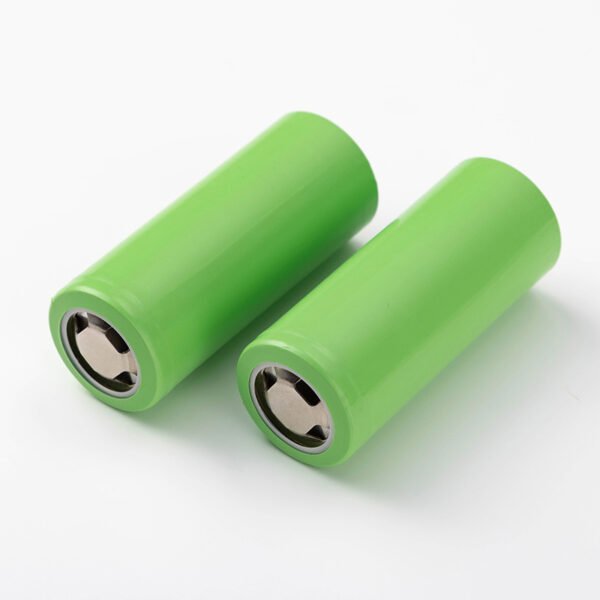
46150 Battery Cell Long Cycle Life | CNS BATTERY
Engineering Deep-Dive into Next-Generation Cylindrical Lithium-Ion Technology
The 46150 battery cell represents a critical advancement in cylindrical lithium-ion technology, delivering exceptional long cycle life performance for demanding industrial and energy storage applications. As global demand for reliable energy storage solutions intensifies across European, North American, and Asian markets, understanding the technical foundations behind extended cycle performance becomes essential for engineers and technical procurement specialists evaluating battery suppliers.
Technical Architecture Behind Extended Cycle Performance
The 46150 designation follows IEC standard nomenclature, indicating a cylindrical cell with 46mm diameter and 150mm height. This form factor optimizes the surface-area-to-volume ratio, enabling superior thermal management compared to smaller cylindrical formats like 18650 or 21700 cells. The enhanced thermal dissipation directly contributes to cycle life extension by minimizing degradation mechanisms accelerated by heat accumulation.
Key Parameter Advantages
Electrode Material Optimization: CNS BATTERY’s 46150 cells utilize advanced cathode formulations with stabilized crystal structures that resist capacity fade during repeated charge-discharge cycles. The anode incorporates silicon-graphite composite materials, balancing energy density with mechanical stability during lithium intercalation.
Electrolyte Engineering: Proprietary electrolyte additives form robust solid-electrolyte interphase (SEI) layers that remain stable across thousands of cycles. This prevents continuous electrolyte consumption and maintains low internal resistance throughout the cell’s operational lifetime.
Manufacturing Precision: Tight tolerance control during electrode coating and cell assembly ensures uniform current distribution, eliminating localized stress points that accelerate degradation.
Cycle Life Testing Methodology
Validating long cycle life claims requires rigorous testing protocols aligned with international standards:
IEC 62619 Compliance: Industrial lithium battery safety standards mandate cycle testing under controlled temperature conditions (typically 25°C ±2°C). Cells undergo repeated charge-discharge cycles at specified C-rates until capacity drops to 80% of initial rating.
UN38.3 Transportation Safety: Before market deployment, all lithium cells must pass UN38.3 testing, including altitude simulation, thermal cycling, vibration, shock, external short circuit, impact, overcharge, and forced discharge tests. This ensures safe global transportation from manufacturing facilities to end-users.
Accelerated Aging Tests: Elevated temperature cycling (45°C-60°C) provides predictive data on long-term performance, enabling engineers to project cycle life under various operating conditions.
Regional Compliance and Technical Barriers
European Market Requirements
For EU market access, 46150 cells must comply with IEC 62619 (industrial application safety) and IEC 62133 (portable equipment safety). The European Battery Regulation (EU) 2023/1542 introduces additional carbon footprint disclosure requirements and recycled content minimums, creating technical barriers that favor manufacturers with transparent supply chains and sustainable production practices.
North American Standards
US market entry requires UL 1642 (cell safety) and UL 2054 (battery pack safety) certifications. The Department of Transportation mandates UN38.3 compliance for all lithium battery shipments. California’s Proposition 65 and emerging state-level battery recycling regulations add additional compliance layers that technical procurement teams must navigate.
Asia-Pacific Considerations
Chinese manufacturers serving global markets must demonstrate compliance with GB/T standards while maintaining export certifications. CNS BATTERY’s manufacturing facilities implement dual-track quality systems satisfying both domestic GB requirements and international IEC/UL standards.
Strategic Supplier Selection Criteria
When evaluating 46150 battery cell suppliers for long-cycle applications, technical teams should verify:
- Documented cycle life data from third-party testing laboratories
- Regional certification portfolios matching target market requirements
- Manufacturing traceability systems enabling quality accountability
- Technical support infrastructure for integration assistance
CNS BATTERY maintains comprehensive certification documentation and provides detailed technical specifications for engineering evaluation. Their cylindrical battery cell production lines operate under ISO 9001 quality management systems, ensuring consistent performance across production batches.
For detailed product specifications and technical documentation, visit the cylindrical battery cell product page. Engineering teams requiring custom configurations or volume procurement should review battery manufacturers in China for capability assessment. Direct technical consultation is available through the contact page.
Conclusion
The 46150 battery cell format delivers compelling advantages for applications requiring extended cycle life, including stationary energy storage, electric mobility, and industrial equipment. Success in global markets demands not only technical excellence but also comprehensive regulatory compliance across target regions. Manufacturers combining advanced cell chemistry with robust quality systems and complete certification portfolios position themselves as preferred suppliers for demanding international procurement programs.
Technical procurement specialists evaluating 46150 cells should prioritize suppliers demonstrating proven cycle life performance, complete regional compliance documentation, and responsive engineering support capabilities. These factors collectively determine total cost of ownership and project success in increasingly competitive energy storage markets.

