
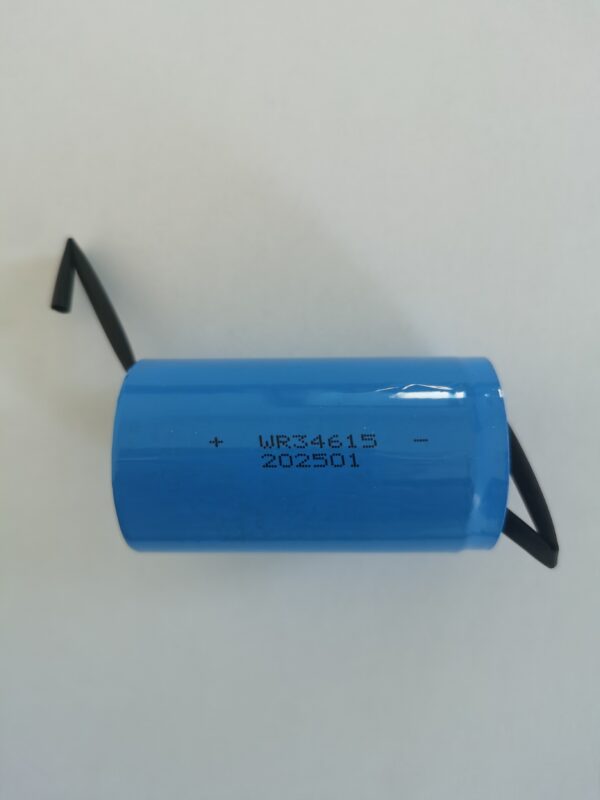
Low Noise Lithium Battery for Precision Scientific Instruments
In the realm of precision scientific instrumentation, power supply stability is not merely a convenience—it is a fundamental requirement for measurement accuracy. Low noise lithium batteries have emerged as the critical power solution for applications where electrical interference can compromise data integrity, from analytical spectrometers to medical diagnostic equipment. As primary lithium battery specialists, we understand that voltage fluctuation and electromagnetic noise represent the two primary threats to instrument precision.
Why Noise Matters in Scientific Applications
Scientific instruments operating at microvolt or picoampere sensitivity levels cannot tolerate power supply variations. Traditional alkaline or rechargeable lithium-ion batteries exhibit voltage decay curves and generate switching noise during discharge cycles. This electrical instability introduces measurement errors that cascade through sensitive detection circuits, particularly in:
- Mass spectrometers requiring stable ionization chamber potentials
- Chromatography detectors where baseline drift affects quantification
- Electrophysiology equipment measuring neuronal or cardiac signals
- Optical sensors dependent on consistent photomultiplier tube bias voltages
Primary lithium metal batteries, specifically lithium thionyl chloride (Li-SOCl₂) chemistry, deliver inherently low noise characteristics due to their electrochemical stability. Unlike rechargeable systems with complex battery management circuits, single-use lithium primary cells maintain flat discharge curves throughout 90% of their capacity, eliminating voltage sag that triggers noise in downstream regulation circuits.
Technical Advantages of Low Noise Primary Lithium Batteries
1. Ultra-Stable Voltage Output
Premium ER-series lithium batteries (ER14505, ER18505, ER26500) provide nominal 3.6V output with less than 0.1V variation across their operational lifetime. This stability eliminates the need for complex voltage regulation that introduces switching noise. For instruments requiring extended deployment without maintenance, self-discharge rates below 1% per year ensure consistent performance over 10+ year service intervals.
2. Minimal Electromagnetic Interference
Primary lithium batteries generate zero electromagnetic interference during operation. There are no internal protection circuits, balancing systems, or charge controllers that could emit RF noise. This characteristic proves essential for:
- NMR spectroscopy equipment operating near sensitive RF receivers
- Electron microscopy systems requiring clean power for beam stability
- Quantum sensing applications where environmental noise compromises coherence
3. Wide Temperature Performance
Scientific instruments often operate in controlled environments, but field-deployable equipment faces temperature extremes. Quality lithium primary batteries function reliably from -55°C to +85°C without performance degradation. This thermal stability prevents noise generation from temperature-induced voltage variations that plague alternative chemistries.
4. High Energy Density with Low Internal Resistance
Modern composite power designs pair Li-SOCl₂ cells with hybrid layer capacitors (HLC) to deliver pulse currents up to 4A while maintaining low noise baselines. This architecture supports instruments with intermittent high-power demands—such as wireless data transmission in remote monitoring stations—without compromising measurement precision during active sampling periods.
Selection Criteria for B2B Procurement
When evaluating low noise lithium batteries for scientific instrumentation, procurement teams should verify:
| Parameter | Minimum Specification |
|---|---|
| Voltage Stability | ±0.05V over 80% discharge |
| Self-Discharge Rate | <1% per year at 25°C |
| Operating Temperature | -40°C to +85°C |
| Internal Resistance | <20Ω for standard cells |
| Capacity Retention | >90% after 5 years storage |
Certification compliance matters equally. Ensure batteries meet IEC 60086-4 safety standards and UN 38.3 transportation requirements. For medical-adjacent applications, ISO 13485 manufacturing certification provides additional quality assurance.
Implementation Best Practices
Proper battery integration maximizes noise reduction benefits:
- Direct Connection Architecture: Minimize intermediate regulation stages between battery and load
- Shielded Compartment Design: Prevent external EMI from affecting battery terminals
- Parallel Configuration: For critical systems, implement redundant battery banks with isolation diodes
- Regular Voltage Monitoring: Deploy non-invasive monitoring to predict end-of-life before noise increases
Long-Term Partnership Value
Selecting the right primary battery supplier extends beyond component specification. Established manufacturers provide application engineering support, custom form factor development, and batch-to-batch consistency documentation essential for instrument certification processes. Volume procurement agreements ensure supply chain stability for production runs spanning multiple years.
For detailed technical specifications and application consultation, explore our comprehensive primary battery product portfolio. Our engineering team supports instrument manufacturers from prototype development through mass production scaling.
Conclusion
Low noise lithium batteries represent a critical enabling technology for precision scientific instruments. The combination of voltage stability, zero EMI generation, and extended service life makes primary lithium chemistry the optimal choice for applications where measurement accuracy cannot be compromised. By partnering with experienced battery suppliers who understand scientific instrumentation requirements, OEMs can ensure their devices deliver reliable performance throughout their operational lifetime.
Ready to optimize your instrument’s power architecture? Contact our technical team for application-specific recommendations and sample evaluation programs.
