

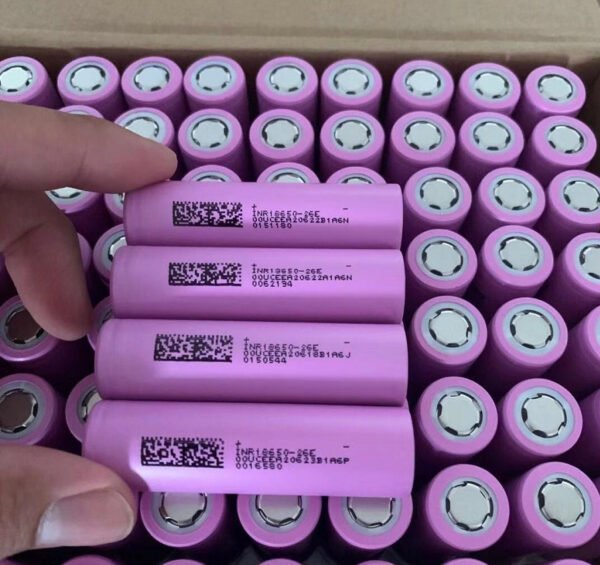
Long Cycle Life 18650 LFP Cells for ESS – Ultimate Guide
As we advance into 2026, the Energy Storage System (ESS) market is undergoing a rigorous transformation. For engineers and technical purchasers, the core component defining system reliability is no longer just capacity, but cycle life and regulatory compliance. Among various form factors, the 18650 LFP (Lithium Iron Phosphate) cell remains a cornerstone for modular ESS designs due to its mechanical stability and mature supply chain. This guide provides a deep technical拆解 (breakdown) of long-cycle 18650 LFP cells, focusing on performance parameters, testing methodologies, and critical geo-regulatory compliance for global deployment.
Why 18650 LFP Chemistry Dominates Long-Cycle ESS
The choice of Lithium Iron Phosphate (LiFePO₄) over NCM (Nickel Cobalt Manganese) for stationary storage is driven by thermodynamic stability. The strong P-O bond in the phosphate polyanion group prevents oxygen release during thermal abuse, significantly reducing thermal runaway risks.
For ESS applications, the “Long Cycle Life” designation typically implies a capability of 3,000 to 5,000 cycles at 80% Depth of Discharge (DOD) while retaining 80% of initial capacity. In a 18650 cylindrical format, achieving this requires precise control over electrode coating consistency and electrolyte formulation. High-quality cells utilize advanced conductive agents and optimized porosity to minimize internal resistance growth over time. When sourcing these cells, engineers must verify that the nominal voltage is 3.2V with a charge cutoff of 3.65V, distinct from the 3.7V/4.2V profile of standard Li-ion cells.
For a comprehensive selection of high-grade cylindrical cells designed for such demanding applications, review the specifications at Cylindrical Battery Cell.
Critical Performance Parameters for 2026 ESS Projects
When evaluating datasheets for long-cycle 18650 LFP cells, three parameters dictate total cost of ownership (TCO):
- Cycle Life vs. Calendar Life: While cycle life indicates usage durability, calendar life determines degradation over time regardless of use. In 2026, premium ESS cells should guarantee a calendar life of 10+ years at 25°C.
- DC Internal Resistance (DCIR): Low DCIR is crucial for efficiency. A typical high-quality 18650 LFP cell should exhibit a DCIR of ≤35mΩ. Higher resistance leads to excessive heat generation during high-current charging, accelerating degradation.
- Consistency (Voltage & Capacity Gap): For battery packs, cell-to-cell consistency is vital. A voltage gap of ≤10mV and capacity gap of ≤1% after grading are industry benchmarks for minimizing BMS balancing losses.
Verification: Testing Methods and Standards
Claims of “long cycle life” must be validated through standardized testing. Reliance on manufacturer datasheets alone is insufficient for critical infrastructure.
- IEC 62619: This international standard specifies requirements for the safe operation of secondary lithium cells and batteries used in industrial applications. It covers mandatory safety tests including external short circuit, free drop, and vibration.
- UL 1973: For North American deployment, UL 1973 is the benchmark for batteries in stationary and motive auxiliary power applications. It rigorously tests electrical abuse and mechanical integrity.
- Cycle Testing Protocol: A robust verification involves cycling cells at 1C charge/1C discharge at 45°C to simulate accelerated aging. Capacity checks should occur every 500 cycles.
Engineers should request third-party test reports (e.g., from TÜV or UL) rather than internal factory data. Reliable Battery Manufacturers in China will provide transparent access to these certification documents, ensuring the cells meet international safety thresholds.
Geo-SEO and Regional Compliance: EU and US Market Access
In 2026, technical performance is only half the battle; regulatory compliance is the gatekeeper. For global ESS projects, understanding regional barriers is essential for procurement.
European Union: The Battery Regulation (EU) 2023/1542
The EU has implemented the world’s strictest battery laws. As of 2026, the Battery Passport is becoming mandatory for industrial batteries. This digital record requires detailed data on carbon footprint, recycled content, and supply chain due diligence.
- CE Marking: Essential for market entry, indicating conformity with health, safety, and environmental protection standards.
- Sustainability: Cells must meet minimum recycled content targets and declare their carbon footprint per kWh.
Procuring cells that are pre-compliant with EU Battery Regulation reduces time-to-market significantly for European integrators.
United States: UL and Incentive Alignment
The US market prioritizes safety certification under the National Electrical Code (NEC).
- UL 9540: This standard for energy storage systems and equipment often requires the underlying cells to be UL 1973 listed.
- IRA Compliance: For projects seeking tax credits under the Inflation Reduction Act, supply chain traceability is key. Sourcing from manufacturers with transparent foreign entity of concern (FEOC) guidelines is critical.
CNS Product Technical Barriers and Adaptability
Navigating these complex regulatory landscapes requires a manufacturing partner with deep technical barriers and global adaptability. CNS Battery focuses on bridging the gap between high-performance cell chemistry and strict regional compliance.
Our technical壁垒 (barriers) include proprietary electrolyte additives that enhance high-temperature stability, crucial for passing UL thermal propagation tests. Furthermore, our production lines are audited to ensure data integrity for the EU Battery Passport, allowing seamless integration into European ESS projects. Whether you are deploying in California or Germany, our cells are engineered to meet the specific voltage and safety standards required by local grid codes.
Conclusion
Selecting long cycle life 18650 LFP cells for ESS in 2026 is a multi-dimensional decision involving electrochemistry, validation testing, and geopolitical compliance. Prioritizing cells that offer verified 5,000+ cycle life alongside full EU and US regulatory documentation ensures project longevity and safety.
For technical inquiries regarding specific compliance documentation or custom cell grading, please reach out via our Contact Page. Partnering with a supplier who understands both the science of LFP and the law of global trade is the ultimate strategy for successful energy storage deployment.


