

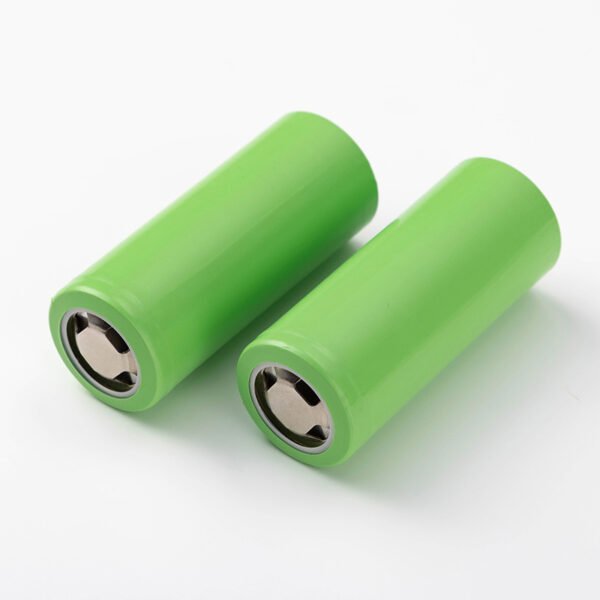
Factory Direct 18650 LFP Cells China Export: No Low Temperature Performance for Power Tools Projects Low Price High Quality
Introduction
In the global lithium battery market, 18650 LFP (Lithium Iron Phosphate) cells have emerged as a critical power solution for industrial applications. However, when sourcing from China export channels, technical buyers and engineers must understand the inherent limitations—particularly regarding low-temperature performance in power tools projects. This article provides a professional technical analysis to help B2B purchasers make informed decisions while balancing cost efficiency with performance requirements.
Understanding LFP Chemistry Fundamentals
Lithium Iron Phosphate chemistry offers distinct advantages including thermal stability, extended cycle life (2000-5000 cycles), and enhanced safety characteristics compared to NMC or NCA alternatives. The olivine crystal structure provides stable voltage platforms at 3.2V nominal, making it suitable for applications prioritizing longevity over energy density.
However, the electrochemical characteristics present challenges in cold environments. At temperatures below 0°C, LFP cells experience increased internal resistance due to reduced lithium-ion mobility within the cathode structure. This phenomenon directly impacts discharge capability and available capacity in power tools applications.
Low Temperature Performance Limitations
Technical Analysis
When operating below -10°C, standard 18650 LFP cells demonstrate capacity retention of approximately 60-70% compared to room temperature performance. The charge acceptance becomes severely restricted below 0°C, with most manufacturers recommending no charging below this threshold to prevent lithium plating.
For power tools projects requiring outdoor operation in cold climates, this limitation necessitates careful system design considerations:
- Thermal Management: Active heating systems may be required for cold climate deployments
- Derating Factors: Power output expectations must account for temperature-based capacity loss
- Alternative Chemistry: Consider NMC variants for extreme cold applications
Impact on Power Tools Applications
Power tools demand high discharge rates (typically 5C-10C continuous) combined with reliable performance across varying environmental conditions. LFP cells excel in room temperature high-drain scenarios but require engineering accommodations for cold weather operation. Professional procurement teams should evaluate:
- Operating temperature ranges specified in project requirements
- Expected duty cycles and peak current demands
- Total cost of ownership including potential thermal management systems
Quality Considerations in China Export Market
The Chinese battery manufacturing sector offers competitive pricing through economies of scale and vertical integration. However, quality variance exists across suppliers. Professional buyers should verify:
- Cell Consistency: Capacity matching within ±3% for pack assembly
- Internal Resistance: Uniform IR values ensuring balanced performance
- Certification Compliance: UN38.3, IEC62133, and relevant regional standards
- Manufacturing Traceability: Batch tracking and quality documentation
For comprehensive supplier evaluation, visit https://cnsbattery.com/battery-manufacturers-in-china/ to understand manufacturing capabilities and quality assurance processes.
Cost-Performance Optimization Strategies
Factory direct purchasing eliminates distributor margins, typically reducing unit costs by 15-25%. However, technical buyers must balance initial savings against long-term performance requirements:
| Consideration | LFP Advantage | Limitation |
|---|---|---|
| Cycle Life | 2000-5000 cycles | Temperature sensitivity |
| Safety | Thermal runaway >270°C | Lower energy density |
| Cost | Lower raw material costs | Potential heating system costs |
| Applications | Stationary storage, indoor tools | Outdoor cold climate limitations |
Technical Specifications for Professional Evaluation
When evaluating 18650 LFP cells for power tools projects, request comprehensive datasheets including:
- Temperature-dependent discharge curves (-20°C to 60°C)
- Impedance spectroscopy data across temperature ranges
- Cycle life testing at various C-rates and temperatures
- Safety testing documentation (nail penetration, overcharge, short circuit)
Explore our cylindrical battery cell specifications at https://cnsbattery.com/products-3/cylindrical-battery-cell/ for detailed technical parameters suitable for engineering evaluation.
Conclusion and Procurement Recommendations
18650 LFP cells from China export channels offer compelling value propositions for power tools projects operating within moderate temperature ranges. Professional buyers should conduct thorough technical due diligence, considering total system costs including potential thermal management requirements.
For projects requiring reliable cold-weather performance, consider hybrid approaches combining LFP with appropriate battery management systems or alternative chemistry selections based on specific application requirements.
Our technical team supports B2B customers with application engineering consultation and customized solutions. Contact us at https://cnsbattery.com/contact-2/ for project-specific technical discussions and quotation requests.
Key Takeaway: Factory direct 18650 LFP cells deliver excellent value for indoor or temperate climate power tools applications. Cold climate deployments require careful engineering assessment to ensure performance expectations align with electrochemical realities. Professional procurement combines cost optimization with technical validation for successful project outcomes.


