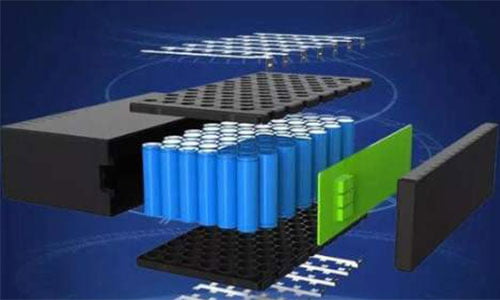
60130 Lithium Ion Cylindrical Battery Wholesale Supplier from China: Guaranteed Short Lead Time for Electric Vehicle OEMs
The electric vehicle revolution demands reliable power solutions with uncompromising safety and performance. For EV OEMs seeking scalable battery partnerships, the 60130 lithium ion cylindrical battery represents a strategic choice combining high energy density, thermal stability, and manufacturing maturity. As a leading wholesale supplier from China, CNS Battery delivers guaranteed short lead times while maintaining full compliance with EU, US, and international transportation standards.
Understanding the 60130 Cylindrical Cell Architecture
The 60130 designation indicates a cylindrical cell with 60mm diameter and 130mm height, positioning it within the large-format cylindrical battery category alongside 4680 and 4695 formats. This geometry offers significant advantages for EV applications:
- Enhanced Energy Density: Larger form factor reduces inactive material ratio, achieving 250-280 Wh/kg at cell level
- Superior Thermal Management: Cylindrical structure enables uniform heat dissipation, critical for preventing thermal runaway
- Mechanical Robustness: Steel casing provides structural integrity against vibration and impact stresses common in automotive environments
The electrochemical foundation typically employs NCM (Nickel-Cobalt-Manganese) or LFP (Lithium Iron Phosphate) cathode chemistry, paired with graphite or silicon-blended anodes. This configuration balances capacity, cycle life, and cost according to specific OEM requirements.
Key Performance Parameters for EV Integration
| Parameter | Specification Range | Testing Standard |
|---|---|---|
| Nominal Capacity | 18-25 Ah | IEC 61960 |
| Operating Voltage | 3.2V (LFP) / 3.7V (NCM) | UN38.3 T1-T8 |
| Cycle Life | 2,000-3,000 cycles @80% DOD | GB/T 31484 |
| Operating Temperature | -20°C to 60°C | IEC 62619 |
| C-Rate Capability | 1C continuous, 3C peak | UL 1973 |
For technical procurement teams evaluating suppliers, these parameters must be validated through comprehensive testing protocols. CNS Battery maintains in-house testing facilities capable of performing all critical validation procedures before shipment.
Critical Testing Methodologies for Quality Assurance
1. UN38.3 Transportation Safety Testing
All lithium battery exports require UN38.3 certification covering eight mandatory tests:
- T1 Altitude Simulation: 11.6 kPa pressure for 6 hours
- T2 Thermal Testing: -40°C to +75°C cycling
- T3 Vibration: 3-axis sinusoidal vibration
- T4 Shock: 150g peak acceleration
- T5 External Short Circuit: 55°C condition
- T6 Impact/Crush: 13kN force application
- T7 Overcharge: 2x voltage exposure
- T8 Forced Discharge: Complete discharge cycle
This certification is non-negotiable for air and ocean freight to North American and European markets.
2. IEC 62619 Industrial Safety Standards
For stationary and automotive applications, IEC 62619 validates secondary lithium cell safety through:
- External short circuit testing
- Overcharge protection verification
- Thermal abuse resistance (130°C exposure)
- Mechanical integrity assessment
3. Cycle Life and Capacity Validation
Accelerated aging tests simulate 5-10 year operational life through:
- Calendar Life Testing: Storage at 45°C, 100% SOC
- Cycle Testing: 1C charge/discharge at 25°C and 45°C
- Capacity Fade Monitoring: Quarterly measurements until 80% EOL
Geographic Compliance and Regional Market Adaptation
European Union Requirements
The EU Battery Regulation 2023/1542 introduces mandatory requirements effective 2026:
- Battery Passport: Digital documentation containing chemistry, manufacturing data, and carbon footprint
- CE Marking: Compliance with EN 62619 and RoHS directives
- Recyclability Standards: Minimum 50% material recovery by 2027
Chinese manufacturers serving EU OEMs must establish traceability systems and carbon accounting protocols. CNS Battery maintains full documentation chains supporting Battery Passport requirements.
United States Market Entry
US market access requires:
- UL 1973 for stationary applications
- UL 2580 for EV battery systems
- DOT/UN38.3 for transportation
- California Title 20 for energy efficiency
Regional Manufacturing Considerations
For OEMs requiring localized supply chains, understanding battery manufacturers in China provides insight into production capacity and quality systems. Chinese facilities offer cost advantages while maintaining ISO 9001 and IATF 16949 certifications required by automotive Tier-1 suppliers.
Supply Chain Advantages: Short Lead Time Commitment
The competitive advantage for EV OEMs lies in guaranteed delivery timelines. CNS Battery maintains:
- 4-6 week standard lead time for production orders
- Safety stock programs for high-volume partners
- Dedicated production lines for OEM-specific configurations
This responsiveness addresses the critical pain point of battery supply constraints affecting global EV production schedules.
Technical Partnership Framework
Successful EV battery integration requires more than component supply. Technical collaboration encompasses:
- BMS Compatibility Testing: Ensuring cell-to-pack communication protocols
- Thermal System Integration: Validating cooling plate designs
- Module Assembly Support: Providing welding parameters and fixture specifications
Access detailed product specifications through the cylindrical battery cell catalog for engineering evaluation samples.
Conclusion: Strategic Sourcing for 2026 and Beyond
The 60130 cylindrical battery format represents a mature, scalable solution for EV OEMs balancing performance, safety, and cost. With 2026 regulatory deadlines approaching—including EU Battery Passport mandates and updated UN38.3 transportation requirements—partner selection must prioritize compliance capability alongside technical specifications.
Chinese wholesale suppliers offering guaranteed short lead times, full certification documentation, and technical support provide strategic advantages for OEMs accelerating production timelines. The key differentiator lies not merely in cell performance, but in the supplier’s ability to navigate complex regulatory landscapes while maintaining delivery commitments.
For procurement teams initiating supplier qualification, direct engagement through CNS Battery contact channels enables technical deep-dives and sample evaluation programs aligned with your development roadmap.
This technical analysis reflects current industry standards as of March 2026. Specifications subject to verification through direct supplier engagement and independent testing.