

Buy Wholesale 18650 NCM Cells Bulk: High Factory Audit IATF16949 Performance for Industrial AGV – Ultimate Guide
For industrial automation engineers and technical procurement specialists sourcing 18650 NCM cells in bulk, understanding the intersection of cell chemistry, manufacturing audits, and regional compliance is critical. This guide dissects the technical parameters, testing methodologies, and geographic适配性 required for deploying lithium-ion batteries in Automated Guided Vehicles (AGVs) across EU and US markets.
Why 18650 NCM Chemistry Dominates Industrial AGV Applications
Nickel-Cobalt-Manganese (NCM) cathode chemistry delivers an optimal balance between energy density (200-250 Wh/kg), cycle life (1500-2500 cycles), and thermal stability. For AGV applications requiring consistent power delivery under variable load conditions, 18650 cylindrical form factors provide superior mechanical robustness and heat dissipation compared to pouch or prismatic alternatives.
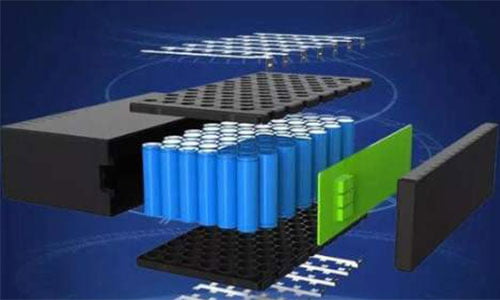
The nominal voltage of 3.6V-3.7V per cell enables flexible pack configuration, while the standardized 18mm diameter × 65mm length dimensions simplify thermal management system design. When purchasing wholesale, verify capacity ratings (typically 2500-3500mAh) against actual discharge curves at 1C-3C rates relevant to your AGV duty cycles.
IATF16949 Factory Audit: What Technical Buyers Must Verify
IATF16949 certification extends beyond ISO9001 by mandating automotive-grade quality management throughout the supply chain. For AGV battery procurement, this ensures:
- Process Control: Statistical Process Control (SPC) monitoring during electrode coating, winding, and electrolyte filling
- Traceability: Full lot tracking from raw material sourcing through final cell testing
- Risk Management: PFMEA (Process Failure Mode Effects Analysis) documentation for critical manufacturing steps
When evaluating suppliers, request audit reports confirming IATF16949 scope includes cylindrical cell production—not just pack assembly. Many manufacturers claim certification while outsourcing cell manufacturing, creating quality gaps in wholesale transactions.
Critical Performance Parameters for AGV Deployment
| Parameter | Industrial Grade Requirement | Testing Standard |
|---|---|---|
| Capacity Retention | ≥80% after 1000 cycles | IEC 62660-2 |
| Operating Temperature | -20°C to 60°C | UN 38.3 |
| Internal Resistance | ≤35mΩ at 1kHz | IEEE 1625 |
| Self-Discharge Rate | ≤3% per month | GB/T 18287 |
For EU deployments, ensure cells meet IEC 62619 (safety requirements for secondary lithium cells) and UN 38.3 (transportation testing). US markets require UL 1642 cell-level certification plus UL 2580 for battery systems. California’s Title 20 energy efficiency regulations may additionally apply for warehouse AGV fleets.
Testing Methodologies: Validating Wholesale Cell Quality
Technical procurement teams should mandate third-party validation using these protocols:
- Capacity Verification: Discharge at 0.5C from 4.2V to 2.75V at 25°C, comparing against rated capacity
- Impedance Spectroscopy: Measure AC internal resistance across 1kHz-10Hz frequency range to detect electrode degradation
- Thermal Abuse Testing: Heat cells to 130°C for 30 minutes per UN 38.3 T4 requirements
- Cycle Life Acceleration: 500-cycle testing at 45°C with 1C charge/2C discharge to project long-term performance
Request test reports from accredited laboratories (TÜV, SGS, or Intertek) rather than relying solely on manufacturer data sheets. Wholesale purchases exceeding 10,000 cells justify independent validation costs.
CNS Products: Geographic Compliance & Technical Barriers
CNS Battery’s 18650 NCM cells are engineered for global AGV deployment with region-specific compliance architectures. For European customers, cells undergo additional EMC testing per EN 61000-6-2/6-4 standards, ensuring electromagnetic compatibility within automated warehouse environments. US-bound shipments include DOT-SP 13721 transportation exemptions for lithium battery quantities exceeding standard limits.
The technical barrier lies in maintaining IATF16949 process controls while adapting to regional certification requirements. CNS Battery’s manufacturing facilities maintain separate production lines for EU-certified versus US-certified cells, preventing cross-contamination of compliance documentation. This geographic segmentation ensures that technical buyers receive cells with appropriate certification marks for their deployment regions.
For detailed specifications on cylindrical battery cells suitable for AGV applications, visit CNS Battery’s Cylindrical Cell Product Line. Technical procurement teams evaluating Chinese manufacturing partners should review Battery Manufacturers in China for supply chain transparency data.
Conclusion: Strategic Wholesale Procurement for AGV Fleets
Purchasing 18650 NCM cells in bulk requires balancing technical specifications, manufacturing audits, and geographic compliance. IATF16949 certification provides the quality foundation, while regional standards (IEC/UL/UN) determine market access. Technical buyers should prioritize suppliers offering transparent test data, traceable manufacturing records, and region-specific certification documentation.
For partnership inquiries or technical consultations on AGV battery integration, contact CNS Battery’s Technical Team to discuss volume pricing, lead times, and compliance documentation for your specific deployment geography.


