

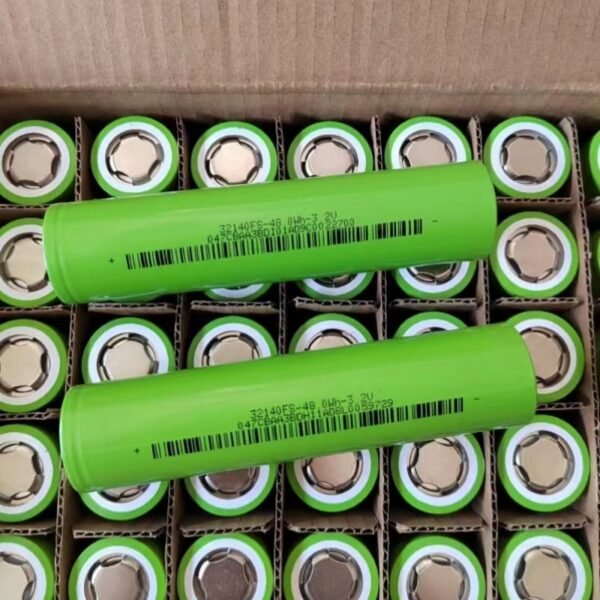
Zero Swelling Issues 18650 LFP Cells for Power Tools – OEM Custom Solutions
The power tool industry demands battery solutions that deliver exceptional safety, longevity, and performance under extreme operating conditions. Among emerging technologies, 18650 LFP (Lithium Iron Phosphate) cells have gained significant traction for their zero swelling characteristics and superior thermal stability. This article explores why OEM manufacturers are increasingly adopting LFP chemistry for professional power tool applications and how custom solutions can optimize your product development.
Understanding Zero Swelling Technology in LFP Cells
Battery swelling represents one of the most critical failure modes in lithium-ion systems. Traditional NMC or NCA chemistries experience volumetric expansion during cycling due to structural changes in the cathode material and electrolyte decomposition. LFP chemistry fundamentally eliminates this issue through its stable olivine crystal structure, which maintains dimensional integrity throughout thousands of charge-discharge cycles.
The phosphorus-oxygen bonds in LiFePO₄ create a robust framework that resists thermal runaway and prevents gas generation during operation. This inherent stability translates to zero swelling issues even under high-current discharge scenarios typical in power tools, where peak currents can exceed 30A per cell.
Technical Advantages for Power Tool Applications
1. Thermal Stability and Safety
LFP cells operate safely within a temperature range of -20°C to 60°C, with thermal runaway initiation temperatures exceeding 270°C—significantly higher than NMC alternatives. For power tools used in demanding environments, this provides crucial safety margins that protect both equipment and operators.
2. Cycle Life Performance
Professional power tools require batteries capable of sustaining 2,000+ full cycles while maintaining 80% capacity retention. 18650 LFP cells consistently deliver 3,000-5,000 cycles under standard testing conditions, reducing total cost of ownership and minimizing warranty claims for OEM partners.
3. Consistent Voltage Platform
The flat discharge curve of LFP chemistry (3.2V nominal) ensures predictable power delivery throughout the discharge cycle. This characteristic enables more accurate battery management system (BMS) design and prevents unexpected power drops during critical operations.
OEM Custom Solution Framework
Successful integration of 18650 LFP cells requires comprehensive customization across multiple dimensions:
Cell Specification Optimization: Working with experienced manufacturers allows OEMs to tailor capacity, discharge rates, and dimensional tolerances to specific tool requirements. High-drain variants support brushless motor applications, while standard versions optimize runtime for continuous-duty tools.
Pack Design Integration: Custom battery packs must accommodate unique form factors while ensuring proper thermal management and mechanical protection. Modular designs enable scalability across product lines without redesigning core components.
BMS Compatibility: Advanced battery management systems must communicate seamlessly with tool electronics, providing accurate state-of-charge information and protecting against over-discharge, over-current, and temperature extremes.
For manufacturers seeking reliable partnership opportunities, exploring established battery manufacturers in China provides access to proven supply chains with comprehensive quality certifications including UN38.3, IEC62133, and UL1642.
Quality Assurance and Manufacturing Standards
Zero swelling performance depends heavily on manufacturing precision. Key quality indicators include:
- Electrode coating uniformity within ±2% tolerance
- Electrolyte filling accuracy ensuring optimal ion transport
- Welding integrity for consistent internal resistance across production batches
- Aging process control to identify early-life failures before shipment
Reputable suppliers maintain automated production lines with real-time monitoring systems that track critical parameters throughout manufacturing. This ensures batch-to-batch consistency essential for OEM applications.
Implementation Considerations
When transitioning from conventional lithium-ion to LFP technology, engineers must account for the lower nominal voltage (3.2V vs 3.6-3.7V). This typically requires adding series cells to maintain equivalent pack voltage, affecting overall pack dimensions and weight distribution.
Additionally, LFP cells exhibit different charging profiles requiring BMS algorithm adjustments. Constant-current charging should terminate at 3.65V per cell, with optional balancing during the saturation phase to maximize pack capacity utilization.
Conclusion
The adoption of zero swelling 18650 LFP cells represents a strategic advantage for power tool manufacturers prioritizing safety, longevity, and total cost optimization. As the industry shifts toward more sustainable and reliable energy storage solutions, LFP technology positions OEMs to meet increasingly stringent regulatory requirements while delivering superior user experiences.
For technical consultations and custom development projects, visit our contact page to connect with engineering specialists. Explore our complete range of cylindrical battery cells to identify specifications matching your application requirements.
Partnering with experienced cell manufacturers ensures access to cutting-edge LFP technology backed by comprehensive testing data, regulatory compliance documentation, and scalable production capacity. The zero swelling advantage isn’t just a technical specification—it’s a competitive differentiator that strengthens brand reputation and reduces lifecycle costs across your entire power tool portfolio.


