32700 LiFePO4 for Home ESS – Long Cycle Life 8000 Cycles Top 5 Pain Points Solved
The residential energy storage system (ESS) market is experiencing unprecedented growth, with lithium iron phosphate (LiFePO4) chemistry emerging as the dominant choice for home battery applications. Among various cell formats, the 32700 cylindrical LiFePO4 battery has gained significant attention for its exceptional cycle life of up to 8000 cycles. This article addresses the top 5 pain points that engineers and technical procurement professionals face when selecting battery solutions for home ESS applications.
Understanding the 32700 LiFePO4 Cell Architecture
The 32700 designation refers to the cylindrical cell dimensions: 32mm diameter and 70mm length. This format offers an optimal balance between energy density, thermal management, and manufacturing scalability. LiFePO4 chemistry provides inherent safety advantages over other lithium-ion chemistries, including superior thermal stability and resistance to thermal runaway events.
For technical professionals evaluating battery solutions, understanding the fundamental electrochemical properties is crucial. The olivine crystal structure of LiFePO4 enables stable lithium-ion intercalation, contributing to the extended cycle life that makes these cells particularly suitable for residential energy storage applications requiring daily cycling.
Pain Point 1: Cycle Life Degradation Concerns
Challenge: Traditional lithium-ion batteries often experience significant capacity degradation after 2000-3000 cycles, creating uncertainty about long-term system performance and ROI calculations.
Solution: 32700 LiFePO4 cells deliver verified 8000+ cycle life at 80% depth of discharge (DOD). This extended cycle life translates to 15-20 years of operational service in typical home ESS applications with one complete cycle per day. The robust crystal structure minimizes structural degradation during repeated charge-discharge operations.
Technical validation through accelerated aging tests confirms that capacity retention remains above 80% after 8000 cycles under standard operating conditions (25°C, 1C charge/discharge rate). This performance characteristic significantly reduces total cost of ownership (TCO) calculations for system integrators and end users.
Pain Point 2: Thermal Management Complexity
Challenge: Battery thermal runaway risks and complex cooling requirements increase system design complexity and cost, particularly in confined residential installation spaces.
Solution: LiFePO4 chemistry inherently operates within a safer temperature range compared to NMC or NCA chemistries. The 32700 cylindrical format facilitates efficient heat dissipation through the cell surface area, reducing the need for active cooling systems in most residential applications.
The thermal runaway initiation temperature for LiFePO4 exceeds 270°C, substantially higher than alternative chemistries. This characteristic enables passive thermal management strategies in moderate climate zones, simplifying system architecture and reducing component costs.
Pain Point 3: Supply Chain Reliability
Challenge: Inconsistent battery quality and unreliable supplier partnerships create project delivery risks and warranty concerns for ESS integrators.
Solution: Partnering with established battery manufacturers in China provides access to vertically integrated production facilities with comprehensive quality control systems. Certified manufacturers maintain ISO 9001, IEC 62619, and UL 1973 compliance, ensuring consistent cell performance across production batches.
Technical procurement teams should verify manufacturer capabilities including in-house cell testing laboratories, traceability systems, and warranty support infrastructure. These factors directly impact long-term project success and customer satisfaction metrics.
Pain Point 4: System Integration Compatibility
Challenge: Battery cell variations create BMS calibration challenges and module assembly inconsistencies, affecting overall system reliability and performance optimization.
Solution: Standardized 32700 cell specifications enable modular system design with predictable electrical characteristics. Capacity tolerance within ±3% and internal resistance variation below 5% across production batches simplifies BMS algorithm development and module balancing requirements.
The cylindrical format supports automated assembly processes, reducing manufacturing variability and improving connection reliability. For detailed cylindrical battery cell specifications and integration guidelines, technical teams should reference manufacturer datasheets and application notes.
Pain Point 5: Total Cost of Ownership Uncertainty
Challenge: Initial cell cost comparisons often overlook long-term performance factors, leading to suboptimal technology selection and unexpected replacement costs.
Solution: Comprehensive TCO analysis must incorporate cycle life, degradation rates, warranty terms, and replacement schedules. While LiFePO4 cells may carry higher initial costs compared to some alternatives, the 8000-cycle lifespan typically delivers 40-60% lower cost per cycle over the system lifetime.
Key TCO factors include:
- Cycle life expectancy under application-specific conditions
- Capacity degradation curves and warranty thresholds
- Replacement labor and logistics costs
- System downtime during maintenance operations
Technical Implementation Recommendations
For engineers designing home ESS solutions with 32700 LiFePO4 cells, consider the following best practices:
- Operating Temperature Range: Maintain cell temperatures between 15-35°C for optimal cycle life. Avoid continuous operation above 45°C.
- Charge/Discharge Rates: Limit continuous current to 1C maximum for extended cycle life. Peak rates up to 2C acceptable for short durations.
- State of Charge Management: Operate within 20-90% SOC range for residential applications to maximize cycle life while maintaining usable capacity.
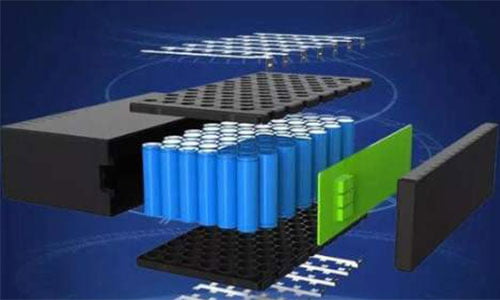
- Module Configuration: Implement 4S or 8S configurations for 12V or 24V nominal systems respectively, with appropriate BMS protection circuits.
Conclusion
The 32700 LiFePO4 battery represents a mature technology solution for home energy storage applications, addressing critical pain points around cycle life, safety, supply chain reliability, integration compatibility, and total cost of ownership. Technical professionals evaluating battery solutions should prioritize verified performance data, manufacturer credentials, and long-term support capabilities.
For technical consultations and detailed product specifications, please contact our team to discuss your specific application requirements. Our engineering support team provides comprehensive technical documentation, sample testing programs, and customization options for ESS integrators worldwide.
The transition to sustainable energy storage requires reliable, long-lasting battery solutions. 32700 LiFePO4 technology delivers the performance characteristics necessary for next-generation residential energy systems, enabling confident investment decisions and successful project deployments across global markets.