

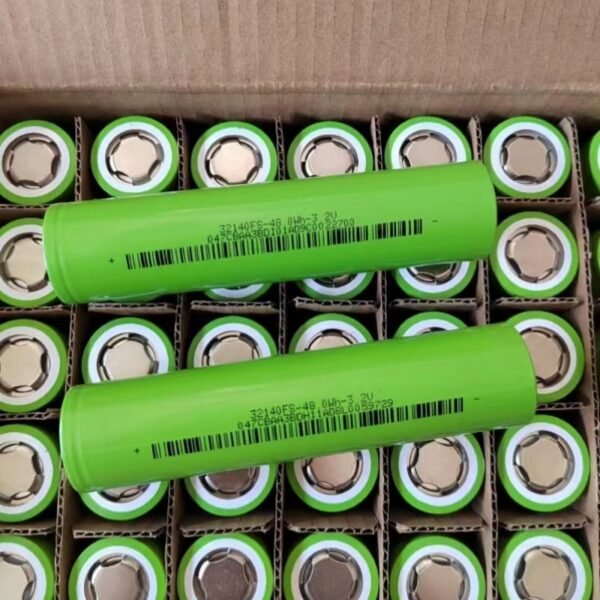
Top 5 Perfect Cell Matching Problems with 33140 Cells in Medical Devices Applications & Solutions
Introduction
In the critical field of medical device manufacturing, battery reliability is not merely a performance metric—it is a matter of patient safety. The 33140 cylindrical lithium-ion cell, with its typical capacity range of 12-18Ah and nominal voltage of 3.6V-3.7V, has become increasingly popular in portable medical equipment including ventilators, infusion pumps, and diagnostic devices. However, achieving perfect cell matching remains one of the most challenging aspects of battery pack design. This article examines the top five cell matching problems encountered with 33140 cells in medical applications and provides engineering-focused solutions.
Problem 1: Capacity Variance Across Production Batches
Technical Challenge: Even within the same manufacturer specification, 33140 cells can exhibit capacity variations of ±3-5% across different production batches. In medical devices requiring consistent runtime performance, this variance creates unpredictable discharge behavior.
Root Cause Analysis: Capacity variance stems from differences in electrode coating thickness, electrolyte filling volume, and formation cycling conditions during manufacturing. When cells with mismatched capacities are connected in parallel, the lower-capacity cells reach discharge cutoff voltage first, triggering premature pack shutdown.
Engineering Solution: Implement strict batch tracing and capacity grading protocols. Cells should be sorted into capacity bins with maximum 1% variance within each pack. Advanced Battery Management Systems (BMS) with individual cell monitoring can compensate for remaining variance through active balancing circuits. For comprehensive battery manufacturing standards, refer to established battery manufacturers in China that maintain ISO 13485 medical device quality certifications.
Problem 2: Internal Resistance (IR) Mismatch
Technical Challenge: Internal resistance variations between 33140 cells cause uneven current distribution during high-drain medical device operations, leading to localized heating and accelerated degradation.
Technical Specification: A typical 33140 cell should maintain AC internal resistance below 35mΩ at 1kHz. However, production variance can create differences exceeding 10mΩ between cells in the same pack.
Engineering Solution: Conduct DC internal resistance testing at multiple current rates (0.5C, 1C, 2C) before pack assembly. Match cells within 5mΩ tolerance for medical applications. Implement thermal management systems with temperature sensors positioned between cell groups. The BMS should monitor individual cell temperatures and reduce discharge current when temperature differentials exceed 5°C.
Problem 3: Self-Discharge Rate Inconsistency
Technical Challenge: Medical devices often remain in standby mode for extended periods. Cells with higher self-discharge rates create voltage imbalances that compromise device readiness during emergency use.
Technical Analysis: Self-discharge rates for quality 33140 cells should not exceed 2-3% per month at 25°C. Variations occur due to separator quality, electrolyte purity, and microscopic internal shorts.
Engineering Solution: Perform 30-day open-circuit voltage (OCV) stability testing before pack assembly. Cells showing voltage drop exceeding 50mV should be excluded. For long-term storage applications, implement periodic topping-charge cycles managed by the BMS. Consider cylindrical battery cell options with enhanced separator technology for reduced self-discharge characteristics.
Problem 4: Voltage Profile Divergence During Discharge
Technical Challenge: Different 33140 cells exhibit varying voltage discharge curves even with matched capacity and IR. This creates state-of-charge (SOC) estimation errors in BMS algorithms.
Technical Detail: The voltage plateau between 3.6V-3.3V during discharge should maintain consistency within ±20mV across all cells. Divergence indicates differences in cathode material composition or electrode aging characteristics.
Engineering Solution: Utilize coulomb counting combined with voltage-based SOC estimation. Implement adaptive learning algorithms that adjust to individual cell characteristics over multiple charge-discharge cycles. For critical medical applications, maintain SOC operating window between 20%-80% to minimize voltage curve sensitivity regions.
Problem 5: Thermal Coefficient Variation
Technical Challenge: 33140 cells from different production lots exhibit varying thermal coefficients, affecting performance consistency across the medical device’s operating temperature range (typically 0°C to 45°C for clinical environments).
Engineering Specification: Capacity retention at 0°C should exceed 80% of room temperature capacity. Temperature coefficient variations beyond 0.5%/°C between cells create performance imbalances.
Engineering Solution: Conduct thermal chamber testing at three temperature points (0°C, 25°C, 45°C) during cell qualification. Match cells with similar thermal performance characteristics. Integrate heating elements for low-temperature operation and active cooling for high-drain scenarios. The BMS must implement temperature-compensated charging algorithms to prevent lithium plating during cold conditions.
Conclusion and Product Integration
Perfect cell matching in 33140 battery packs for medical devices requires systematic approaches spanning cell selection, testing protocols, and intelligent BMS design. The five problems outlined above represent the most critical challenges facing medical device engineers today. By implementing the solutions discussed, manufacturers can achieve battery pack reliability exceeding 99.5% uptime—essential for life-supporting equipment.
For medical device manufacturers seeking qualified 33140 cell suppliers with comprehensive matching capabilities and ISO 13485 certification, we recommend exploring specialized cylindrical battery cell solutions designed for healthcare applications. Our engineering team provides technical consultation for battery pack design optimization and regulatory compliance support.
To discuss your specific medical device battery requirements or request technical documentation including cell matching specifications and testing reports, please contact us for detailed consultation. Our team of battery engineers stands ready to support your medical device development projects with compliant, reliable power solutions.
This technical article serves medical device engineers, procurement specialists, and R&D teams seeking deeper understanding of 33140 cell matching challenges. All specifications referenced align with current IEC 62133 and UN 38.3 transportation standards for lithium batteries in medical equipment applications.


