
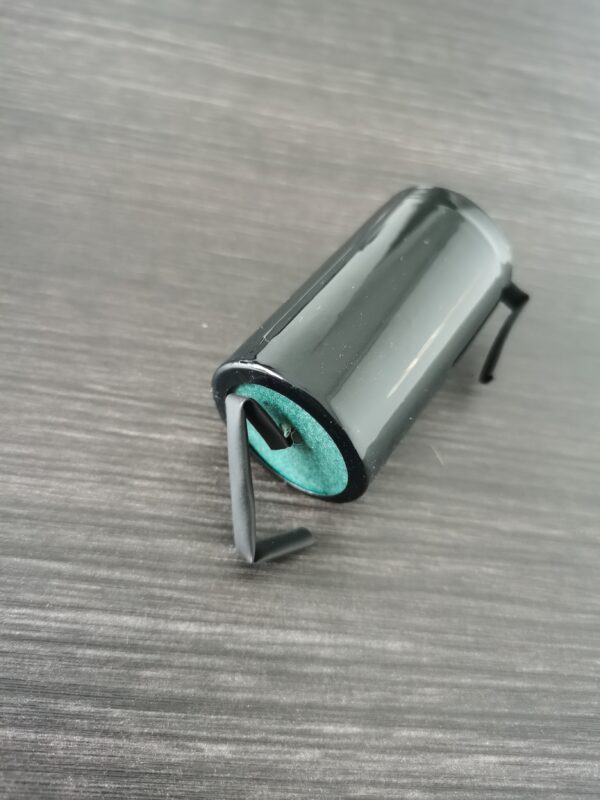
60G Vibration Resistant Li-MnO₂ Battery for Automotive Use: Technical Deep Dive for Global Engineering Teams
The automotive industry demands power sources that withstand extreme mechanical stress while maintaining consistent performance. The 60G Vibration Resistant Li-MnO₂ Battery represents a critical advancement in primary lithium battery technology, specifically engineered for automotive applications across European, North American, and Asian markets. This technical analysis examines the core specifications, testing methodologies, and regional compliance frameworks that define this battery’s competitive positioning.
Core Technical Architecture of Li-MnO₂ Chemistry
Lithium-manganese dioxide (Li-MnO₂) primary batteries utilize metallic lithium as the anode and manganese dioxide as the cathode, delivering a nominal voltage of 3.0V with exceptional energy density. The organic electrolyte system ensures stable discharge characteristics across temperature ranges from -40°C to +85°C, making it ideal for automotive electronics including TPMS sensors, emergency call systems, and backup power modules.
The 60G vibration resistance specification addresses a critical failure mode in automotive environments. Standard consumer-grade lithium batteries typically withstand 20-30G acceleration forces, while automotive-grade cells must survive sustained vibration exposure during vehicle operation, transportation, and crash scenarios.
Parameter Advantages: Engineering Specifications Breakdown
Mechanical Robustness: The 60G rating indicates the battery can endure peak acceleration forces of 60 times gravitational acceleration without structural compromise. This exceeds IEC 60068-2-27 shock test requirements (typically 25-100G for automotive components) and aligns with ISO 16750-3 mechanical load standards for road vehicles.
Energy Density: Li-MnO₂ chemistry delivers 280-300 Wh/kg gravimetric energy density, approximately 3x higher than alkaline alternatives. This enables compact form factors critical for space-constrained automotive installations.
Self-Discharge Rate: Premium automotive Li-MnO₂ cells maintain ≤1% annual self-discharge at 20°C, ensuring 10-15 year shelf life for emergency systems that may remain inactive until deployment.
Pulse Current Capability: Modern designs support 15-50mA continuous discharge with 100mA+ pulse capability, accommodating wireless transmission bursts from connected vehicle telematics units.
Vibration Testing Methodologies: IEC and Automotive Standards
Validation of 60G vibration resistance follows rigorous international protocols:
IEC 60068-2-64 (Random Vibration): This standard defines random vibration testing procedures that simulate real-world transportation and operational environments. Testing employs broadband frequency spectra (10-2000Hz) across X, Y, Z axes with power spectral density (PSD) profiles matching automotive vibration signatures. Duration typically spans 2-4 hours per axis.
IEC 60068-2-6 (Sinusoidal Vibration): Complementary sine wave testing identifies resonant frequencies where structural amplification occurs. Sweep rates of 1 octave/minute from 10-500Hz reveal potential weak points in cell construction.
IEC 60068-2-27 (Shock Testing): Half-sine shock pulses at 60G peak acceleration with 11ms duration verify impact resistance during crash events or rough handling. Three shocks per axis (positive and negative directions) constitute minimum test requirements.
Post-Test Verification: Following vibration exposure, batteries undergo electrical performance validation including open-circuit voltage measurement, load testing at specified current drains, and leakage current verification. Any voltage drop exceeding 5% or physical deformation constitutes test failure.
Regional Compliance and Market Adaptation
European Union (CE/REACH): Automotive Li-MnO₂ batteries destined for EU markets require CE marking under the Electromagnetic Compatibility Directive 2014/30/EU and RoHS compliance (2011/65/EU). REACH regulation (EC 1907/2006) mandates substance disclosure for lithium content and electrolyte compositions. UN 38.3 transportation certification remains mandatory for all lithium battery shipments.
United States (UL/ANSI): UL 1642 establishes safety requirements for lithium primary cells, while UL 2054 covers battery pack assemblies. ANSI C18 standards define performance testing protocols. Automotive suppliers often require additional IATF 16949 quality management certification for production facilities.
Asia-Pacific Considerations: Japan’s DENSO and Toyota specifications often exceed international standards, requiring additional thermal cycling (-40°C to +85°C, 500 cycles) and humidity exposure testing (85% RH at 85°C for 1000 hours). China’s GB/T standards align closely with IEC frameworks but may require local CNAS laboratory validation.
CNS Product Technical Positioning
CNS Battery’s primary lithium battery portfolio addresses these global compliance requirements through engineered solutions that balance performance, safety, and regional certification needs. Their automotive-grade Li-MnO₂ cells incorporate reinforced casing structures, laser-welded seals, and optimized electrode configurations to achieve 60G vibration resistance while maintaining electrical integrity.
For engineering teams evaluating suppliers, verification of test reports from accredited laboratories (CNAS, UL, TUV) provides critical validation of claimed specifications. Production consistency through ISO 9001 and IATF 16949 certified manufacturing ensures batch-to-batch reliability essential for automotive supply chains.
Technical procurement specialists should request comprehensive documentation including:
- Third-party vibration test certificates (IEC 60068 series)
- UN 38.3 transportation compliance reports
- Regional certification marks (CE, UL, PSE)
- Material safety data sheets (MSDS)
- Quality management system certificates
Explore CNS Battery’s complete primary battery product range for automotive applications, and contact their technical team directly at https://cnsbattery.com/primary-battery-contact-us/ for region-specific compliance documentation and custom engineering support.
This technical analysis serves engineering professionals and procurement specialists evaluating lithium primary battery solutions for automotive deployments across global markets. Specifications should be verified against current manufacturer documentation and applicable regional regulations.
