

46135 Battery Cell Long Cycle Life: Technical Analysis for Engineering Applications
Introduction
The 46135 cylindrical battery cell has emerged as a critical component in next-generation energy storage systems, offering exceptional cycle life performance that meets the demanding requirements of electric vehicles, industrial equipment, and stationary energy storage applications. As the global demand for reliable, long-lasting power solutions intensifies, understanding the technical advantages of the 46135 form factor becomes essential for engineers and technical procurement professionals evaluating battery specifications for their projects.
This article provides an in-depth technical analysis of the 46135 battery cell’s cycle life characteristics, examining the underlying chemistry, structural design factors, and practical considerations that make this cell format a compelling choice for applications requiring extended operational longevity.
Understanding the 46135 Cell Architecture
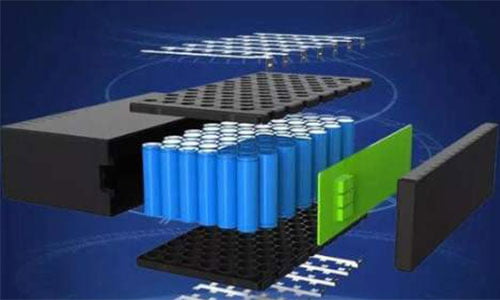
The 46135 designation refers to a cylindrical lithium-ion cell with specific dimensional parameters: 46mm diameter and 135mm height. This large-format cylindrical design represents a significant evolution from traditional 18650 and 21700 cells, offering enhanced energy density while maintaining the structural advantages inherent to cylindrical geometry.
Key Structural Advantages:
The cylindrical format provides superior mechanical stability compared to prismatic or pouch cells. The curved surface distributes internal pressure evenly during charge-discharge cycles, reducing the risk of swelling and deformation that can compromise cycle life. For the 46135 specifically, the larger volume-to-surface-area ratio enables more efficient thermal management, a critical factor in maintaining long-term performance.
The tabless or all-tab design commonly implemented in 46-series cells significantly reduces internal resistance. Lower resistance translates to reduced heat generation during high-current operations, directly contributing to extended cycle life by minimizing thermal degradation of electrode materials and electrolyte components.
Cycle Life Performance Factors
Electrode Chemistry Selection:
The cycle life of 46135 cells varies substantially based on cathode chemistry. Lithium Iron Phosphate (LiFePO4/LFP) variants typically deliver 3,000 to 5,000+ full equivalent cycles while maintaining 80% capacity retention. Nickel Manganese Cobalt (NMC) formulations offer higher energy density but generally provide 1,500 to 2,500 cycles under similar operating conditions. For applications prioritizing longevity over maximum energy density, LFP chemistry in the 46135 format presents an optimal balance.
Depth of Discharge (DoD) Impact:
Operating parameters significantly influence achievable cycle life. Cells operated at 80% DoD typically achieve 20-30% more cycles compared to 100% DoD operation. Engineering teams should consider implementing battery management systems that optimize DoD based on application requirements, potentially extending usable life by thousands of cycles.
Thermal Management Considerations:
Temperature control remains the single most critical factor affecting cycle life. Operating 46135 cells within the 15°C to 35°C range maximizes longevity. Every 10°C increase above optimal temperature can reduce cycle life by approximately 50%. The 46135’s cylindrical geometry facilitates efficient cooling system integration, whether through air cooling, liquid cooling plates, or phase-change materials.
Applications Benefiting from 46135 Long Cycle Life
Electric Mobility:
Electric two-wheelers, three-wheelers, and light commercial vehicles benefit significantly from the 46135’s extended cycle life. These applications often require daily deep cycling, making the 3,000+ cycle capability of LFP 46135 cells particularly valuable for total cost of ownership calculations.
Stationary Energy Storage:
Behind-the-meter storage systems, uninterruptible power supplies, and renewable energy integration projects demand batteries capable of 10+ year operational life. The 46135 format’s combination of cycle life, safety characteristics, and modular assembly capabilities makes it well-suited for these stationary applications.
Industrial Equipment:
Forklifts, automated guided vehicles (AGVs), and material handling equipment operating in multi-shift environments require batteries that maintain performance across thousands of cycles. The 46135’s robust construction and long cycle life reduce replacement frequency and downtime costs.
Quality and Manufacturing Considerations
When sourcing 46135 cells, engineering teams must evaluate manufacturer capabilities beyond specification sheets. Consistent quality control, cell matching precision, and traceability systems directly impact real-world cycle life performance. Variations in manufacturing processes can result in significant differences in cycle life even among cells with identical nominal specifications.
Reputable battery manufacturers in China have developed sophisticated production capabilities for large-format cylindrical cells, implementing automated quality control systems and comprehensive testing protocols. Working with established manufacturers ensures access to cells meeting international safety and performance standards.
For detailed information about battery manufacturers and their capabilities, visit https://cnsbattery.com/battery-manufacturers-in-china/ to evaluate potential supply partners.
Technical Specifications and Integration
When integrating 46135 cells into battery packs, engineers should consider:
- Module Design: Optimal cell spacing for thermal management
- BMS Requirements: Cell balancing algorithms suited for large-format cylindrical cells
- Mechanical Integration: Vibration resistance and structural support requirements
- Safety Systems: Thermal runaway propagation prevention measures
Comprehensive product specifications and technical documentation for cylindrical battery cells, including the 46135 format, are available at https://cnsbattery.com/products-3/cylindrical-battery-cell/ for engineering evaluation.
Conclusion
The 46135 battery cell represents a mature technology solution for applications demanding extended cycle life without compromising on power delivery or safety. Its combination of cylindrical structural advantages, flexible chemistry options, and proven manufacturing scalability makes it an increasingly popular choice for engineers designing next-generation energy storage systems.
For technical consultations, customization requirements, or partnership discussions regarding 46135 battery cell integration, contact the CNS Battery team directly at https://cnsbattery.com/contact-2/ to explore how their solutions can meet your specific application requirements.
As the energy storage industry continues evolving, the 46135 format’s balance of performance, longevity, and cost-effectiveness positions it as a strategic choice for projects where total cost of ownership and operational reliability are primary considerations.


