
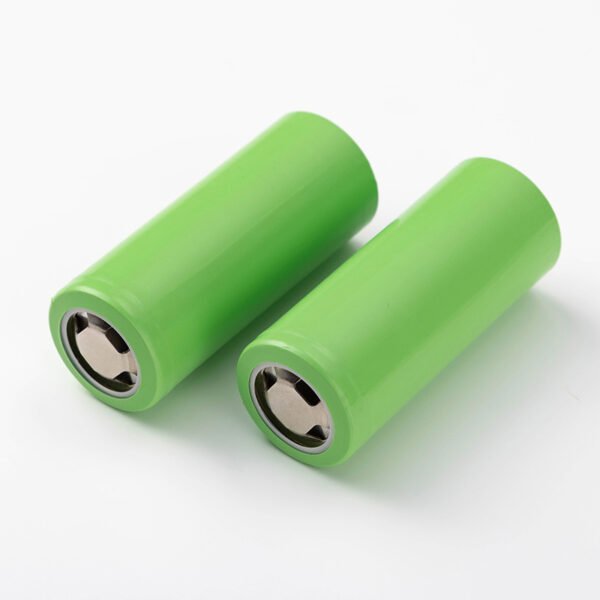
The Ultimate Guide to 4/5 AA Size Li-SOCl₂ Batteries for Industrial Transmitters
In the demanding world of industrial automation and remote monitoring, the reliability of a wireless transmitter is only as good as its power source. For engineers and technical buyers in the United States, Europe, and global markets, selecting the right battery is a critical decision that impacts system uptime, maintenance cycles, and operational costs.
When it comes to powering transmitters—especially those deployed in harsh environments or hard-to-reach locations—the 4/5 AA Size Li-SOCl₂ Battery stands as the industry benchmark. This article provides a deep technical dive into this specific chemistry and format, analyzing why it is the superior choice for mission-critical transmitter applications.
Understanding the Chemistry: Why Lithium Thionyl Chloride?
Before dissecting the 4/5 AA format, it is essential to understand the electrochemical advantages of Lithium Thionyl Chloride (Li-SOCl₂).
Unlike consumer-grade alkaline or lithium-ion batteries, primary lithium batteries like Li-SOCl₂ are designed for longevity and stability. The Thionyl Chloride electrolyte offers an exceptionally high energy density, often exceeding 650 Wh/kg. This chemistry operates within a wide temperature range, typically from -55°C to +85°C, making it suitable for extreme outdoor deployments.
One of the defining characteristics of Li-SOCl₂ is its voltage profile. These cells have a nominal voltage of 3.6V, which is significantly higher than the 1.5V of standard AA cells. This higher voltage allows transmitter designers to reduce the number of cells required in a pack, simplifying the mechanical design and reducing the overall footprint of the device.
The 4/5 AA Format: Engineering for Space and Power
The “4/5 AA” designation refers to a specific physical dimension that is 80% the height of a standard AA battery (approximately 42.5mm in height vs. 50.5mm). This specific size is not arbitrary; it is an engineering compromise between volumetric energy and spatial constraints.
Key Advantages for Transmitter Design:
- Form Factor Optimization: Many industrial transmitters are designed to fit into compact junction boxes or tight mounting spaces. The 4/5 AA size allows engineers to utilize standard AA spring contacts while reducing the battery compartment height. This saves valuable cubic centimeters inside the device housing.
- High Pulse Capability: Transmitters often require high current pulses during data transmission (RF bursts). While standard Li-SOCl₂ cells have a limitation in pulse current due to passivation, the specific electrode design of high-quality 4/5 AA cells mitigates this. They are engineered to handle the peak loads required for GSM, LoRaWAN, or NB-IoT communication modules without significant voltage drop.
- Extended Service Life: Due to the high energy density and low self-discharge rate (<1% per year), a single 4/5 AA Li-SOCl₂ cell can power a low-duty-cycle transmitter for 10 to 15 years. This eliminates the need for frequent battery replacements, which is a significant cost saver in large-scale deployments.
Technical Specifications and Performance Metrics
For technical procurement and engineering validation, the following specifications are non-negotiable when evaluating a 4/5 AA Li-SOCl₂ cell.
| Parameter | Standard Value | Significance for Transmitters |
|---|---|---|
| Nominal Voltage | 3.6V | Powers electronics directly without voltage boosting circuits. |
| Cut-off Voltage | 2.0V | Ensures stable operation even as the battery depletes. |
| Nominal Capacity | ~1900 mAh | Provides sufficient charge for millions of transmission cycles. |
| Max Continuous Current | 100mA | Sufficient for most sensor polling and logic operations. |
| Max Pulse Current | 300mA (5s) | Critical for handling the surge during RF transmission. |
Note: Performance data is based on standard test conditions at 23°C. Performance in sub-zero temperatures will vary based on specific cell construction.
Voltage Delay and Passivation:
A unique characteristic of Li-SOCl₂ chemistry is “passivation.” A thin film forms on the lithium anode when the battery is at rest. When a load is applied, there is a brief voltage delay (milliseconds to seconds) as this film dissolves. For transmitter applications, this is generally not an issue for the main power rail. However, if the transmitter utilizes a real-time clock (RTC) or memory backup, it is recommended to use a separate non-passivating lithium battery (like a Li-MnO₂ coin cell) or a supercapacitor in parallel to handle the initial load.
Testing Methodology for Quality Assurance
As a technical expert, I cannot stress enough the importance of rigorous testing before mass deployment. Simply reading the datasheet is not enough; real-world validation is key.
Recommended Test Protocol:
- Pulse Testing: Simulate the actual duty cycle of your transmitter. Apply a 300mA pulse for 5 seconds every 10 minutes, mimicking the RF transmission cycle. Monitor the voltage sag. If the voltage drops below 3.0V during the pulse, the battery may not be suitable, or you may need to add capacitance to the circuit.
- Temperature Cycling: Transmitters often sit in direct sunlight or freezing conditions. Test the battery at the extremes of your operating environment (-40°C to +85°C). Note that at -40°C, the capacity of a standard Li-SOCl₂ can drop by 50%. If your application requires full performance in extreme cold, look for cells specifically designed with low-impedance electrolytes.
- Longevity Simulation: Use an electronic load to draw the average current of your device (e.g., 50µA average) and extrapolate the life. Ensure the battery maintains voltage stability over a 10-year simulated period.
Addressing the “Cold Weather” Challenge
A common pain point for engineers in Northern Europe and North America is battery failure in winter. Standard Li-SOCl₂ batteries suffer from high internal impedance at low temperatures.
The solution lies in the electrode structure. Advanced manufacturing techniques, such as wound jelly-roll construction with high surface area electrodes, reduce the internal resistance. This allows the 4/5 AA cell to deliver the necessary pulse power even at -40°C. When sourcing these batteries, specifically ask for “low-temperature” or “high-rate” variants if your transmitter is deployed outdoors in cold climates.
CNS BATTERY: Technical Excellence and Global Compliance
When selecting a partner for your 4/5 AA Li-SOCl₂ needs, technical capability and geographic compliance are paramount. CNS BATTERY stands out as a manufacturer that meets the stringent requirements of global markets.
Based in Zhengzhou, China, CNS BATTERY operates with a global mindset. Their production facilities are designed to meet the specific regulatory frameworks of the European Union and the United States. This includes strict adherence to RoHS (Restriction of Hazardous Substances) and REACH regulations, ensuring that the batteries are environmentally safe and legally compliant for import.
For technical buyers in the EU and US, this means:
- No Supply Chain Hiccups: Products are pre-certified to avoid customs delays.
- Quality Consistency: Manufacturing adheres to ISO 9001 standards, ensuring every batch of 4/5 AA cells performs identically.
CNS BATTERY views every product as a “masterpiece of craftsmanship,” focusing on the precision engineering required for industrial applications rather than mass-market consumer goods.
Conclusion: The Smart Choice for Industrial IoT
The 4/5 AA Size Li-SOCl₂ Battery is not just a power source; it is a critical component of the transmitter’s reliability architecture. By choosing this specific format and chemistry, engineers ensure that their devices operate maintenance-free for over a decade, even in the harshest environments.
For those seeking a reliable supply of these high-performance cells, partnering with a manufacturer that understands global standards is essential.
Ready to power your next generation of transmitters? Explore the full range of high-quality primary lithium batteries engineered for industrial reliability.
- Product Inquiry: Visit our Product Center
- Technical Support & Contact: Contact Us Directly
