

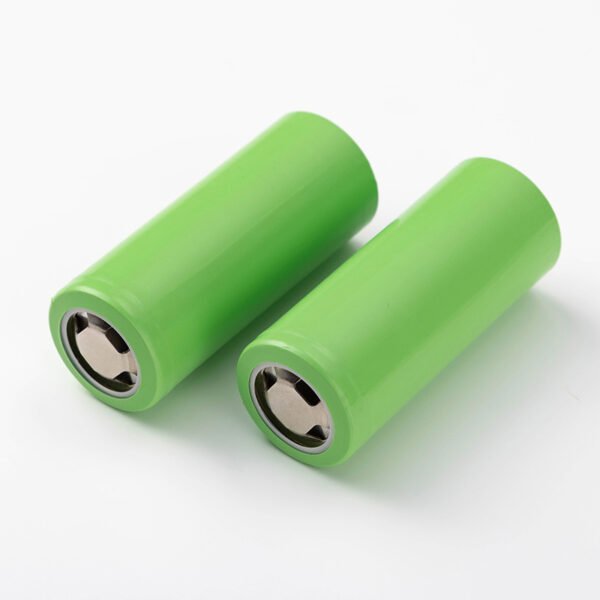
The 26650 Battery Cell: Engineering Power and Stability for Industrial Applications
In the rapidly evolving landscape of energy storage, the transition from consumer-grade cells to industrial-grade solutions is critical for Original Equipment Manufacturers (OEMs) and system integrators. While the 18650 and 21700 formats dominate headlines, the 26650 battery cell remains a cornerstone for high-drain industrial applications requiring a balance of volumetric efficiency and thermal stability.
At CNS Battery, we understand that industrial clients require more than just a power source; they require a component that integrates seamlessly into complex Battery Management Systems (BMS). We are currently offering free samples of our industrial-grade cylindrical cells to engineering teams evaluating our technology for integration. This article will dissect the technical specifications of the 26650 format, compare it against industry standards, and explain why our manufacturing capabilities in Zhengzhou position us as a reliable partner for global supply chains.
Technical Anatomy of the 26650 Format
The nomenclature “26650” is derived from the Japanese Industrial Standards (JIS) for lithium-ion cells. The first two digits represent the diameter in millimeters, while the last three digits represent the height in tenths of a millimeter.
- Dimensions: 26mm (diameter) x 65.0mm (height).
- Comparison: This format is physically larger than the ubiquitous 18650 (18mm x 65mm) and the newer 21700 (21mm x 70mm), but shorter than the 32700 (32mm x 70mm).
Why does this specific geometry matter to engineers?
The 26650 format offers a “Goldilocks Zone” between energy density and power delivery. The larger diameter allows for thicker electrode stacks, which reduces internal resistance ($R_{internal}$). According to the Joule heating law ($Q = I^2 R t$), lower resistance translates directly into less heat generation during high-current discharge cycles. This is particularly advantageous in applications where active cooling systems are limited or where battery packs are subjected to extreme ambient temperatures.
Material Chemistry and Performance Metrics
Selecting the correct cathode chemistry is the first step in the design process. For the 26650 platform, we typically utilize Iron Phosphate (LiFePO4) or Nickel Manganese Cobalt (NMC) variants, depending on the client’s specific energy-to-power ratio requirements.
Key Performance Indicators (KPIs) for Industrial Evaluation:
- Cycle Life: Our standard 26650 cells are engineered to exceed 2,000 charge-discharge cycles at 80% Depth of Discharge (DoD) under controlled laboratory conditions. This longevity is crucial for reducing the Total Cost of Ownership (TCO) in equipment like Automated Guided Vehicles (AGVs) or medical carts.
- Thermal Runaway Resistance: The larger surface area of the 26650 allows for more efficient heat dissipation through the steel casing. When combined with our proprietary electrolyte additives, our cells demonstrate superior resistance to thermal runaway, a non-negotiable safety feature for industrial safety certifications.
- Volumetric Efficiency: While not as space-efficient as the 21700 in terms of pure energy density per unit volume, the 26650 offers superior mechanical stability in module construction due to its shorter height and wider base, reducing stress on the tabs during vibration.
Applications and System Integration
The robust physical structure of the 26650 makes it an ideal candidate for applications where reliability outweighs the need for minimal footprint.
Primary Application Sectors:
- Electric Power Tools: Cordless drills, saws, and impact drivers require high pulse currents. The 26650’s low internal resistance allows it to deliver the necessary torque without significant voltage sag.
- Electric Bicycles (E-Bikes) & Light Electric Vehicles (LEVs): For mid-drive motor systems, the 26650 provides a balance of range and power. Its stability is preferred in “hard case” battery packs that are exposed to road vibrations and weather.
- Uninterruptible Power Supplies (UPS) & Energy Storage Systems (ESS): In stationary storage, the slightly lower energy density is offset by the ease of thermal management and the lower cost per cycle.
When integrating 26650 cells into a Battery Management System, our R&D team emphasizes the importance of Cell Matching. Due to the high currents involved, even minor variations in Internal Resistance (IR) between cells can lead to imbalances. We provide detailed binning data for every batch to ensure your BMS operates at peak efficiency.
Why Partner with CNS Battery?
As a leading battery manufacturer in China with over two decades of experience, CNS Battery differentiates itself through vertical integration and quality control.
- Automated Production: Our facility in Zhengzhou utilizes fully automated production lines to minimize human error and ensure dimensional consistency, which is vital for automated pack assembly lines.
- Customization Capabilities: We do not believe in a “one-size-fits-all” approach. Whether you require a specific tab configuration, a custom electrolyte formulation for low-temperature (-20°C) operation, or a specific State of Health (SoH) algorithm, our engineering team can adapt the 26650 platform to your needs.
- Global Supply Chain Reliability: We understand the volatility of the global market. By maintaining strategic raw material reserves and adhering to strict ISO standards, we guarantee supply continuity for our B2B partners.
Ready to Test the Performance?
If your engineering team is currently designing a new product or looking to upgrade an existing platform, we invite you to request a free sample of our 26650 cells. Our technical sales managers are available to discuss your specific discharge curves and environmental requirements.
For immediate technical consultation or to request your free sample, please visit our Contact Us page. To explore our full range of cylindrical battery technologies, including the 18650 and 32700 formats, visit our Product Center.


