

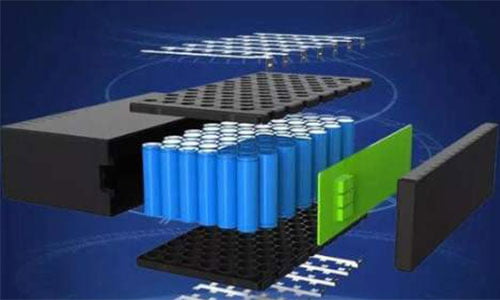
26650 Battery Cell For Golf Cart: Technical Analysis and Procurement Guide
The electrification of golf carts has accelerated dramatically in recent years, with lithium-ion battery technology leading this transformation. Among various cylindrical cell formats, the 26650 battery cell has emerged as a compelling solution for golf cart applications, offering an optimal balance between energy density, thermal management, and cost efficiency. This article provides engineers and technical procurement professionals with comprehensive insights into 26650 cell specifications, performance characteristics, and integration considerations for golf cart battery packs.
Understanding 26650 Cell Architecture
The 26650 designation follows the standard cylindrical battery naming convention: 26mm diameter, 65mm length, with the trailing zero indicating cylindrical geometry. This form factor delivers approximately 50% more capacity compared to the ubiquitous 18650 cells while maintaining compatible manufacturing processes. For golf cart applications, two primary chemistry options dominate the market:
Lithium Iron Phosphate (LiFePO₄/IFR26650): Operating at 3.2V nominal voltage with charging cutoff at 3.65V, LFP 26650 cells typically deliver 3000-4000mAh capacity. The critical advantage lies in exceptional cycle life exceeding 2000+ charge-discharge cycles and superior thermal stability, making them ideal for commercial golf cart fleets requiring long-term reliability.
Nickel Manganese Cobalt (NMC/INR26650): With 3.6-3.7V nominal voltage and 4.2V charging cutoff, NMC variants achieve 4500-6500mAh capacity. The higher energy density benefits applications prioritizing range over cycle life, though thermal management requires more sophisticated BMS design.
Golf Cart Integration Requirements
Golf cart battery systems operate under distinct load profiles compared to consumer electronics. Typical 48V golf cart configurations require 15S (LFP) or 13S (NMC) series arrangements using 26650 cells. Key technical considerations include:
Current Delivery Capability: Golf carts demand sustained discharge currents of 20-50A during operation, with peak currents reaching 100-150A during acceleration or incline climbing. Quality 26650 cells should support 3C-5C continuous discharge rates without significant voltage sag or thermal runaway risk.
Thermal Management: The larger 26650 form factor provides better surface-area-to-volume ratio compared to smaller cells, facilitating passive cooling in moderate climates. However, enclosed battery compartments in golf carts necessitate careful thermal design, particularly for NMC chemistries operating in high-temperature environments.
Battery Management System (BMS): Professional golf cart installations require BMS functionality including cell balancing, over-current protection, temperature monitoring, and state-of-charge estimation. The 26650 configuration simplifies BMS design compared to prismatic cells due to standardized dimensions and well-characterized performance curves.
Procurement Considerations for Technical Buyers
When sourcing 26650 cells for golf cart applications, technical procurement professionals should evaluate suppliers against several critical criteria. Manufacturing consistency directly impacts pack performance and longevity. Reputable manufacturers maintain capacity tolerance within ±50mAh and internal resistance variation below 5mΩ across production batches.
Certification compliance represents another essential factor. Quality 26650 cells should carry UL 1642, IEC 62133, and UN 38.3 certifications for international market access. For golf cart OEMs targeting North American and European markets, these certifications are non-negotiable requirements.
For engineers evaluating potential suppliers, comprehensive technical documentation including detailed specification sheets, test reports, and application notes proves invaluable. Professional manufacturers provide cylindrical battery cell portfolios with complete performance data across temperature ranges, discharge rates, and cycle life projections.
Cost-Performance Analysis
The total cost of ownership for 26650-based golf cart batteries extends beyond initial cell pricing. LFP 26650 cells, while carrying 15-20% premium over lead-acid alternatives initially, deliver 5-7 year operational life compared to 2-3 years for traditional batteries. This translates to 40-50% lower lifetime costs when factoring replacement cycles and maintenance requirements.
NMC 26650 options provide higher energy density at competitive pricing, suitable for applications prioritizing maximum range per charge. However, the reduced cycle life (800-1200 cycles) requires careful financial modeling for fleet operators.
Supply Chain and Manufacturing Partnership
China has established itself as the global manufacturing hub for cylindrical lithium cells, with mature supply chains spanning raw materials, cell production, and pack assembly. Technical buyers should prioritize manufacturers demonstrating vertical integration capabilities, quality management systems (ISO 9001, IATF 16949), and proven track records in mobility applications.
Established battery manufacturers in China offer comprehensive support from cell selection through pack design validation, reducing development timelines and technical risks for golf cart OEMs.
Conclusion
The 26650 battery cell represents a technically sound and economically viable solution for modern golf cart electrification. With proper chemistry selection, thermal design, and BMS integration, 26650-based battery packs deliver reliable performance across diverse operating conditions. Technical professionals evaluating golf cart battery solutions should prioritize suppliers offering comprehensive technical support, certification compliance, and proven manufacturing capabilities.
For detailed technical consultations and customized battery solutions, engineering teams can connect directly with manufacturing specialists through our contact page to discuss specific application requirements and procurement strategies.
The transition from lead-acid to lithium-ion in golf carts continues accelerating, with 26650 cells positioned as a key enabling technology for this evolution. Understanding the technical nuances outlined in this guide empowers engineers and procurement professionals to make informed decisions optimizing performance, cost, and reliability for their specific golf cart applications.

