The 21700 LFP Advantage: Why Cylindrical Cells are Redefining ESS Performance
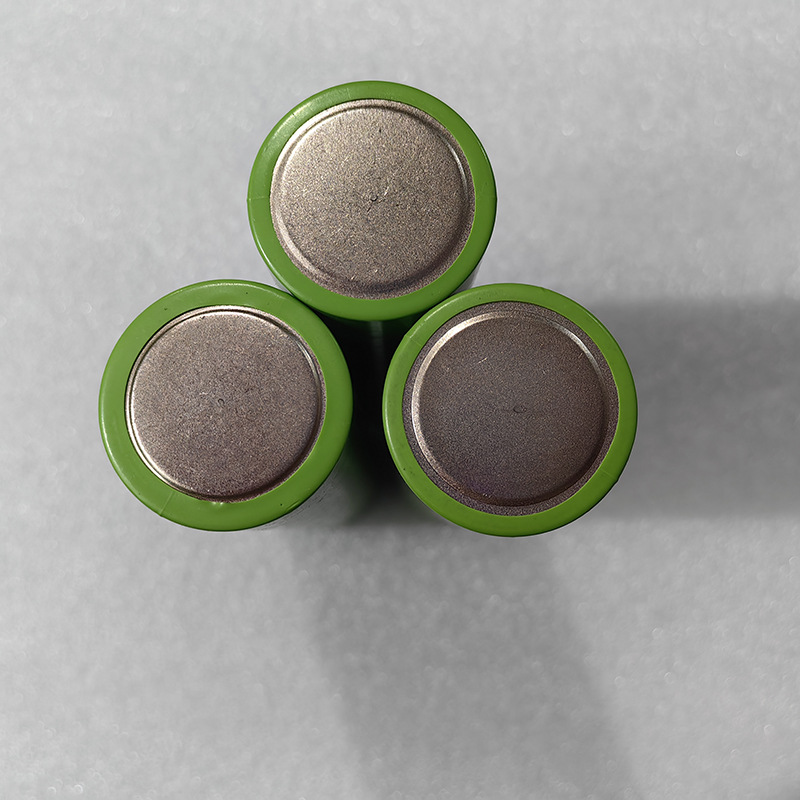
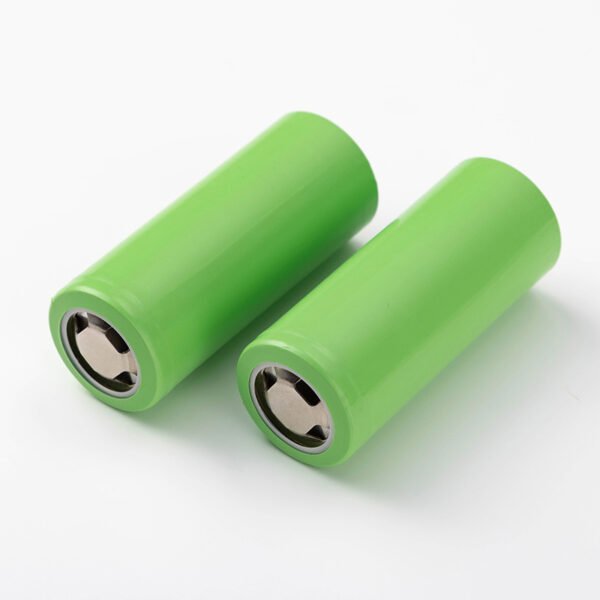
In the rapidly evolving landscape of energy storage, the transition from traditional 18650 cells to the newer 21700 LFP (Lithium Iron Phosphate) format is no longer just a trend—it is becoming the industry standard. For engineers and system integrators building ESS (Energy Storage Systems), the shift offers a compelling value proposition: higher energy density, simplified Battery Management Systems (BMS), and superior thermal stability. At CNS Battery, we have engineered our 21700 cylindrical battery cells to meet the rigorous demands of commercial and industrial applications, offering OEM partners a robust platform for custom voltage solutions.
This article delves into the technical rationale behind the 21700 format and how our specific chemistry and manufacturing processes solve common pain points in modern ESS design.
Technical Deep Dive: The Physics of Scaling Up
To understand why the 21700 is supplanting the 18650 in high-capacity applications, we must examine the relationship between volume, surface area, and internal resistance.
- Volume vs. Capacity: The 21700 cell (21mm diameter, 70mm height) has a volume approximately 2.5 times larger than the 18650 (18mm x 65mm). While the capacity doesn’t scale linearly due to packing inefficiencies, CNS Battery’s advanced electrode engineering allows us to achieve capacities of 4000mAh to 6000mAh in this format. This means fewer cells are needed to achieve the same pack capacity.
- Reduced BMS Complexity: Fewer cells directly translate to a simpler Battery Management System. With fewer nodes to monitor and balance, the risk of failure decreases, and the cost of the BMS electronics is reduced.
- Thermal Runaway Mitigation: The larger size of the 21700 cell provides a better surface-area-to-volume ratio for heat dissipation compared to stacking multiple smaller cells. Combined with the inherently stable LFP (LiFePO4) chemistry—which lacks the cobalt found in NMC batteries—the 21700 LFP cell exhibits exceptional thermal stability, drastically reducing the risk of thermal runaway.
CNS 21700: Engineered for Industrial Durability
While the format is advantageous, the specific performance depends on the manufacturer’s R&D. CNS Battery leverages over two decades of experience to optimize our 21700 cells for the harsh realities of field deployment.
1. High Energy Density & Power Output
Our INR21700 series is designed to deliver both high capacity and high discharge rates. Unlike standard cells that trade off capacity for power, our advanced cathode materials allow for continuous discharge currents of up to 10A (and pulse currents significantly higher). This makes them ideal for applications requiring burst power, such as backup UPS systems or heavy-duty power tools.
2. Superior Thermal Management
We utilize a proprietary winding technique and high-thermal-conductivity electrolytes. This ensures that even during high-rate charging or discharging, the core temperature of the cell remains within safe operational limits. For ESS applications installed in non-climate-controlled environments, this thermal resilience is non-negotiable.
3. Long Cycle Life
For commercial customers, the Total Cost of Ownership (TCO) is king. Our 21700 LFP cells are cycled-tested to exceed 2000 cycles at 1C discharge while retaining over 80% of their initial capacity. This longevity ensures that your energy storage system remains profitable over a decade of daily use.
Custom Voltage Platforms: A Solution, Not a Product
As a professional battery manufacturer in China, we understand that off-the-shelf cells rarely fit perfectly into complex industrial designs. This is why we offer Custom Voltage Platform OEM Solutions.
Many ESS developers struggle with the “voltage gap” between standard cell configurations and their inverter requirements. Instead of forcing a design to fit a 48V or 96V standard using cumbersome balancing circuits, CNS Battery works with your engineering team to:
- Optimize Cell Count: We help calculate the precise number of 21700 cells needed in series to match your inverter’s MPPT voltage window.
- Mechanical Integration: We provide mechanical drawings and thermal interface recommendations specific to the 21700 form factor to ensure efficient packing and cooling.
- Safety Certification: We assist in navigating global safety certifications (UL, IEC, etc.) for the final assembled pack.
Expert Insight: “When designing a high-voltage ESS string, using 21700 cells reduces the physical footprint by nearly 30% compared to 18650 cells of equivalent watt-hours. This allows our clients to build slimmer, more aesthetically pleasing home storage units.” — CNS Battery R&D Team.
Product Spotlight: The CNS 21700 Series
To support your next design cycle, we offer a range of stock configurations that serve as excellent starting points for customization.
| Model | Typical Capacity | Nominal Voltage | Max Continuous Discharge | Primary Application |
|---|---|---|---|---|
| INR21700-4000 | 4.0 Ah | 3.7 V | 45A | Power Tools, Garden Tools |
| INR21700-4500 | 4.5 Ah | 3.7 V | 10A | E-Bikes, Small Appliances |
| INR21700-5000 | 5.0 Ah | 3.7 V | 10A | Portable ESS, Medical Devices |
| INR21700-5500/6000 | 5.5 – 6.0 Ah | 3.6 V | 2C | High-Capacity EV & Storage |
Note: These are standard specifications. We encourage engineers to contact us for custom capacity and discharge rate requirements.
Conclusion: Partnering for the Future of Energy
The move to 21700 LFP cells is a strategic decision for any company serious about dominating the energy storage market. By choosing a partner like CNS Battery, you are not just buying cells; you are gaining access to a team that views battery chemistry as a system, not just a component.
If you are looking to build a next-generation ESS with a smaller footprint, longer lifespan, and lower BMS complexity, the 21700 platform is the logical choice. We invite you to explore our full range of cylindrical solutions or reach out to our technical sales team for a custom consultation.
Ready to optimize your energy storage design? Explore the technical specifications of our cylindrical battery cells or contact our engineering team for a custom solution today.
- Explore our Product Range: Cylindrical Battery Cells
- Contact Our Engineers: Contact Information
- Learn about our Manufacturing Capabilities: Battery Manufacturer in China