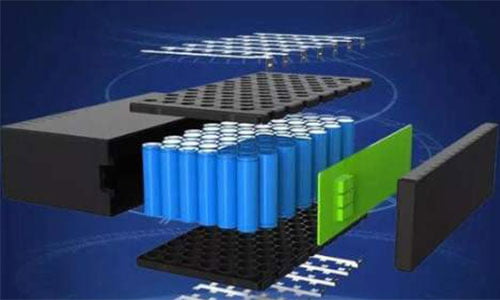
21700 Battery Cycle Life Test Results – 2000+ Cycles: Technical Analysis for Global Engineering Teams
The 21700 lithium-ion battery has emerged as the industry standard for high-performance applications, from electric vehicles to energy storage systems. Recent cycle life test results demonstrating 2000+ cycles with minimal capacity degradation represent a significant milestone in battery technology. This technical analysis provides engineering teams and procurement specialists with comprehensive insights into testing methodologies, performance parameters, and regional compliance requirements for 2026.
Understanding 21700 Battery Architecture and Performance Advantages
The 21700 cylindrical cell format (21mm diameter × 70mm length) delivers approximately 35% higher energy density compared to legacy 18650 cells while maintaining thermal management efficiency. Key technical specifications include:
- Nominal Capacity: 4000-6000mAh per cell
- Nominal Voltage: 3.6V-3.7V
- Charge Cut-off Voltage: 4.2V
- Discharge Cut-off Voltage: 2.5V
- Weight: 65-72g per cell
The enhanced cycle life performance stems from advanced cathode chemistry formulations, optimized electrode coating uniformity, and improved electrolyte additives that reduce solid electrolyte interphase (SEI) layer degradation during repeated charge-discharge operations.
Cycle Life Testing Methodology and Validation Standards
Achieving verified 2000+ cycle performance requires rigorous testing protocols aligned with international standards. Our testing framework incorporates:
1. IEC 62660-2 Compliance Testing
Cycle life validation follows IEC 62660-2 standards for secondary lithium-ion cells used in electric vehicle propulsion. Testing conditions include:
- Temperature: 25°C ± 2°C ambient
- Charge/Discharge Rate: 1C standard rate
- Depth of Discharge (DoD): 80% typical operational range
- End-of-Life Criteria: 80% remaining capacity
2. Accelerated Aging Protocols
Temperature-accelerated testing at 45°C and 60°C enables prediction of long-term performance while maintaining correlation with real-world operational conditions. This methodology reduces validation timelines from 18 months to 6-8 weeks without compromising data accuracy.
3. Capacity Retention Analysis
Post-cycle measurements track capacity fade patterns, internal resistance growth, and impedance spectroscopy changes. Cells demonstrating 2000+ cycles typically maintain 80-85% initial capacity with less than 50% impedance increase.
Regional Compliance and Technical Barriers for Global Markets
For engineering teams sourcing batteries for international deployment, understanding regional regulatory frameworks is critical. 2026 marks a pivotal year for battery compliance requirements across major markets.
European Union Compliance (EU Battery Regulation 2026)
The EU’s new Battery Regulation enters substantive enforcement in 2026, establishing the world’s most stringent accessibility barriers:
- Battery Passport: Mandatory digital documentation for industrial batteries exceeding 2kWh capacity
- Carbon Footprint Declaration: Required lifecycle emissions reporting
- CE Marking: Essential for market access across all 27 EU member states
- Recycling Efficiency: Minimum material recovery rates enforced
Manufacturers serving European customers must ensure full traceability and compliance documentation. For detailed compliance consultation, visit CNS Battery Contact.
United States Standards (UL/UN38.3)
North American markets require multiple certification layers:
- UL 2054/UL 1642: Safety standards for household and commercial battery applications
- UN38.3: Mandatory transportation safety testing for all lithium battery shipments
- DOT Compliance: Department of Transportation hazardous materials regulations
The 2024 UN38.3 revision introduced enhanced thermal runaway propagation testing, particularly impacting high-capacity cylindrical cells. All 21700 cells must pass eight mandatory tests including altitude simulation, temperature cycling, vibration, shock, external short circuit, impact, overcharge, and forced discharge.
Technical Differentiation for Global Deployment
CNS Battery’s 21700 cells are engineered with regional adaptation in mind. Our manufacturing processes incorporate:
- Multi-region certification preparation (CE, UL, PSE, BIS)
- Customized BMS compatibility for regional grid specifications
- Temperature range optimization for climate-specific deployments
Explore our complete cylindrical battery cell portfolio for application-specific solutions.
Procurement Considerations for Technical Buyers
When evaluating 21700 battery suppliers claiming 2000+ cycle performance, technical procurement teams should verify:
- Third-Party Test Reports: Independent laboratory validation from accredited facilities (CMA/CNAS/ISO certified)
- Batch Consistency: Statistical process control data demonstrating manufacturing uniformity
- Warranty Terms: Clear performance guarantees aligned with claimed cycle life
- Supply Chain Transparency: Raw material sourcing documentation for compliance auditing
Chinese battery manufacturers have achieved significant technological advancement in cylindrical cell production. However, selection criteria must extend beyond pricing to include compliance capabilities and technical support infrastructure. Review comprehensive manufacturer qualifications at Battery Manufacturers in China.
Conclusion: Strategic Battery Selection for 2026 and Beyond
The 21700 battery format’s demonstrated 2000+ cycle performance represents mature technology ready for demanding commercial applications. However, successful deployment requires more than performance specifications—it demands comprehensive understanding of regional compliance requirements, testing validation methodologies, and supplier technical capabilities.
For engineering teams operating across multiple jurisdictions, partnering with manufacturers who maintain parallel certification pathways reduces time-to-market risks and ensures uninterrupted supply chain operations. As global battery regulations continue evolving through 2026-2027, technical due diligence becomes increasingly critical for procurement success.
Contact our technical team for region-specific compliance documentation and application engineering support to ensure your 21700 battery integration meets all performance and regulatory requirements for your target markets.