

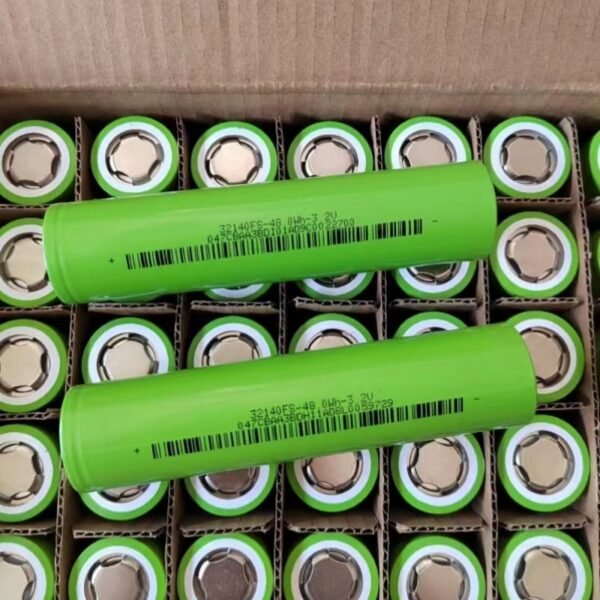
21700 Battery Cell For 1000W Power Station: Technical Deep Dive & Compliance Guide
The 21700 lithium-ion battery cell has emerged as the optimal power density solution for 1000W portable power stations, balancing energy capacity, thermal management, and cost efficiency. For engineers and technical procurement specialists evaluating battery systems for North American, European, and Asian markets, understanding the technical specifications and compliance frameworks is critical. This analysis dissects the 21700 cell architecture, performance parameters, testing methodologies, and regional regulatory alignment essential for deployment in commercial energy storage applications.
Core Technical Advantages of 21700 Cells
The 21700 form factor (21mm diameter × 70mm length) delivers approximately 30-50% higher energy density compared to legacy 18650 cells, making it ideal for 1000W power station configurations. Key performance metrics include:
Energy Density: Typical 21700 cells offer 4,800-5,000mAh capacity at 3.6V nominal voltage, translating to 17-18Wh per cell. A 1000W power station requiring 1000Wh capacity necessitates approximately 56-60 cells in series-parallel configuration.
Discharge Rate: High-drain 21700 variants support 10A-15A continuous discharge, enabling 1000W output without excessive voltage sag or thermal buildup. This is critical for powering AC inverters, medical equipment, and professional tools.
Cycle Life: Premium 21700 cells achieve 800-1,000 cycles at 80% depth of discharge (DOD), ensuring 3-5 year operational lifespan in commercial deployments.
Thermal Performance: The larger surface-area-to-volume ratio improves heat dissipation compared to smaller form factors, reducing thermal runaway risk during high-load operations.
For detailed cylindrical cell specifications, visit our Cylindrical Battery Cell Product Line.
Testing Methodologies & Quality Validation
Engineering teams must validate 21700 cells through standardized testing protocols before integration into 1000W power stations:
Capacity Testing: Cells undergo constant current-constant voltage (CC-CV) charging at 0.5C, followed by 0.2C discharge to 2.5V cutoff. Capacity retention must exceed 95% of rated specification across sample batches.
Internal Resistance Measurement: DC internal resistance (DCIR) should remain below 50mΩ per cell to minimize voltage drop during 1000W discharge events. Elevated resistance indicates manufacturing defects or electrode degradation.
Thermal Cycling: Cells experience -20°C to 60°C environmental cycling for 500+ cycles while monitoring capacity fade. This validates performance across North American, European, and Asian climate zones.
Safety Compliance: UN38.3 transportation testing, IEC 62133 safety certification, and UL 1642 cell-level validation are mandatory for international shipment and end-product certification.
Cycle Life Validation: Accelerated cycling at 1C charge/1C discharge with periodic capacity checks ensures projected lifespan claims are empirically supported.
Regional Compliance & Technical Barriers
CNS BATTERY’s 21700 cell manufacturing aligns with jurisdiction-specific regulatory frameworks, reducing compliance friction for global procurement teams:
European Union: Cells comply with EU Battery Directive 2006/66/EC and upcoming EU Battery Regulation 2023/1542, including carbon footprint disclosure requirements and recycled content mandates. CE marking and REACH chemical compliance are standard.
United States: UL 1642 cell certification and UN38.3 transportation documentation support integration into UL 2743-certified portable power stations. California Proposition 65 labeling is available upon request.
North American Markets: Energy storage systems targeting US and Canadian markets benefit from cells pre-validated for FCC electromagnetic compatibility and DOE efficiency standards.
Asian Markets: GB/T 31485 (China), JIS C 8714 (Japan), and KS C 8712 (Korea) certifications enable seamless deployment across APAC regions without redesign.
For manufacturers seeking compliant battery partners, explore Battery Manufacturers in China for vetted supply chain options.
Integration Considerations for 1000W Systems
System designers must account for battery management system (BMS) compatibility, cell balancing architecture, and thermal management when deploying 21700 cells in 1000W configurations. Passive balancing suffices for smaller packs, while active balancing is recommended for 50+ cell configurations to maximize cycle life. Thermal pads or phase-change materials should interface between cells and aluminum housing to maintain operating temperatures below 45°C during sustained 1000W discharge.
Conclusion
The 21700 battery cell represents the technical sweet spot for 1000W power station applications, offering superior energy density, discharge capability, and thermal performance. However, successful deployment requires rigorous testing validation and regional compliance alignment. CNS BATTERY’s manufacturing processes integrate these requirements from cell production through final certification, enabling engineers and procurement teams to accelerate time-to-market while maintaining regulatory compliance across EU, US, and APAC jurisdictions.
For technical consultations or procurement inquiries, contact our engineering team at CNS BATTERY Contact.


