

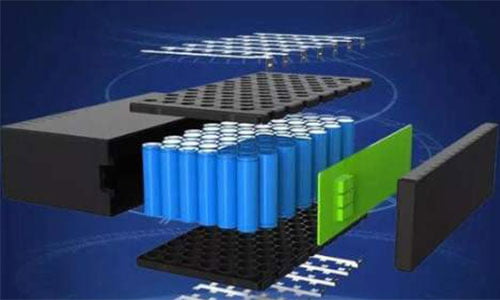
The 21700 Battery Cell: Engineering High-Performance Energy Storage
In the rapidly evolving landscape of energy storage, the transition from traditional 18650 cells to the 21700 format represents a significant leap in engineering efficiency. For engineers and technical procurement managers working on high-drain applications—from electric power tools to electric vehicles (EVs)—the demand for batteries capable of sustaining high continuous discharge rates without thermal runaway is paramount. Among the various specifications available in the market, the 21700 Battery Cell with a 10C Continuous Discharge capability stands out as a critical component for next-generation power systems.
The “10C” rating is not merely a marketing term; it signifies that the cell can deliver ten times its rated capacity in amperes continuously. For instance, a 5.0Ah 21700 cell with a 10C rating can theoretically sustain a 50A discharge current. This high-rate capability is essential for applications requiring bursts of power or sustained high-load operation. This article delves into the technical architecture, material science, and practical applications of high-discharge 21700 cylindrical cells, providing a comprehensive guide for technical decision-makers.
Understanding the 10C Discharge Specification
Before exploring specific applications, it is crucial to define what “10C” means in the context of lithium-ion battery specifications. The “C-rate” measures the charge or discharge current relative to the battery’s capacity.
For a standard high-capacity INR 21700 cell (typically ranging from 4.5Ah to 5.5Ah), achieving a 10C discharge rate requires advanced electrode design and robust thermal management properties. Unlike standard energy cells designed for consumer electronics (which might only handle 0.5C to 1C), a 10C cell is engineered for power.
Technical Breakdown:
- Capacity: ~4.5Ah – 5.0Ah
- Continuous Discharge Current: 10C (e.g., 45A – 50A for a 5.0Ah cell)
- Pulse Discharge: Often exceeds 15C or 20C for short durations
- Chemistry: Typically NMC (Nickel Manganese Cobalt) or high-nickel variants optimized for power density.
This specification allows system designers to reduce the number of parallel cells required in a battery pack. Fewer cells mean simpler Battery Management Systems (BMS), reduced internal resistance in the pack, and a higher power-to-weight ratio.
Structural Advantages of the 21700 Format
The shift from 18650 to 21700 is driven by the “Jelly Roll” effect. By increasing the diameter from 18mm to 21mm and the length from 65mm to 70mm, manufacturers can utilize longer electrode sheets within a single can. This structural change yields several benefits crucial for high-discharge applications.
1. Reduced Internal Resistance
A larger diameter allows for wider electrode tabs. Wider tabs lower the internal impedance of the cell. Lower resistance is the primary factor enabling high-current discharge, as it minimizes voltage drop and heat generation during heavy loads.
2. Enhanced Thermal Stability
While larger cells can theoretically retain more heat, the 21700 format benefits from a better surface-area-to-volume ratio compared to stacking multiple 18650 cells with insulating wrappers. This allows for more efficient heat dissipation through the steel can, which is vital when operating at 10C rates where thermal buildup is significant.
3. Higher Energy Density
The 21700 cell typically offers a 40-50% increase in energy capacity over the 18650 while only increasing the volume by about 48%. For applications like E-Bikes or Energy Storage Systems (ESS), this means longer runtime without increasing the physical footprint of the battery pack.
Material Science Behind High Discharge Rates
Achieving a 10C discharge rate is not just about the physical size; it is fundamentally about the electrochemistry and microstructure of the electrodes.
Cathode Engineering
For a cell to support 10C, the cathode material (usually NMC 811 or similar high-nickel blends) must have a porous structure that allows rapid lithium-ion de-intercalation. Manufacturers utilize nano-coating technologies on the cathode particles to enhance conductivity and structural integrity during rapid ion exchange.
Anode Optimization
The anode (graphite) must also be engineered to accept lithium ions at a high velocity during charging and release them during discharging. Specialized binders and conductive agents are mixed into the anode slurry to prevent exfoliation and maintain electrical contact under high stress.
Electrolyte Formulation
The electrolyte plays a pivotal role as the medium for ion transport. High-rate cells use low-viscosity electrolytes with high ionic conductivity. Additives are often included to form a stable Solid Electrolyte Interphase (SEI) layer on the anode, which prevents degradation during fast charging and discharging cycles.
Applications Requiring 10C 21700 Cells
The 10C specification makes the 21700 cell suitable for a specific tier of high-performance applications where standard cells would fail due to overheating or voltage sag.
1. High-Performance Electric Vehicles and E-Bikes
In the automotive sector, particularly for high-speed E-Bikes or light electric vehicles (LEV), the motor demands high current during acceleration and hill climbing. A 10C 21700 cell ensures that the voltage does not drop below the BMS cutoff threshold during peak loads, preventing sudden power loss.
2. Cordless Power Tools
Professional-grade power tools (drills, saws, impact drivers) require instantaneous high torque. These tools operate in a “work-rest” cycle where the battery discharges at high C-rates for short periods. The 21700 cell’s ability to handle 10C ensures that the tool maintains full power until the battery is depleted, rather than losing power as the battery heats up.
3. Grid Storage and UPS Systems
While traditional energy storage focuses on capacity, modern Grid Storage and Uninterruptible Power Supplies (UPS) increasingly require high discharge rates to handle inrush currents or to provide backup power for high-wattage industrial equipment. The 10C rating ensures these systems can deliver the necessary surge power during a grid failure.
Selection Guide: 21700 vs. 18650 vs. 32700
When designing a new system, engineers must choose the optimal cell format. The table below compares the 21700 against its closest competitors to highlight the specific niche of the high-discharge 21700.
| Feature | 18650 Cell | 21700 Cell (10C) | 32700 Cell |
|---|---|---|---|
| Dimensions | 18mm x 65mm | 21mm x 70mm | 32mm x 70mm |
| Typical Capacity | 2.0Ah – 3.5Ah | 4.5Ah – 5.0Ah | 6.0Ah+ |
| Max Discharge (Typical) | 10A – 30A | 45A – 50A | 20A – 30A (Energy Focused) |
| Best Use Case | Consumer Electronics, Small Packs | Power Tools, High-Speed E-Bikes | High-Capacity Storage, Low-Drain EV |
| System Efficiency | Lower (More Cells Required) | Higher (Fewer Cells, Lower IR) | High Capacity, Lower Power Density |
Note: While the 32700 offers superior capacity, it is often optimized for energy density rather than the extreme power density of the 10C 21700.
Partnering with a Manufacturer for High-Discharge Solutions
Selecting a battery cell is not just about the datasheet; it is about partnering with a manufacturer that understands the rigors of high-drain applications. Quality control in the coating, assembly, and formation processes is critical. Variations in internal resistance between cells can lead to imbalances in a pack, causing premature failure or safety hazards.
When evaluating suppliers for 21700 Battery Cells, technical procurement teams should look for:
- Consistency: Tight control over capacity and internal resistance (IR) matching.
- Safety Certifications: UN38.3, MSDS, and CE certifications are mandatory.
- Customization: The ability to modify the tab configuration or electrolyte for specific thermal environments.
Manufacturers specializing in cylindrical cells often provide comprehensive testing data, including cycle life graphs at high temperatures and discharge rates, which are essential for accurate system design.
Conclusion: The Future of Power is 21700
The 21700 Battery Cell with a 10C Continuous Discharge rating represents the convergence of energy density and power density. For engineers, it offers a pathway to design lighter, more efficient, and more powerful systems. As the technology matures, we are likely to see even higher C-rates and capacities emerging from this format.
For technical teams looking to integrate this technology, the next step is to review specific datasheets and request samples for validation testing. Understanding the nuances of the discharge curve and thermal profile under load is essential for a successful product launch.
If you are looking for a reliable partner to source high-performance cylindrical cells or need custom solutions for your specific application, exploring the capabilities of established manufacturers is the first step. You can learn more about the range of cylindrical battery cells available and their specific applications by visiting the product page. For direct inquiries regarding technical specifications or procurement, contacting the manufacturer’s engineering team ensures you receive the most accurate and up-to-date information.
Explore the range of Cylindrical Battery Cells designed for high performance.
Learn More About Cylindrical Battery Cells
Contact our engineering team for technical support and custom solutions.
Get in Touch with Our Experts
Discover how leading manufacturers are utilizing 21700 technology to innovate.
Read More About Battery Manufacturing in China


