

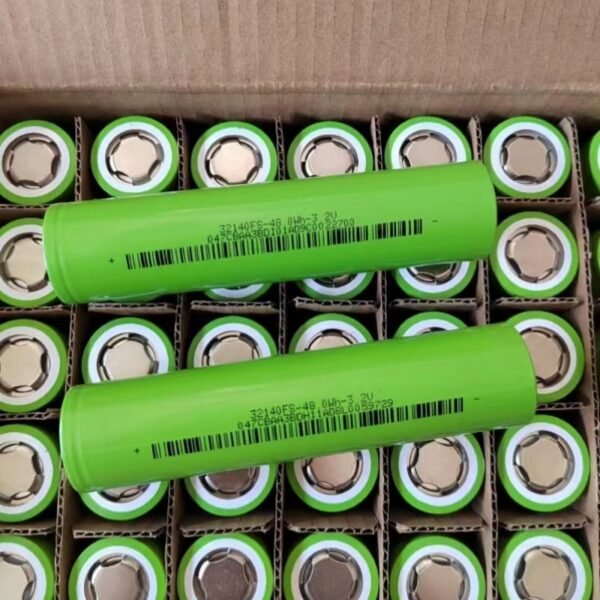
2026 NCM Cylindrical Battery Supplier: Fix BMS Compatibility Solved in Battery Pack Using 32135 Cells Ultimate Guide
As the global energy storage market accelerates toward 2026, NCM cylindrical battery technology has emerged as a critical solution for EV manufacturers and industrial energy storage systems. The 32135 cell format represents a significant advancement in energy density and thermal management, yet BMS (Battery Management System) compatibility remains a persistent challenge for technical procurement teams across North America, Europe, and Asia-Pacific regions. This comprehensive guide addresses the core technical barriers and provides actionable solutions for seamless battery pack integration.
Understanding 32135 NCM Cell Architecture
The 32135 cylindrical cell designation indicates dimensions of 32mm diameter and 135mm height, offering approximately 15-20% higher volumetric energy density compared to traditional 21700 formats. NCM (Nickel-Cobalt-Manganese) chemistry delivers optimal balance between energy density, cycle life, and thermal stability. For engineers designing battery packs in California, Germany, or Shenzhen, understanding the nominal voltage (3.6V-3.7V), capacity range (8-12Ah), and discharge characteristics is fundamental to BMS selection.
The key advantage lies in the cell’s internal structure. Advanced tab design reduces internal resistance to below 8mΩ, enabling higher C-rate discharge without excessive heat generation. This characteristic directly impacts BMS algorithm requirements, particularly for cell balancing and thermal monitoring protocols.
BMS Compatibility Challenges and Solutions
Voltage Range Matching: NCM 32135 cells operate within 2.5V-4.2V per cell. BMS systems must accurately monitor individual cell voltages within ±5mV precision. For EU-compliant systems following EN 62619 standards, isolation requirements demand reinforced insulation between high-voltage battery packs and low-voltage control circuits.
Temperature Monitoring Integration: Each 32135 cell generates heat proportionally to discharge current. Optimal BMS design incorporates NTC thermistors at three critical points: cell surface, module interconnect, and pack enclosure. American UL 2580 standards require thermal runaway detection within 2 seconds of temperature exceeding 65°C.
Communication Protocol Standardization: CAN 2.0B remains dominant in automotive applications, while industrial systems increasingly adopt CAN FD or RS485. For cross-regional deployment, BMS firmware must support multiple protocol stacks without hardware modification. This flexibility proves essential for manufacturers serving both Detroit automotive OEMs and European stationary storage clients.
Testing Methodologies for Validation
Cycle Life Testing: Conduct minimum 1000 cycles at 1C charge/discharge rate, maintaining 80% capacity retention. Temperature-controlled chambers must simulate regional climate conditions: -20°C to 45°C for North American markets, -30°C to 50°C for European operations.
Safety Certification Testing: UN 38.3 transportation testing remains mandatory for international shipping. Additional regional requirements include CE marking for Europe, UL certification for United States distribution, and GB/T standards for Chinese domestic applications. Each certification demands specific documentation and test reports from accredited laboratories.
BMS Algorithm Validation: Implement hardware-in-the-loop (HIL) testing to verify overcharge protection, over-discharge cutoff, and short-circuit response times. Response latency must remain below 100ms for critical safety functions according to ISO 26262 ASIL-B requirements.
CNS Technology: Regional Compliance Advantages
CNS Battery has established manufacturing facilities with multi-regional certification capabilities, addressing the complex compliance landscape facing international procurement teams. Our 32135 NCM cylindrical cells undergo rigorous testing protocols aligned with both Western and Asian regulatory frameworks.
For European customers, our battery packs meet EN 62619 safety standards and REACH chemical compliance requirements. The manufacturing process incorporates traceability systems satisfying EU Battery Regulation 2023/1542, ensuring complete material sourcing documentation for sustainability reporting.
North American clients benefit from UL 1973 and UL 2580 certified production lines, with testing facilities located in California enabling rapid prototype validation. Our engineering team provides localized technical support across PST and EST time zones, reducing communication delays critical for time-sensitive projects.
The technical barrier CNS overcomes lies in adaptive BMS firmware architecture. Rather than requiring custom hardware for each regional standard, our programmable BMS platforms support parameter configuration through software updates. This approach reduces lead times from 12 weeks to 4 weeks for market-specific certifications.
Implementation Best Practices
Successful battery pack deployment requires coordinated effort between cell suppliers, BMS manufacturers, and system integrators. Early engagement during design phases prevents costly redesigns. We recommend establishing technical working groups including representatives from all supply chain partners before finalizing specifications.
Documentation completeness proves equally critical. Maintain comprehensive test reports, material safety data sheets, and certification certificates for regulatory audits. Digital twin simulations should validate thermal and electrical performance before physical prototyping begins.
For procurement teams evaluating suppliers, request sample cells for independent validation testing. Verify manufacturer claims through third-party laboratories rather than relying solely on supplier-provided data. This due diligence prevents performance discrepancies during mass production.
Conclusion
The 2026 NCM cylindrical battery market demands suppliers who understand both technical specifications and regional compliance requirements. 32135 cells offer compelling advantages for high-energy-density applications, but BMS compatibility remains the critical success factor. By partnering with manufacturers who maintain multi-regional certification capabilities and provide flexible BMS solutions, engineering teams can accelerate time-to-market while ensuring regulatory compliance across target markets.
For technical specifications, certification documentation, or customization requirements, visit our product catalog or connect with our engineering team through our contact page. Learn more about our manufacturing capabilities and quality systems at CNS Battery manufacturers.
Technical Note: All specifications subject to validation testing. Regional certification requirements may vary based on application category and local regulatory updates. Consult with qualified engineering professionals before system deployment.


