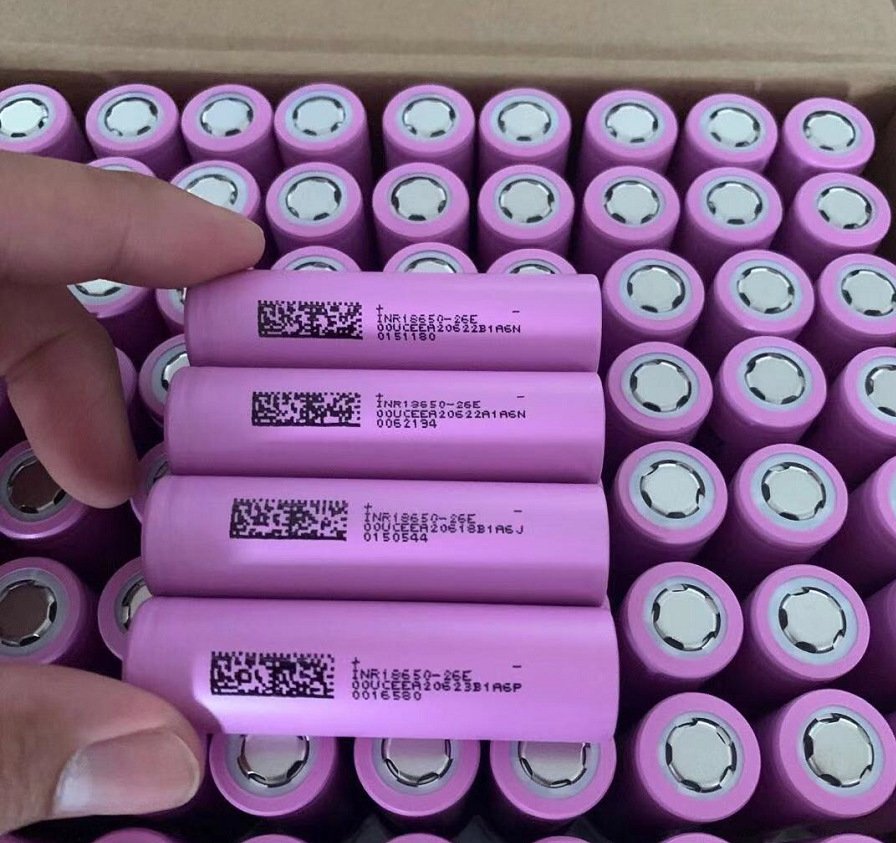
2026 LFP Cylindrical Battery Supplier: Fix Perfect Cell Matching in ESS Using 18650 Cells Top 5 Problems & Solutions
Are you struggling to achieve a stable, long-lasting Energy Storage System (ESS) using LFP 18650 cells? As we move into 2026, the demand for high-density, safe, and cost-effective energy storage continues to surge. Lithium Iron Phosphate (LFP) cylindrical cells, particularly the 18650 format, remain a cornerstone for many industrial and consumer-grade ESS applications due to their robust safety profile and long cycle life.
However, while LFP chemistry is renowned for stability, the physical constraints of the 18650 format present unique engineering challenges. Achieving “perfect cell matching” is not just a manufacturing slogan; it is the mathematical determinant of your system’s efficiency. In a series-parallel battery pack, the performance of thousands of individual cells must be harmonized. Even minor deviations in capacity or internal resistance can lead to significant energy waste, thermal runaway risks, or premature system failure.
As a seasoned player in the global battery supply chain, we understand that the difference between a failing prototype and a market-leading product often lies in the quality of the cylindrical cell supplier. This article dissects the top 5 technical problems encountered when using 18650 cells for ESS and provides actionable engineering solutions to fix your cell matching strategy.
The Core Challenge: Why 18650 Cell Matching is Critical for ESS
Before diving into the problems, let’s clarify the technical principle. Cell matching (or cell sorting) is the process of grouping battery cells with extremely similar characteristics—specifically Voltage (OCV), Capacity (Ah), and Internal Resistance (IR)—before assembling them into a pack.
The 18650 cell, while a masterpiece of standardization, has a relatively low capacity (typically 2.0Ah to 3.5Ah for LFP/NMC) compared to larger formats like the 21700 or 32700. This means an ESS system requires a significantly higher number of parallel connections to achieve the desired energy density. The more cells in parallel, the higher the statistical probability of variance. If unmatched cells are welded together, the “weakest link” principle applies: the cell with the lowest capacity will dictate the entire string’s performance, leading to imbalanced charging and accelerated degradation.
Problem 1: Capacity Fading Due to Initial Sorting Inaccuracy
The Technical Hurdle:
The most common failure in ESS is premature capacity fade. This occurs when cells within a parallel group have a capacity difference exceeding ±1%. During the discharge cycle, the lower-capacity cells deplete first and are then subjected to reverse charging by the higher-capacity cells in the parallel block. This “parasitic” effect causes rapid aging and can lead to electrolyte decomposition.
The 2026 Solution:
Insist on suppliers that utilize high-precision grading machines with a sorting accuracy of ±0.5% or better. At the cell level, this means rigorous binning based on actual discharge capacity rather than relying solely on nominal ratings. For industrial ESS applications, never accept cells that have not undergone a full formation and grading cycle under load conditions that mimic your application.
Expert Insight: In 2026, the standard for industrial ESS has shifted. Basic sorting is no longer sufficient; dynamic capacity matching under pulsed loads is becoming the benchmark for premium suppliers.
Problem 2: Thermal Runaway in High-Current Scenarios
The Technical Hurdle:
ESS systems often require high discharge rates (C-rates) for surge protection or grid balancing. If the Internal Resistance (IR) variance between parallel cells exceeds ±1.0 mΩ, the current distribution becomes uneven. The cell with the lower IR will carry a disproportionate share of the current, generating excessive heat. This localized “hotspot” can trigger thermal runaway, especially if the cells are physically packed tightly in a cylindrical array.
The 2026 Solution:
Implement strict IR screening protocols. Modern automated production lines, such as those utilizing advanced laser welding and inline resistance testers, can segregate cells with micro-variances. For high-power ESS, specify cells that are sorted within a ±0.3 mΩ IR range. This ensures that current flow is uniform, preventing localized overheating and extending the thermal management system’s (BMS) effectiveness.
Problem 3: Voltage Drift and BMS Confusion
The Technical Hurdle:
Voltage consistency is the primary metric the Battery Management System (BMS) uses to calculate State of Charge (SOC). If the Open Circuit Voltage (OCV) of cells in a series string varies significantly (e.g., >10mV difference), the BMS will struggle to balance the pack. This leads to “voltage drift,” where the BMS prematurely cuts off charging (due to high voltage on some cells) while other cells remain undercharged. The result is a system that never reaches its rated capacity.
The 2026 Solution:
Focus on the “K-value,” which is the voltage drop rate over time. Cells should be matched not just on instantaneous voltage but on their voltage decay characteristics. Suppliers should store cells for a standardized period (e.g., 48 hours) post-formation and re-test the OCV. Matching cells with a K-value consistency ensures that the voltage curves of the cells remain parallel throughout the battery’s lifecycle, drastically reducing the BMS’s balancing burden.
Problem 4: Production Yield Loss from Manual Sorting
The Technical Hurdle:
Many legacy battery manufacturers still rely on semi-automatic or manual sorting processes. This introduces human error and inconsistent data logging. If the sorting data isn’t traceable, identifying the root cause of a field failure becomes nearly impossible. Furthermore, manual handling increases the risk of micro-damage to the cell casing, leading to future self-discharge issues.
The 2026 Solution:
Adopt a “Zero-Defect” manufacturing philosophy. Partner with suppliers that utilize fully automated production lines where robots handle the cells from the jelly roll stage to the final packaging. Automated sorting integrates seamlessly with the Manufacturing Execution System (MES), providing a digital twin for every single cell. This level of traceability is non-negotiable for 2026 ESS standards, ensuring that every batch delivered to your factory has a verifiable pedigree of performance data.
Problem 5: Supply Chain Instability for Custom Specs
The Technical Hurdle:
Off-the-shelf 18650 cells are abundant, but they are often optimized for consumer electronics (high energy density, low cycle life). Industrial ESS requires定制化 (Customized) cells with thicker casings, specific electrolyte formulations for wide temperature ranges, or tailored tab designs. Relying on a generic supplier often means you get “consumer-grade” cells repackaged for industrial use, leading to a mismatch in cycle life expectations.
The 2026 Solution:
Collaborate with a manufacturer that offers true OEM/ODM services. Your supplier should have the R&D capability to adjust the cathode-anode balance and electrolyte additives to meet your specific cycle life target (e.g., 6000+ cycles). This requires a partner with in-house material synthesis capabilities, not just a cell assembler.
Conclusion: Partnering for ESS Success in 2026
Solving the “perfect cell matching” puzzle requires more than just buying batteries; it requires partnering with a manufacturer that views quality as a chemical and engineering equation, not just a price point.
As a leading Lithium-ion cylindrical battery manufacturer in China, we provide comprehensive cylindrical battery cells and customizable solutions for the world. Whether you are looking for standard high-energy density solutions or require定制化 (Customized) 18650, 21700, or 32700 cells for your specific ESS architecture, our automated production lines and strict quality control ensure that every battery is a masterpiece of craftsmanship.
Don’t let substandard cell matching compromise your 2026 energy storage projects.
- Explore our comprehensive range of Cylindrical Battery Cells designed for industrial stability.
- Contact our engineering team today to discuss your specific cell matching requirements and receive a consultation on optimizing your ESS performance.