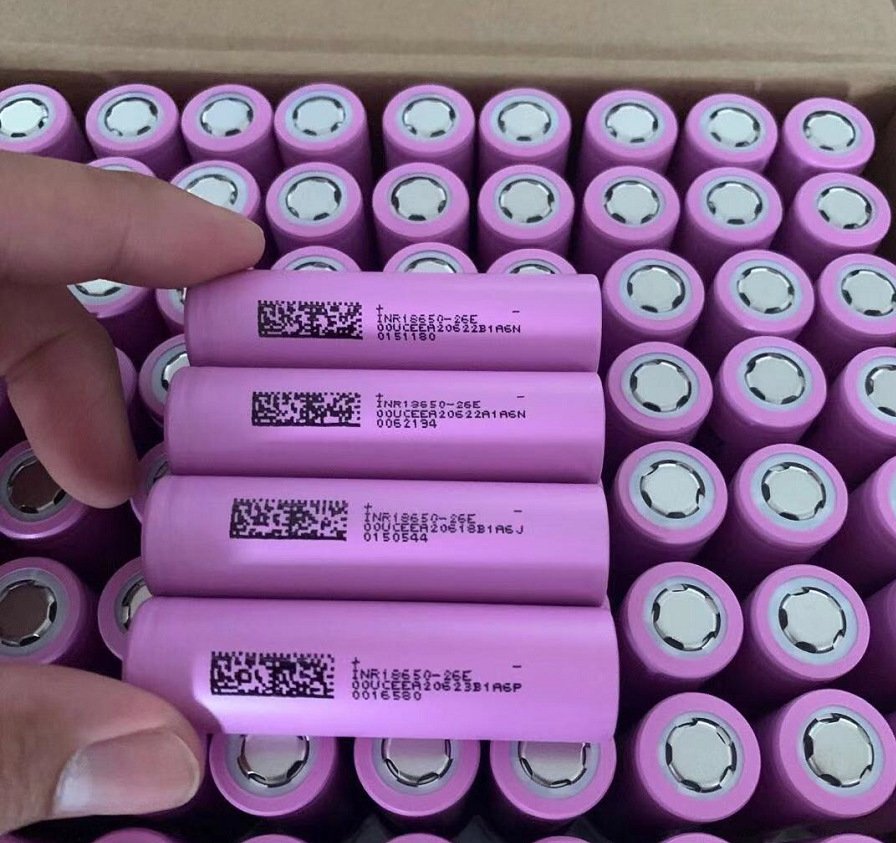
Stabilizing Costs in Volatile Markets: The Strategic Shift to 18650 LFP for 2026 EV Production
The electric vehicle (EV) industry stands at a pivotal crossroads. As we look toward 2026, manufacturers are no longer chasing raw performance metrics alone; the focus has sharply pivoted toward supply chain resilience and cost predictability. The volatility of raw material prices has forced a strategic re-evaluation of battery chemistry. While high-nickel formulations grab headlines, a pragmatic shift is occurring beneath the surface: a move toward Lithium Iron Phosphate (LFP) in cylindrical formats, specifically the 18650 cell. This isn’t just about chemistry; it is about securing a competitive wholesale price structure that allows OEMs to forecast profitability with confidence.
For engineers and procurement managers, the challenge is clear: deliver safe, durable EVs without exposing the business to the financial roulette of cobalt and nickel markets. This article explores why the 18650 LFP cell is emerging as the cornerstone of this strategy, offering a blueprint for stabilizing production costs while maintaining technical integrity.
The Economic Imperative: Why LFP Dominates the 2026 Forecast
To understand the 2026 landscape, one must first understand the economics of the cathode. The cathode material represents the single largest cost component in a lithium-ion cell. Traditional NMC (Nickel Manganese Cobalt) chemistries are subject to extreme price fluctuations due to the scarcity and geopolitical sensitivity of nickel and cobalt.
LFP technology eliminates these variables. By utilizing iron and phosphate—abundant, geographically widespread, and inexpensive materials—LFP cells decouple battery manufacturing from the volatility of critical metals. For a manufacturer planning a 2026 production run, this translates directly into a “Fix Competitive Wholesale Price” model. You are no longer betting on commodity futures; you are buying a stabilized technology platform.
Furthermore, the safety profile of LFP reduces the engineering overhead required for Battery Management Systems (BMS) and thermal runaway protection. This simplification cascades down the balance sheet, lowering the Total Cost of Ownership (TCO) for the vehicle.
The Resurgence of the 18650: Engineering Maturity Meets Thermal Efficiency
There is a common misconception that cylindrical cells must grow larger to be more efficient. However, the 18650 format remains the gold standard for engineering reliability. While the industry experiments with 21700 and 4680 formats, the 18650 offers distinct advantages for specific 2026 applications, particularly in the realm of LFP.
The smaller size of the 18650 cell provides a superior surface-area-to-volume ratio. In thermal management, this is critical. LFP chemistry, while inherently safer, benefits immensely from the 18650’s geometry, which allows for rapid heat dissipation. This geometry prevents hot spots and ensures uniform temperature distribution across the battery pack—a critical factor in extending cycle life and maintaining performance in demanding EV applications.
Moreover, the tooling and manufacturing processes for the 18650 are the most mature and automated in the industry. This maturity drives down the “Manufacturing Conversion Cost”—the cost to assemble raw materials into a finished cell. For a 2026 EV manufacturer seeking to minimize waste and maximize throughput, leveraging this established infrastructure is a strategic advantage.
Technical Deep Dive: The Physics of LFP Stability
To appreciate why LFP is ideal for long-duration applications, we must examine the crystal structure. LFP cells utilize a olivine crystal structure. Unlike the layered oxide structures found in NMC batteries, the olivine framework is incredibly robust.
When lithium ions are extracted during charging, the LFP lattice remains stable. This structural integrity is why LFP cells exhibit such a long cycle life—often exceeding 3,000 cycles while retaining 80% capacity. For an EV battery pack, this means the vehicle can maintain its range for a significantly longer lifespan without degradation.
Additionally, the electrochemical potential of the Fe²⁺/Fe³⁺ redox couple is higher than that of metallic lithium. This fundamental property makes LFP chemically incapable of undergoing thermal runaway in the same violent manner as other lithium-ion chemistries. It is this “ultra-safe” characteristic that allows manufacturers to design lighter, less complex battery packs, further contributing to the competitive pricing model.
Strategic Sourcing for 2026: Partnering with Proven Manufacturers
Securing a fixed, competitive price for 2026 requires more than just choosing the right chemistry; it requires partnering with a manufacturer that has the vertical integration and scale to honor those prices.
A reliable partner must demonstrate:
- Raw Material Security: Long-term contracts with phosphate and iron suppliers to buffer against market shocks.
- Automated Production: High-speed assembly lines that minimize labor costs and ensure consistency.
- Quality Management: Rigorous testing protocols to ensure every batch meets the exacting standards of the automotive industry.
By locking in supply agreements with manufacturers who possess these capabilities now, OEMs can hedge against the inflationary pressures expected in the coming years.
Conclusion: Building the Future on a Stable Foundation
The transition to 2026 EV production is not merely an upgrade; it is a recalibration of priorities. The industry is moving away from the “bigger is better” narrative toward a philosophy of “stable and reliable.” The 18650 LFP cell represents the convergence of economic wisdom and engineering pragmatism.
By adopting this technology, manufacturers can offer consumers an affordable, safe, and durable product, all while protecting their own margins from the chaos of the commodities market. It is a strategic move that prioritizes long-term sustainability over short-term hype.
For engineers and procurement officers ready to secure their 2026 supply chain, the time to act is now. Evaluate your battery strategy through the lens of cost stability and technical reliability.
Ready to optimize your 2026 production costs? Explore our comprehensive range of cylindrical battery cells and customizable solutions designed for global manufacturers. Contact our team today to discuss how we can help you fix competitive wholesale prices for your next-generation EVs.