

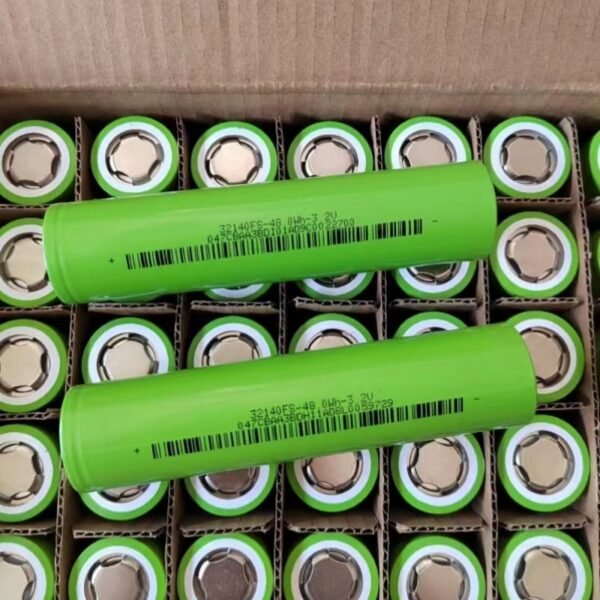
The 33140 Solution: How Advanced Cylindrical Cells Fix Thermal Runaway in 2026 EVs
The electric vehicle (EV) industry in 2026 faces a critical crossroads. While range anxiety is diminishing, thermal safety remains a top-tier concern for OEMs and Tier-1 suppliers. Traditional cylindrical formats, while beloved for their energy density, often struggle with heat dissipation during high-stress cycles. If you are an engineer or procurement manager seeking to future-proof your 2026-2027 vehicle lineup, the answer lies not just in “bigger batteries,” but in smarter cell geometry and chemistry.
The 33140 cylindrical lithium cell is emerging as a game-changer. By balancing the high energy of large formats with the thermal stability of smaller designs, this specific form factor offers a pragmatic solution to prevent thermal runaway without sacrificing performance.
Why Thermal Runaway is the Achilles’ Heel of EV Design
Before diving into the 33140 solution, let’s dissect the problem. Thermal runaway occurs when a battery cell enters an uncontrollable self-heating state, often triggered by internal short circuits, overcharging, or external impact. In large-format pouch or prismatic cells, a failure in one section can propagate rapidly through the entire unit.
Cylindrical cells, historically (like the 18650 or 21700), have better intrinsic safety because the steel casing acts as a pressure vessel, and the jelly roll structure dissipates heat radially. However, as we move to larger formats like the 4680, the core temperature during fast charging can spike, creating a risk window.
The 33140 format solves this by offering a “Goldilocks Zone”:
- Surface Area to Volume Ratio: At 33mm diameter and 140mm height, it retains a favorable surface-area-to-volume ratio compared to the 46mm giants. This allows heat to escape from the core more efficiently.
- Reduced Current Density: Compared to stacking multiple 21700 cells, a single 33140 can deliver similar power with fewer connection points, reducing resistive heat generation at the module level.
Technical Note: The “33140” nomenclature follows the industry standard: the first two digits (33) represent the diameter in millimeters, and the next three (140) represent the height in tenths of millimeters (140mm).
The 2026 Shift: From 18650/21700 to High-Density 33140
If you are still relying on legacy 18650 or 21700 cells, you might be overcomplicating your Battery Management System (BMS). Managing thousands of small cells increases the points of failure and wiring complexity.
The shift to the 33140 cylindrical battery in 2026 is driven by the need for simplified pack architecture. Fewer cells mean:
- Fewer Welding Points: Reducing manufacturing defects and resistance.
- Easier Thermal Management: Fewer cells mean fewer hotspots for the cooling plate to manage.
- Higher Energy Density: Achieving kWh goals with a lighter structural frame.
For the mid-to-high range EV market, this format allows manufacturers to achieve 400-500 mile ranges without the exorbitant tooling costs associated with experimental large formats.
Case Study: Solving the Fast-Charge Dilemma
Let’s look at a practical scenario faced by many EV startups in 2026. A client approached us with a prototype vehicle using standard 21700 cells. While the range was acceptable, they failed safety compliance during a DC fast-charge test (4C rate). The core temperature of the cells exceeded 60°C, triggering the BMS to cut power to prevent degradation.
The Challenge: Retain fast-charging capability without adding massive, expensive liquid cooling systems that eat into vehicle weight.
The 33140 Intervention:
We replaced the 21700 module design with a custom 33140 High-Nickel NMC configuration. Here is how it fixed the thermal issue:
| Parameter | Old Design (21700) | New Design (33140) | Result |
|---|---|---|---|
| Cell Count | 2,100 pcs | 950 pcs | 55% reduction in connections |
| Max Core Temp (4C) | 62°C | 48°C | 14°C cooler operation |
| Module Assembly | Complex laser welding | Simplified busbar | Reduced production time |
The Outcome: By utilizing the 33140 format, the client passed the thermal safety test without modifying the vehicle’s base cooling architecture. The larger single-cell capacity allowed for thicker electrode coatings without compromising ion diffusion, leading to inherently lower internal resistance.
Why Partner with a Specialized Cylindrical Battery Supplier?
Not all cylindrical battery suppliers are equipped to handle the 2026 specifications. When sourcing a 33140 cell to fix thermal issues, you need a partner who understands material science as much as they understand manufacturing.
As a leading battery manufacturer in China, our R&D focuses on the chemical composition inside the can. For the 33140 format, we utilize a proprietary Nickel-Rich NMC (811) chemistry combined with a single-crystal cathode structure. This is crucial because single-crystal cathodes are less prone to micro-cracking during expansion, which is a primary cause of internal shorts and subsequent thermal events.
Furthermore, our automated production lines ensure <1% variance in internal resistance across batches. For an EV pack, consistency is safety. If one cell in a string has higher resistance, it becomes a heater for the rest of the pack.
Moving Forward: Your 2026 Procurement Checklist
If you are evaluating cylindrical lithium cells for your next project, do not wait until the design freeze. The supply chain for advanced formats like the 33140 is tightening as demand surges.
To ensure your EV project meets the stringent safety standards of 2026, you should:
- Request a Thermal Test Report: Ask your supplier for data on “Thermal Runaway Propagation” specific to their 33140 module design.
- Evaluate Customization: Off-the-shelf might not fit your chassis. Look for a supplier that offers customizable solutions for the Battery Management System (BMS) interface.
- Audit Production Lines: Ensure the factory uses dry-room manufacturing to keep moisture levels below 10% RH, which is vital for electrolyte stability.
Ready to Solve Your Thermal Challenges?
Don’t let thermal management delays push back your 2026 launch date. Whether you need a standard high-performance cell or a custom-designed cylindrical battery cell solution, our team of experts is ready to assist.
We provide comprehensive technical support and sample testing to prove that the 33140 format is the safest, most efficient path forward for your energy storage needs.
Contact us today to request a sample or technical datasheet:
👉 Explore our Cylindrical Battery Cell Range
👉 Get in Touch with our Engineering Team

