
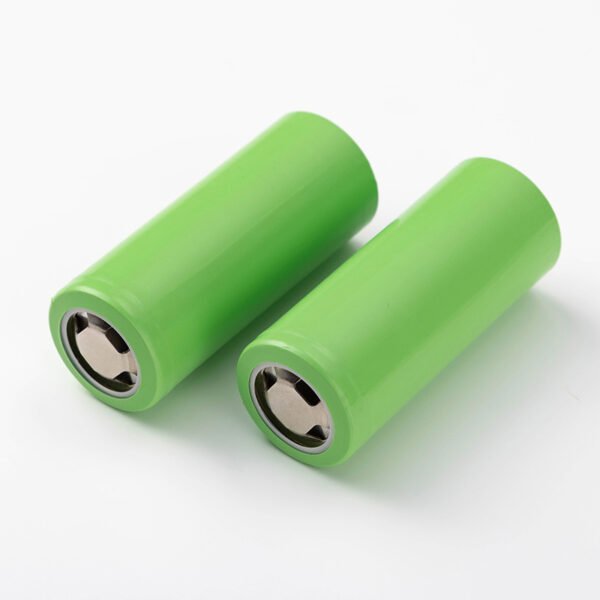
2/3 AA Size Li-SOCl₂ Battery | Industrial Transmitter Use
Introduction
In the rapidly expanding landscape of industrial IoT and remote monitoring systems, reliable power sources remain the cornerstone of operational continuity. The 2/3 AA Size Li-SOCl₂ (Lithium-Thionyl Chloride) Battery, commonly designated as ER14335, has emerged as the preferred energy solution for industrial transmitters, wireless sensors, and telemetry devices. This article provides a comprehensive technical analysis from a professional lithium primary battery perspective, addressing the critical specifications, electrochemical characteristics, and application considerations that engineers and technical procurement specialists need to evaluate.
Technical Specifications and Electrochemical Fundamentals
The 2/3 AA Li-SOCl₂ battery operates on a lithium-thionyl chloride chemistry system, delivering a nominal voltage of 3.6V with a typical capacity ranging from 1,600 to 1,650 mAh. The physical dimensions measure 14.5mm in diameter and 33.5mm in height, making it an optimal form factor for space-constrained industrial transmitter housings.
Core Electrochemical Reaction
The fundamental electrochemical reaction can be expressed as:
4Li + 2SOCl₂ → 4LiCl + S + SO₂
- Anode (Negative): Lithium metal (Li → Li⁺ + e⁻)
- Cathode (Positive): Carbon with thionyl chloride electrolyte
- Electrolyte: LiAlCl₄ dissolved in SOCl₂
This chemistry delivers one of the highest specific energy densities among practical battery systems, reaching up to 590 Wh/kg and 1,100 Wh/L. The flat discharge curve maintains approximately 90% of capacity within a stable voltage plateau between 3.3V and 3.6V, ensuring consistent transmitter performance throughout the battery lifecycle.
Performance Advantages for Industrial Applications
1. Ultra-Low Self-Discharge Rate
Li-SOCl₂ batteries exhibit an annual self-discharge rate of less than 1% under ambient storage conditions. This characteristic enables a shelf life of 10 to 15 years, making them ideal for deployments where maintenance access is limited or cost-prohibitive. For industrial transmitters installed in remote locations—such as oil pipelines, water distribution networks, or agricultural monitoring stations—this longevity translates directly into reduced total cost of ownership.
2. Extended Operating Temperature Range
The standard operating temperature spans -55°C to +85°C, with specialized high-temperature variants extending to +150°C. This thermal resilience ensures reliable performance in harsh environments, from Arctic monitoring stations to desert-based telemetry systems. The battery’s ability to maintain voltage stability across this range eliminates the need for additional thermal management components in transmitter design.
3. Pulse Current Capability
While Li-SOCl₂ batteries are primarily designed for low-current applications, modern variants support continuous discharge currents up to 50mA and pulse currents up to 400mA. This capability accommodates industrial transmitters that require periodic high-current bursts for wireless communication (LoRaWAN, NB-IoT, or cellular transmissions) while maintaining baseline sensor operations at microampere levels.
4. Voltage Stability and End-of-Service Indication
The discharge curve remains remarkably flat throughout 90% of the capacity range, with a sharp voltage drop signaling end-of-life. This characteristic enables accurate battery status monitoring through simple voltage measurement circuits, allowing predictive maintenance scheduling before transmitter failure occurs.
Application Considerations for Industrial Transmitters
Current Drain Optimization
Industrial transmitters typically operate in duty-cycled modes, alternating between sleep states (microampere consumption) and active transmission periods (milliampere peaks). Engineers must calculate the average current drain considering:
- Sleep current × sleep duration
- Active current × transmission duration
- Transmission frequency per day
For example, a transmitter drawing 5μA in sleep mode and 100mA for 2-second transmissions every hour would achieve approximately 8-10 years of operation on a single ER14335 cell.
Voltage Lag Phenomenon
A known characteristic of Li-SOCl₂ chemistry is voltage lag—a temporary voltage depression observed after extended storage or low-temperature exposure. This occurs due to passivation layer formation on the lithium anode. Modern battery designs incorporate electrolyte additives and optimized electrode structures to minimize this effect. For critical applications, preconditioning cycles or hybrid capacitor configurations can mitigate initial voltage depression.
Safety and Compliance
Li-SOCl₂ batteries must be handled under anhydrous and oxygen-free conditions during manufacturing, as thionyl chloride reacts violently with moisture. End users should verify compliance with international standards including UL, CE, RoHS, and UN 38.3 for transportation. Proper disposal protocols must be followed, as lithium primary batteries contain hazardous materials.
Selection Criteria for Technical Procurement
When evaluating 2/3 AA Li-SOCl₂ batteries for industrial transmitter deployments, procurement specialists should consider:
- Capacity Verification: Request certified test reports confirming capacity at specified discharge rates
- Temperature Performance: Validate performance data across the intended operating temperature range
- Shelf Life Documentation: Obtain manufacturing date codes and storage recommendations
- Certification Compliance: Ensure UL, CE, RoHS, and transportation certifications are current
- Supplier Reliability: Evaluate manufacturer track record for industrial-grade primary batteries
For comprehensive product specifications and technical documentation on industrial-grade Li-SOCl₂ batteries, visit our primary battery product portfolio.
Conclusion
The 2/3 AA Size Li-SOCl₂ Battery represents a mature, reliable power solution for industrial transmitter applications where long-term autonomy, environmental resilience, and voltage stability are paramount. Understanding the electrochemical fundamentals, performance characteristics, and application considerations enables engineers and procurement teams to make informed decisions that optimize system reliability and minimize lifecycle costs.
For technical consultations, custom battery configurations, or volume procurement inquiries, our engineering team is available to support your industrial power requirements. Contact us at Primary Battery Contact to discuss your specific application needs and obtain detailed technical documentation.
